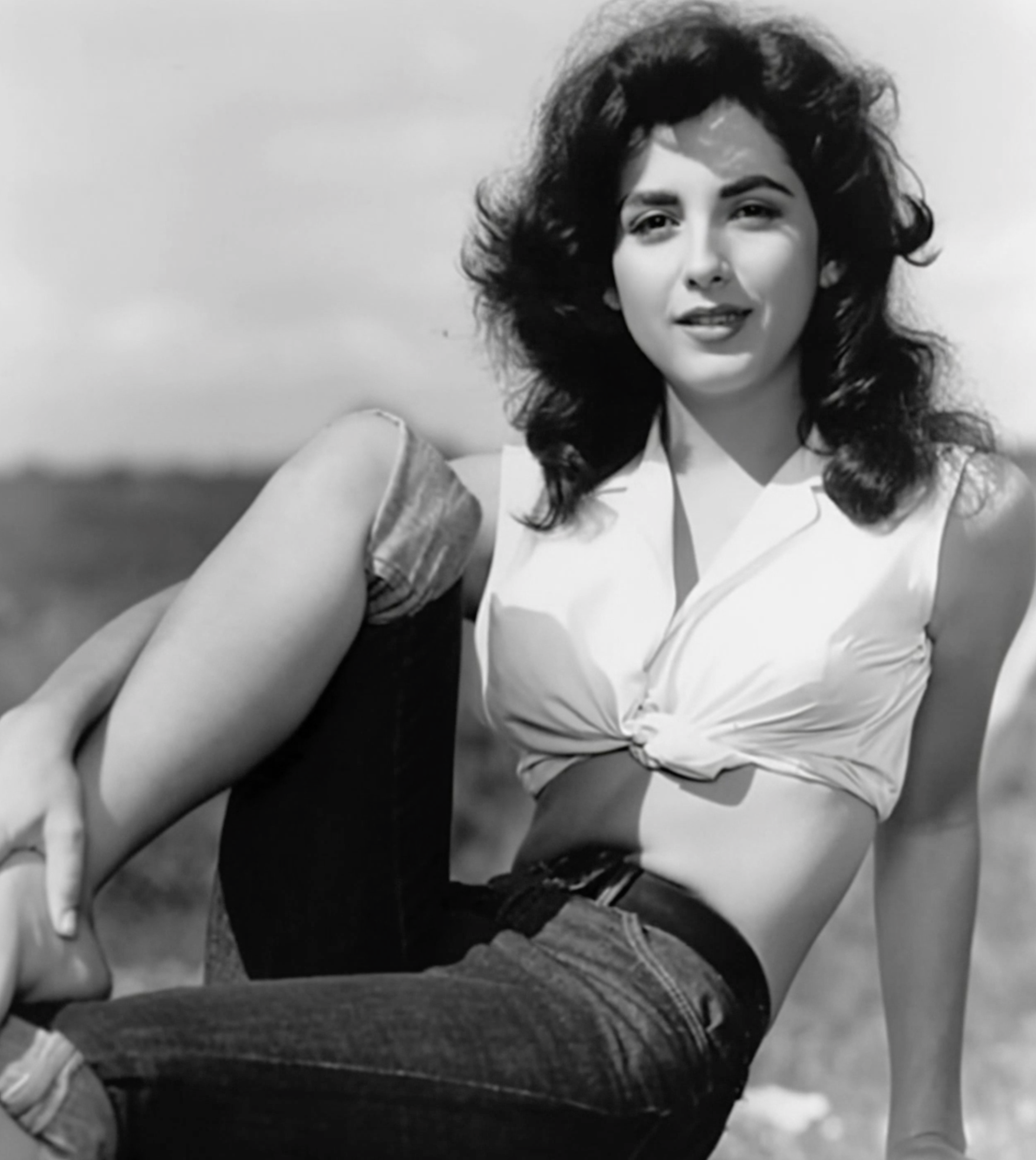
She came into the world in Miami in 1983, born to a mother who modeled and a father who probably never imagined his daughter would end up half-naked on billboards and screaming her lungs out in horror films. Diora was shy—painfully, crushingly shy—the kind of kid who folds into herself like she’s trying to disappear. Her mother did what mothers sometimes do when love is mixed with a little ambition: she signed her daughter up for acting classes and hoped the stage lights would scare the quiet out of her.
It worked.
Diora turned out to be the kind of introvert who just needed a script to open her mouth.
She became vice president of her school’s Thespian Society, a title that sounds fancier than it really is—just a badge that says you’re one of the weird theatre kids who’d rather be rehearsing than doing whatever the “normal” teenagers are up to. By seventeen, she’d had enough of Florida sand and small talk; she packed up and moved to Los Angeles to chase the dream. Only dreams cost money, and LA collects its dues fast. Diora paid with her time and her pride: selling clothes at The Gap, catering parties, teaching preschoolers, waiting tables, painting on a smile as a children’s party clown.
Nothing says “I’m trying to make it in Hollywood” like tying balloon animals while wearing makeup that sweats off in the sun.
Eventually, the modeling world noticed her. Guess? put her front and center, all angles and attitude. Then Playboy came calling in 2005. Diora didn’t tiptoe in—she jumped, landing on the cover with a nude spread that turned her into a name people whispered about but couldn’t quite place. Suddenly she wasn’t invisible anymore. Elite Model Management signed her. Glossy magazines followed. Doors that had been rusted shut for years finally cracked open.
She walked through with enough confidence to pretend it had always been hers.
Her acting career started the usual way: a little role on The Drew Carey Show, a low-budget horror flick called Brain Blockers. But 2005 hit different—Wedding Crashers threw her into mainstream view. A small role, sure, but unforgettable in that way Hollywood loves: beautiful women making loud entrances. After that came Accepted, Hot Tamale, and the role that cemented her in horror lore—Bailey in The Texas Chainsaw Massacre: The Beginning (2006). Blood, screaming, running barefoot through hell—she did it all and looked spectacular doing it, which is often the whole job description in horror.
Magazines kept calling. FHM, Stuff, Maxim—her face and body plastered across spreads ranking her among the hottest women alive. It was the kind of fame that sells calendars but doesn’t always pay the rent long-term. Diora knew that. She kept hustling anyway. She wasn’t just a pin-up; she was trying to build a career in an industry that only half-believed she could act.
She voiced a girlfriend option in the Scarface video game. Guest-starred in Big Day, Shark, The Loop, and Two and a Half Men, the last of which let her show off comic timing beneath all the curves and cleavage. She returned to horror with 30 Days of Night: Dark Days and played Lily Thompson in Night of the Demons. She wasn’t picky—she was working. That’s what matters.
Then came a streak of weird, wonderful internet fame.
Funny or Die scooped her up, letting her lean fully into comedy—sketches with Garfunkel and Oates, oddball characters, the kind of unruly fun Hollywood rarely allowed her to show. She worked with Robert Englund, starred in “Sexy Dark Ages,” then “This Party Took a Turn for the Douche,” proving she could take a joke and turn it sharper.
In 2011, she howled her way into a short musical film for The Black Keys—Howlin’ for You. A strange little fever dream of a project that showed just how comfortably she could slip between genres.
Her filmography grew with a mix of indies, straight-to-video gems, and the occasional studio surprise—Young People Fucking, My Best Friend’s Girl, a blink-and-you’ll-miss-it cameo as a green-skinned Orion in Star Trek (the 2009 reboot). She played a porn star in the 2014 film Beautiful Girl, a role that let her poke at the edges of typecasting and push them outward.
Amazon cast her in Cocked, a pilot with a killer lineup that never made it to series—Hollywood heartbreak 101. She popped up in Hulu’s Casual, kept working, kept grinding. Not every role hits the headlines, but she stayed in the game, which is more than most actors can say.
Her personal life was the sort of thing tabloids love and she tolerated. She married actor Jonathan Togo in 2013, had a child, then split in 2016. In 2017 she came out publicly, not with fireworks but with a kind of quiet relief. For years she’d assumed she was asexual—turns out she was a lesbian. She started dating comedian Mav Viola and the two got engaged before eventually parting ways. Life shifts; people shift with it.
In June 2025, Diora welcomed her second child, a soft and human reminder that careers mutate, families reshape themselves, and life keeps moving even when the big roles don’t.
Her story isn’t a meteoric rise or fairy tale. It’s the grit beneath the gloss—clown makeup sweating down her face, retail shifts, rejected auditions, the bright heat of the Playboy spotlight, the scream-smeared sets of slasher films, the strange relief of discovering her true identity at thirty-something.
She started off shy, hiding behind other people’s ideas of who she should be.
Somewhere between the horror movies, the comedy sketches, and the magazine covers, she stepped into herself.
Diora Baird didn’t just find her voice—
she learned to make it loud enough that she never had to hide again.