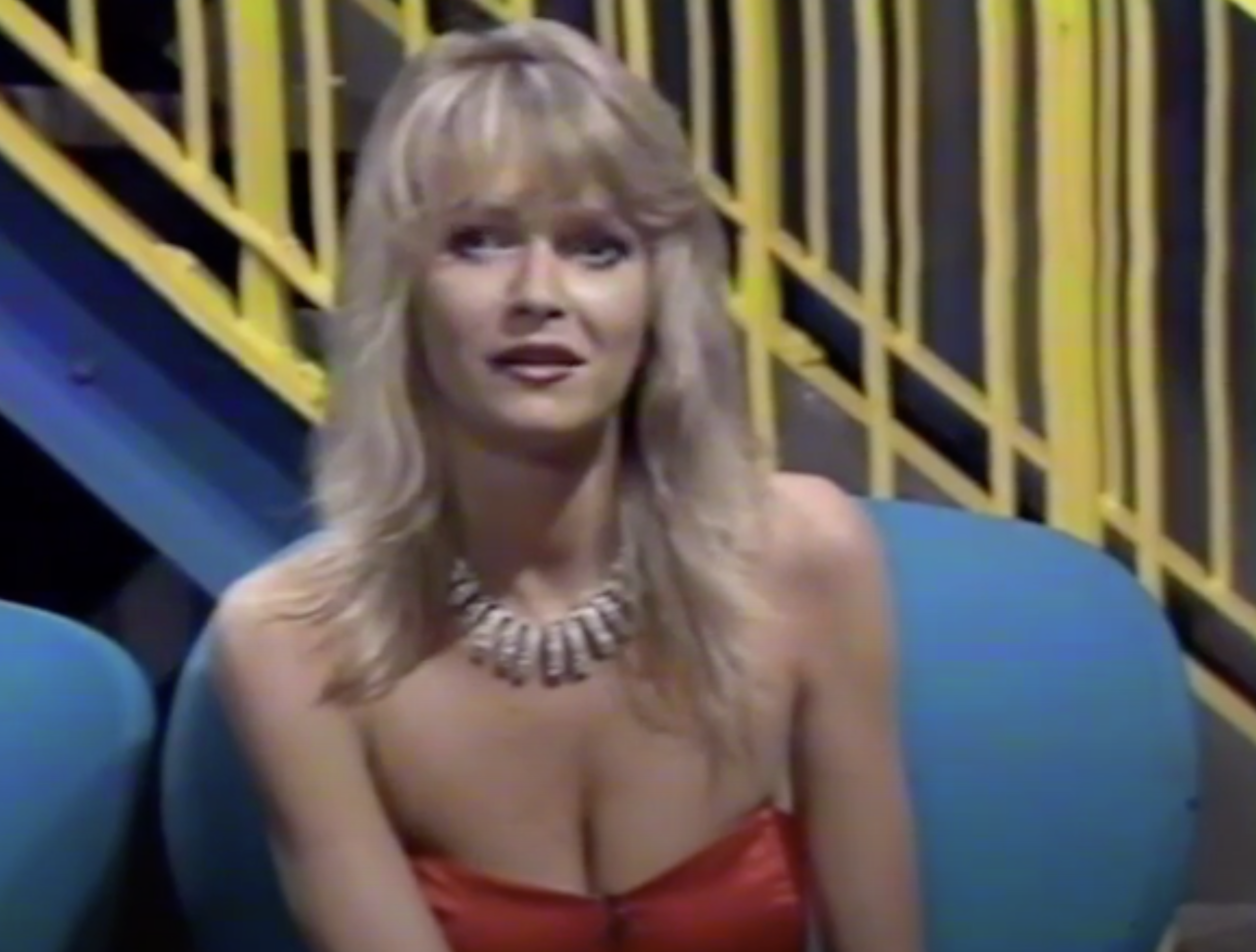
Tara Buckman’s career is one of those Hollywood stories that doesn’t begin with a spotlight so much as a hallway light in a cheap hotel, a coffee pot hissing in the background, and a teenager learning to keep her balance while the world keeps packing boxes. She was born October 2, 1956, on a Navy base in Pensacola, Florida, the kind of birthplace that already tells you the first act of her life would be about movement. An Army-brat childhood means you learn early that home is less a place and more a posture. You get good at reading rooms fast, good at making friends before you have to say goodbye, good at looking steady even while the ground rolls under you.
Her family didn’t stay still long enough for roots to get comfortable. Two years was the longest stretch in any one house. By the time they finally landed in Virginia Beach while she was a teenager, Buckman had already collected more zip codes than most people do in a lifetime. That can make you restless, sure, but it can also make you adaptable, which is basically the first and last job requirement in acting. She became a drum major—first one in her school’s history—at Princess Anne High School, graduating in 1974. That detail matters. Drum major isn’t just a sash and a baton; it’s being the one who steps out front when everyone else is still wondering if the parade is even going to start. It’s posture, timing, being seen without flinching.
After high school she worked as a waitress in a hotel dining room in Norfolk. That sounds like the kind of footnote nobody reads—until you realize that’s where her life pivots. Producer James Goldstone saw her there and later offered her a part in Rollercoaster (1977). The story has that old Hollywood whiff of fate and fluorescent lighting: a girl carrying plates becomes a girl carrying a screen credit. But what’s easy to miss is the courage between the lines. Three months after the offer, she moved to Los Angeles. Not next year. Not “someday.” Three months. That’s a suitcase decision. That’s a “you get one life, kid, go live it” decision. Goldstone helped her secure a contract with Universal Studios, and suddenly she was in the city where the freeways look like veins and everyone’s trying to become somebody else.
Buckman didn’t land in L.A. as a headliner; she landed as a working actor. There’s a difference. Headliners are meteor myths. Working actors are the engines that keep television running while the stars go to press junkets. She found her lane early on TV, and she stayed there like someone who understood that a career doesn’t have to be loud to be real.
Her most recognizable television work came in the late ’70s and early ’80s, when network schedules were fat with cop shows, detective shows, sci-fi, and the kind of weekly dramas where guest stars were the fuel. Buckman portrayed Officer Brandy Ames on The Misadventures of Sheriff Lobo, a role that put her in uniform and into America’s living rooms with regularity. It was the sort of part that could’ve been thrown away as decorative, but a recurring TV role in that era meant stability—paychecks, visibility, and a chance to sharpen your craft under pressure. She also played Cat Hellman in The Master, another series in that stretch when action TV was king and viewers wanted their heroes and villains simple enough to understand before the next commercial break.
Then came the guest-star circuit, where Buckman’s face became familiar to anyone who watched TV the way people watch weather: constantly, habitually, grateful for something to carry them through the night. She popped up on The Rockford Files, Kojak, CHiPs, Quincy, M.E., Buck Rogers in the 25th Century, The Hardy Boys Mysteries, and more. Each appearance was its own little sprint—show up, build a character in a breath or two, leave an impression, disappear before the next episode resets the board. It’s tricky work, the kind that asks you to be memorable without hogging the frame, to make a viewer feel like they know you even if you’re only there for twelve minutes and a gunshot.
She also did TV movies, a format built for the era’s appetite for contained melodrama and quick thrills. Death Car on the Freeway (1979) and The Man in the Santa Claus Suit (also 1979) fit that mold, and fit her skill set: she could be credible, quick, and present without needing the story to revolve around her. Later, she took a daytime turn as Norma Kirkland on Days of Our Lives in 1984–85. Soap work is its own animal—long hours, relentless pace, emotions dialed up because the camera lives inches from your face—and a stint like that isn’t something you sleepwalk through. You either adapt or you wash out.
Her film career runs parallel, smaller in size but not in significance. Buckman often played minor roles in bigger pictures. She was in Burt Reynolds’ Hooper (1978), a film drenched in stunt-world swagger, and in The Cannonball Run (1981), where she was billed in a way that basically admits the game: “Lamborghini Girl #2.” That’s the Hollywood machine at its most honest and most insulting. It tells you exactly what they wanted: a beautiful prop in a scene about horsepower and punchlines. But there she was anyway, doing the job, taking the paycheck, and probably filing the whole thing away as another mile marker on the road. Because not every actor gets to be the driver. Some of us learn to survive in the passenger seat until we find a chance to grab the wheel.
She also worked steadily in B-movies and genre fare through the late ’70s into the early ’90s. That’s where the craft can either rot or toughen, and in Buckman’s case it toughened. She appeared in Silent Night, Deadly Night (1984), a controversial horror picture that asked her to play a brutal victim in a slasher scene that’s still remembered because it was nasty, jolting, and uncomfortably direct. Roles like that are the dark end of the industry: high-risk, low-glamour, and the kind of work that tests whether you can make something feel real even when the scenario is pure nightmare pulp. She returned in later entries of that franchise too, which tells you she wasn’t just passing through; she was part of the movie’s DNA.
Her genre résumé includes Snowballing (1984), Never Too Young to Die (1986), Terminal Exposure (1987), Blue Angel Cafe (1989), Night Killer (1990), High Finance Woman (1990), The Marilyn Diaries (1990), and Round Trip to Heaven(1992). These are titles from the trenches—low budget, high churn, sometimes rough around the edges—but for actors they’re also opportunities. The bills don’t pay themselves, and the camera doesn’t care whether the movie cost two million or two hundred. It only cares whether you show up alive in your eyes.
Her most substantial late-career film role was as Dr. Julie Casserly in Xtro II: The Second Encounter (1991). Sci-fi horror sequels aren’t prestige work, but they do ask for a certain credibility—someone has to sell the madness with a straight face so the audience can follow the ride. Buckman had that ability. She could ground a scene without smothering it, could play competence in a world that’s going off the rails.
By the mid-1990s, her on-screen presence slowed, and she eventually stepped away. That’s a familiar arc for performers whose careers are built on steady work rather than marquee heat: you ride the wave while it exists, you take the roles offered, you live a life, and when the industry drifts to a new obsession you decide whether to keep chasing or to walk off with your dignity intact. Buckman chose retirement, and there’s no shame in that. There’s a quiet kind of victory in leaving on your own terms.
What makes Tara Buckman interesting isn’t a list of credits—that list is long enough. It’s the shape of the list. She was a working actress in an era when television still ran on the rhythm of weekly appointments and guest stars mattered. She made a career out of showing up, doing the job, and making herself useful to the story. That’s not celebrity. That’s craft. It’s survival. It’s a woman who started as a waitress in Virginia and found herself in Hollywood’s machine, not as a myth, but as a steady hand.
In a business that’s forever chasing “the next big thing,” Tara Buckman was the thing that kept the machine moving between the big things. If you watched TV from the late ’70s through the early ’90s, odds are you knew her face. And in Hollywood, where faces come and go like weather, being remembered at all is its own kind of win.