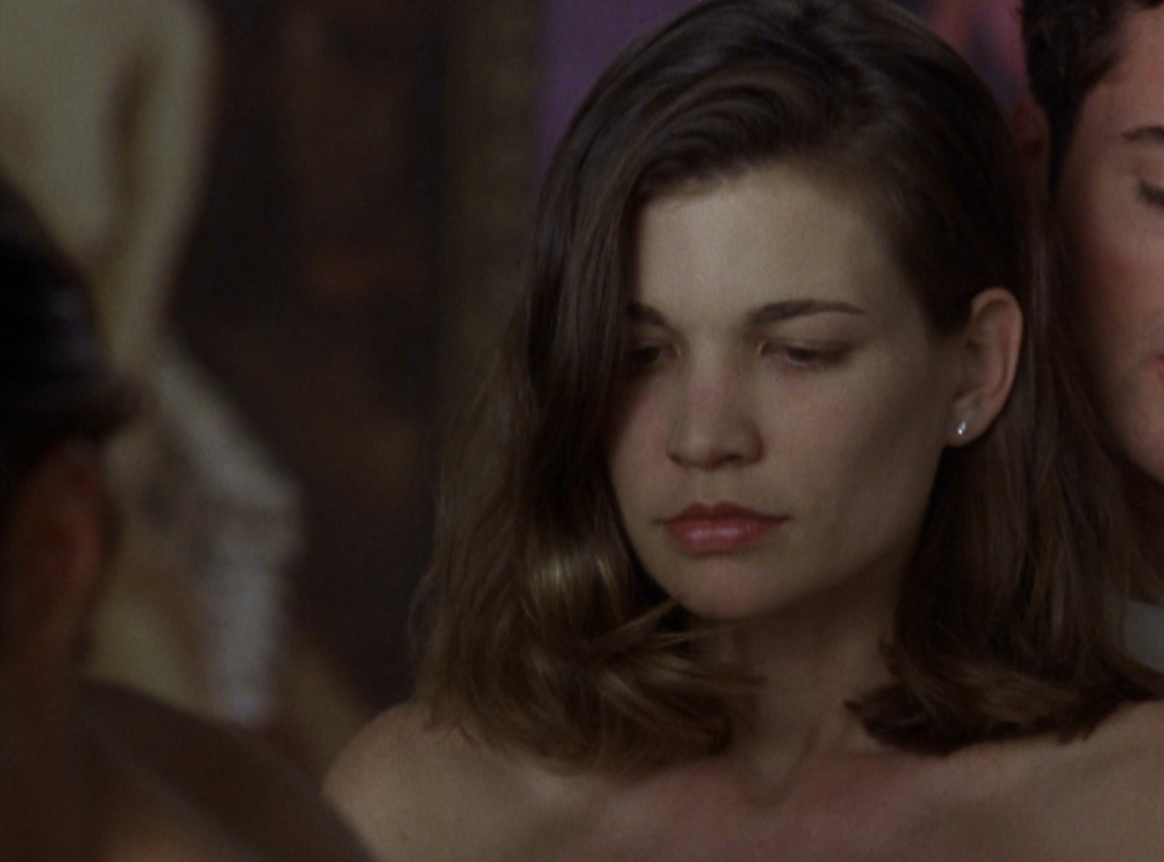
Susan Cabot came into the world as Harriet Pearl Shapiro in 1927, born to a Jewish family in Boston, and from the start life gave her more obstacles than comfort. Her father walked out, her mother—broken by the weight of the world—was institutionalized, and Susan was left ricocheting through eight foster homes like a loose marble, never landing anywhere soft. The Bronx became her default home, though “home” is a generous word when you’re surviving on scraps of belonging. What she endured there—emotional abuse, sexual abuse, the kind of trauma that digs into the wiring of a person—would haunt her for the rest of her life. Later, it would explain the shadows that followed her, the fears that shot up like electric fences around her mind. But back then, she was just a girl trying to get through each day without breaking.
She found work illustrating children’s books—funny how someone who never had a comforting childhood ended up drawing them. She worked nights singing at the Village Barn, using her voice to earn a living and maybe drown out the other noise. And she got married at sixteen to Martin Sacker, a childhood friend, because the law said marriage meant emancipation, and leaving foster care was the only way forward. It’s not romance when a wedding ring is your only exit. But for Susan, escape was escape.
Her break into film came in 1947, a blink-and-you’ll-miss-it role in Kiss of Death. It didn’t make her a star, but it put her on the radar. A talent scout saw her singing at the Village Barn and sent her toward Hollywood. She landed On the Isle of Samoa in 1950, and soon Universal Pictures signed her. Here was the real beginning: Tomahawk in 1951, then Western after Western, her face on every poster where the desert looked dangerous and justice rode in on horseback. She played women who survived, women who stared down the world with a backbone stiff enough to snap if you weren’t careful. Funny how art imitates the people inside it.
By 1954, she’d had enough. Universal kept offering her roles that felt like rinse and repeat. She didn’t want to be a studio ornament. She wanted to be an actress. So she broke her contract and went back to New York—theater, Meisner training, the real stuff that hurts your pride and sharpens your instincts. She performed in A Stone for Danny Fisher, worked the stage, studied, struggled. For a while, she was free.
She was also involved—deeply and secretly—with King Hussein of Jordan. A CIA memo later revealed that the agency invited her to meet him, but they couldn’t script chemistry. It just happened. Their affair lasted seven years. Their son, Timothy Scott, was born in 1964, out of wedlock, a secret wrapped in diplomatic fog and Cold War absurdity. Her life was already complicated, but this stretched it into something stranger, more fragile. King Hussein provided financial support. She built a life, married again—to Michael Roman—raised her son, tried to settle into something resembling stability.
But Hollywood pulled her back in the late ’50s, this time through Roger Corman. His sets were chaotic, fast-moving, wonderfully cheap. She thrived there. Carnival Rock, Sorority Girl, The Viking Women and the Sea Serpent, Machine-Gun Kelly. She became one of Corman’s sharpest edges—quick, expressive, fearless. Her final role was the one that stuck in pop culture’s memory: The Wasp Woman (1959), where she played a cosmetics CEO so desperate for youth and beauty she transformed into a monster. A metaphor too on-the-nose for comfort.
And then she vanished.
Not literally, but spiritually. The ’60s came and she retreated. A little theater in New York. A single TV episode on Bracken’s World in 1970. After that: silence. She lived like a ghost in a house full of vintage cars and the rustling sound of her own fears.
By the 1980s, her mind was fraying. Depression ate away at her. Nightmares followed her into daylight. She developed phobias that lived under her skin. She was under psychiatric care, but even the professionals said her pain was overwhelming. Her home grew cluttered, chaotic. But financially, she was holding on—real estate and restored cars paying the bills. The outside world saw mystery. The inside world saw a woman slipping further from herself.
And then came December 10, 1986.
Her son, Timothy—born with dwarfism and severe pituitary issues—was sleeping when she woke in a panic, screaming, calling for her mother who had abandoned her decades earlier. Trauma doesn’t care about time. It loops, repeats, claws back through the years. Timothy tried to help. She attacked him with a barbell bar and a scalpel. In terror, confusion, reflex—who knows in moments like that—he struck back. He killed her.
He hid the weapons, invented a masked intruder because even he didn’t believe the truth sounded real. His defense argued that his medication—tainted with prions, linked to CJD—altered his brain. Maybe it did. Or maybe the horror of that night was enough explanation. The court reduced the charge to involuntary manslaughter. He got probation. He’d already spent years behind bars waiting for the verdict.
And Susan Cabot—this battered, talented, complicated woman—was gone at fifty-nine.
Her obituary reads like a crime story. Her filmography reads like a cult retrospective. Her life reads like a struggle against forces she never asked for: abandonment, exploitation, typecasting, secrecy, mental illness.
But in between those shadows, she was brilliant.
She stood in deserts on soundstages and made Westerns believable. She fought for better roles and walked away when they didn’t come. She loved her son fiercely, even when her own mind betrayed her. She carved out a legacy in B-movies that still flicker on late-night screens, watched by insomniacs and cinephiles who know the beauty of the overlooked.
Susan Cabot burned bright. She burned unevenly. She burned until the world finally burned back.
Some lives are neat arcs. Hers was a wildfire.