Every now and then, a movie comes along that promises environmental horror, government conspiracies, and grotesque body horror—but instead serves up 90 minutes of a man in a beige suit walking around an island asking people questions. That’s Doomwatch (1972), directed by Peter Sasdy, the cinematic equivalent of a wet sponge: vaguely unpleasant, slowly disintegrating, and probably harboring a few mutated life forms you’d rather not examine too closely.

Based on the British sci-fi TV series of the same name, Doomwatch tries to warn us of the terrifying consequences of unchecked pollution and scientific arrogance. That sounds noble. What we get instead is a slow-motion procedural starring a man whose main weapon is polite inquiry, facing off against villagers who all seem like they’ve just woken up from dental surgery.
Let’s get to the “plot”—or what passes for one. Dr. Del Shaw (Ian Bannen), a member of the government’s environmental watchdog group “Doomwatch” (which sounds like a lame metal band), travels to the fictional island of Balfe to investigate an oil spill. But lo and behold, something fishy is going on. And not in a good, fried-with-chips sort of way. The locals are acting strange. Some have grotesque facial growths. Others just stare like they’re auditioning for the world’s slowest zombie film. And there’s one thing they all agree on: shut up and go home, mainlander.
The film wants to suggest suspense, but Peter Sasdy directs every scene like he’s trying not to wake the baby in the next room. Instead of tension, we get long walks, longer silences, and scenes where Dr. Shaw is either reading files or being awkwardly stonewalled by islanders who look like they’re suffering from a shared hangover. You keep waiting for the horror to kick in, but all you get is mild irritation and a desire to check your watch for the 17th time.
And here’s the kicker: the supposed “horror” of Doomwatch is a combination of facial disfigurements and… aggressive behavior caused by contaminated fish. That’s right. The islanders have been eating fish laced with synthetic growth hormones dumped into the water by the military. The result? Testosterone overload. Angry villagers. Bulging foreheads. Caveman cosplay. I’ve seen more terrifying side effects on shampoo bottles.
Peter Sasdy, no stranger to horror (he directed Countess Dracula, another cinematic NyQuil tablet), manages to take a halfway interesting concept and suck every ounce of thrill from it. The cinematography is flat. The pacing is glacial. And any moment that might offer visual impact—a disfigured face, a flash of violence, a moment of scientific revelation—is either cut short or shot like it’s ashamed to be seen.
The one genuinely unsettling element is the makeup on the mutated villagers. These poor souls look like they lost a bar fight with a radioactive ham. Their faces are distorted, brows are swollen, and in one particularly tragic case, a man appears to have grown a third chin entirely composed of regret. But these visuals are so underused, it’s like the filmmakers got a discount on latex and decided to ration it.
The villagers themselves are a mix of hostile yokels and mumbly weirdos. Every conversation is punctuated by dramatic pauses, furtive glances, and the kind of “get off my lawn” energy you’d expect from a town where the median age is cranky. And yet somehow, Dr. Shaw keeps coming back, determined to expose the truth, even though everyone—literally everyone—tells him to get lost. He’s like the worst party guest: clueless, overdressed, and weirdly obsessed with the local fish.
Ian Bannen, bless his heart, tries to lend some gravitas to the film, but he’s clearly struggling to keep his eyes open between takes. His performance is earnest, in the same way that reading an instruction manual out loud is earnest. He emotes like a man who just found out his favorite pub is closing—not devastated, just mildly inconvenienced.
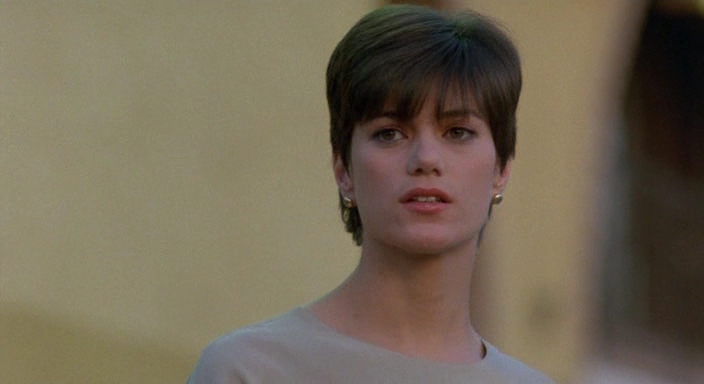
And let’s talk about the romance subplot. Yes, some genius decided this environmental horror snoozefest needed a love interest. Enter Judy Geeson as Victoria Brown, the one islander with a functioning conscience and the approximate personality of a damp washcloth. Her chemistry with Dr. Shaw is so tepid it could be used to put colicky babies to sleep. Their budding relationship feels like it was tacked on in post with glue sticks and apathy.
By the time the film reaches its “climax,” where Shaw confronts the villagers in a dramatic town hall showdown (a.k.a. a bunch of people standing around frowning), the viewer has already emotionally checked out. He reveals the cause of their affliction, and instead of gasps or pitchforks, everyone just kind of… accepts it. “Oh, it’s the fish? Well, that explains the aggression and the tumors. Tea, anyone?”
The film ends not with a bang, but a whimper. Shaw returns to the mainland, satisfied that he’s made the world a marginally better place, and the audience is left staring at the credits, wondering how a movie about hormonal fish monsters turned into a turgid PSA about government waste.
To sum up: Doomwatch is a horror movie afraid of being a horror movie. It tiptoes around its themes, mutes its scares, and leans heavily on the kind of plodding exposition that kills any chance of momentum. It’s the cinematic equivalent of a soggy environmental pamphlet—well-meaning, poorly written, and immediately destined for the recycling bin.
Final Verdict: 1.5 out of 5 radioactive sea bass.
One point for makeup, half a point for effort, and a deduction of all suspense. You’d be better off watching a dead jellyfish float in a tide pool—it has more drama, better pacing, and probably fewer unconvincing romance subplots.
In short, Doomwatch proves that sometimes the scariest thing about environmental horror… is how boring it can be.