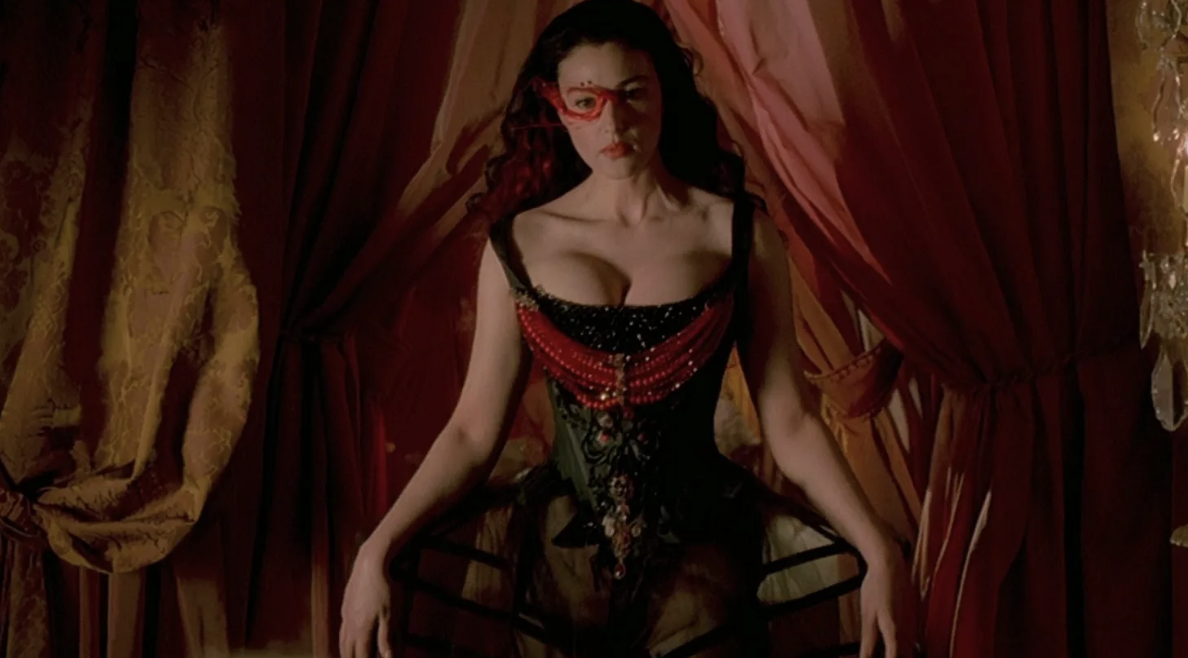
Christophe Gans’ Brotherhood of the Wolf is a psychotic matinee stitched together with velvet gloves and muddy boots. It’s 18th-century France, but only if you imagine France through the cracked lens of a deranged comic book artist. There’s powdered wigs, there’s secret societies, there’s martial arts in the rain, and yes, a beast in the shadows. It shouldn’t work. It should collapse under the weight of its gaudy excess and its swashbuckling kung fu. But it works in the same way that a drunk magician works: you can see the seams, the tricks, the sleight of hand, and still, you clap like hell.

The Monster Is Just the Invitation
Brotherhood of the Wolf is history drunk on absinthe, stumbling into the forest with a knife in one hand and a Bible in the other. Christophe Gans doesn’t so much tell the legend of the Beast of Gévaudan as he undresses it, tosses it on the floor, and lets it roll in a mixture of French gothic melodrama and kung-fu pulp. We’ve got Fronsac, a naturalist who’s supposed to represent science but spends half his time swooning over Marianne (Emilie Dequenne) and half of it sneaking around Monica Bellucci’s courtesan-spy (and honestly, who wouldn’t?). His companion Mani, played by Mark Dacascos, is the film’s heartbeat, doing martial arts in powdered wigs while everyone else broods. And then there’s Jean-François, a one-armed dandy with too many secrets and a closet full of perversions, stroking his pet monster like it’s the family heirloom.
The beast itself? A lion stuffed into medieval S&M gear, armor spikes and all. It’s ridiculous and terrifying at the same time—like something out of a child’s nightmare, except the child had been mainlining cheap wine and opium before bed.
The Brotherhood that controls the beast is half religious cult, half political conspiracy, and all melodrama. Priests plotting God’s return, noblemen whispering about revolution, Monica Bellucci poisoning men with the elegance of someone reapplying lipstick. It’s gothic theater with blood in its teeth.
And it all ends the way legends always do: too much blood, too much betrayal, and a wistful hope that somewhere, maybe on a ship sailing out of the carnage, two lovers got away.
The Cast of Fevered Archetypes
Samuel Le Bihan does well as Fronsac, the naturalist who can dissect a beast in the morning and charm a countess by dusk. But it’s Mark Dacascos, silent and brutal as Mani, who steals the heart of the film — a man of grace dropped into a swamp of European politics. And then there’s Monica Bellucci, who arrives like a vision you’d invent if you’d been in the trenches too long. She doesn’t so much act as she hovers — decadent, impossible, more myth than woman.
Where Poetry Meets Pulp
The fights are staged with a delirious precision, samurai flicks and Hong Kong wire-work dressed up in musketeer sleeves. It’s absurd and over the top in a good way — a kung fu film in the body of a period drama, which makes you realize that the corset and the roundhouse kick aren’t as incompatible as they look on paper. Every frame is painted, sometimes too much — you can almost feel the director stroking the set pieces like a man in love with his own reflection. But the indulgence is part of the spell.
The Beast in the Hall of Mirrors
By the time the curtain falls, you realize Brotherhood of the Wolf is less about a creature and more about masks. The aristocrats masking their corruption, the Brotherhood masking their zealotry, Fronsac masking his grief. The beast is just the blunt instrument, the middle finger raised at the idea that horror should stay in its lane. It’s history rewritten with the patience of a drunk and the elegance of a poet who’s willing to bleed on the page.
Verdict
It’s messy, overripe, and runs twenty minutes too long. But Brotherhood of the Wolf is a rare thing: a monster movie that’s also a costume drama, a kung fu flick that flirts with high art, and a political allegory that wears eyeliner. If cinema is supposed to rattle you awake while seducing you into staying in your seat, this one does both. It’s beauty and carnage, silk and blood. And Monica Bellucci — well, she’s the kind of apparition that makes you forgive excess.
