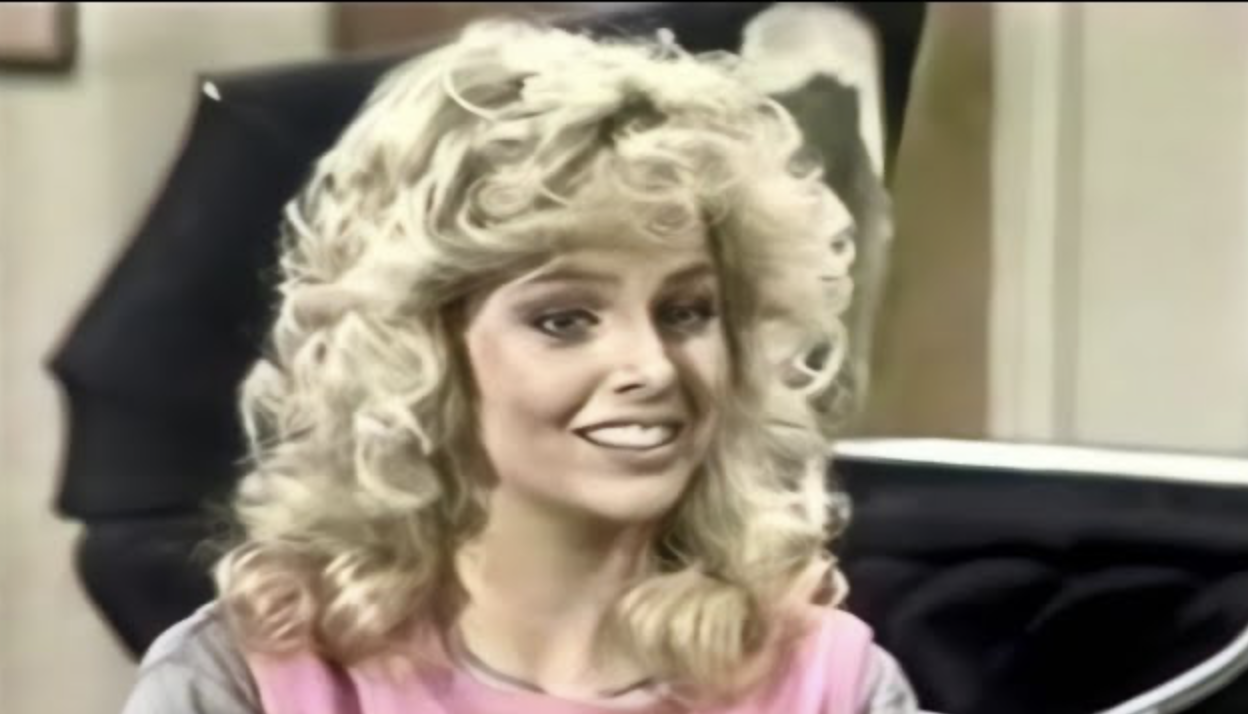
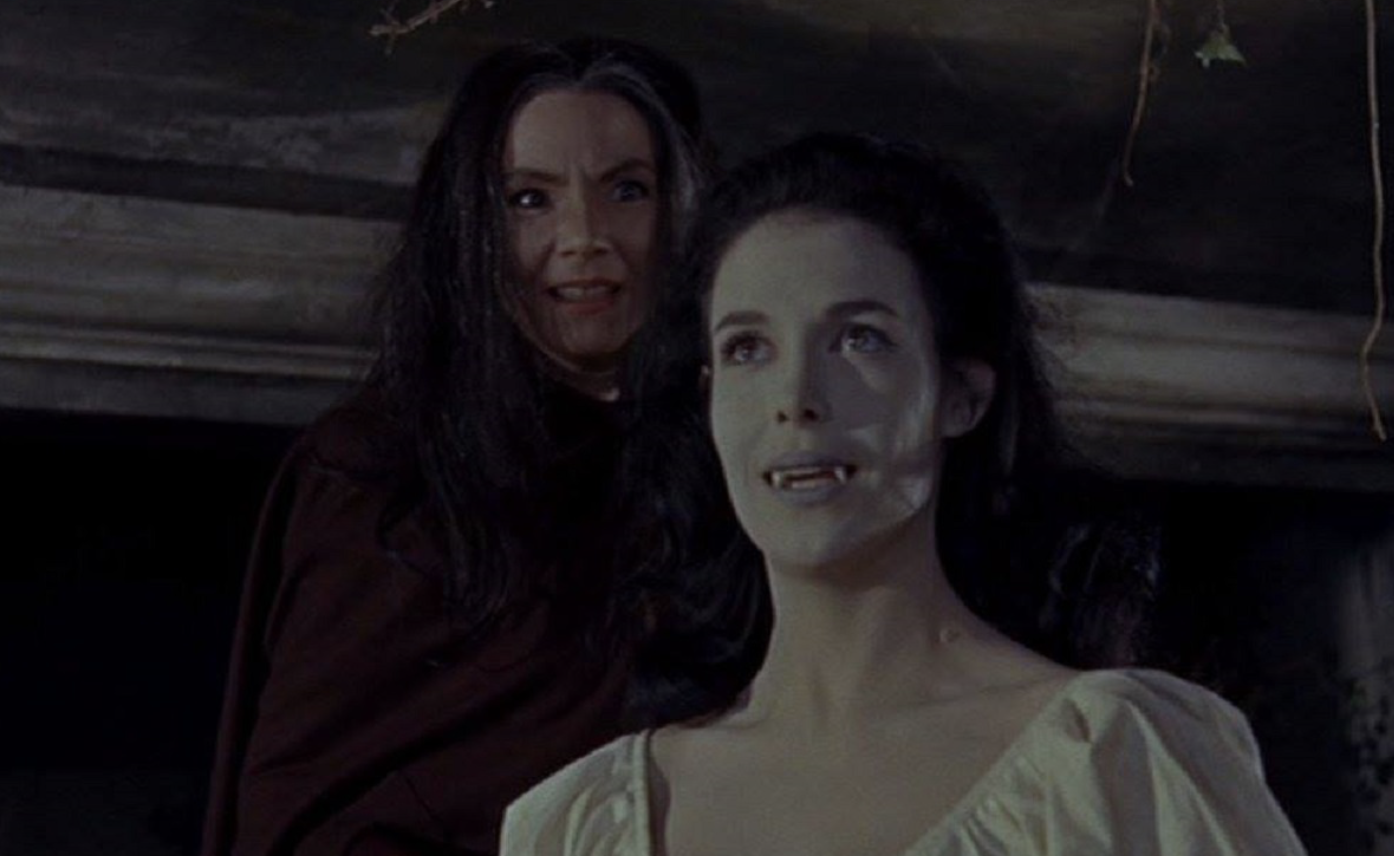
Claudia Cardinale wasn’t just another pretty face flickering on the screen—she was the kind of woman who made the film stock sweat. In the 1960s, when the world was drunk on Fellini and dust and cigarette smoke, she walked into the frame with that impossible mix of beauty and guts, and everyone else had to move aside. Directors with egos bigger than cathedrals bent toward her light, and co-stars with names carved into marble looked almost human standing next to her. She stuck it out for damn near seventy years, through the glamour and the grind, and became the emblem of an age when cinema still had blood in its veins. Now she’s gone, eighty-seven years old,and the tributes pour in like cheap wine at a wake. They talk about “legacy” and “luminary,” but really, she was the kind of flame that makes the night look darker once it’s out.
Early Life and Discovery
Born Claude Joséphine Rose Cardinale on April 15, 1938, in La Goulette, Tunisia, Claudia Cardinale grew up in a multilingual household as the daughter of Sicilian immigrants. She spoke French and Arabic during her childhood in North Africa, while Italian (in a Sicilian dialect) was the language of her family – an upbringing that later gave her a truly international aura. Cardinale’s entry into the world of cinema came almost by chance. In 1957, at age 18, she won a local beauty contest in Tunis called “The Most Beautiful Italian Girl in Tunisia,” which awarded her a trip to the Venice Film Festival. At that glamorous gathering of film luminaries, the young Cardinale’s striking looks immediately caught the eye of producers. Before long, she was offered a contract with the film producer Franco Cristaldi, who became her mentor and guide in the Italian movie industry.
Cardinale made her screen debut with a minor role in the French-Tunisian drama Goha (1958), appearing briefly alongside a then up-and-coming Omar Sharif. Although the part was small, it marked the start of what would become an extraordinarily prolific career.
Transitioning into Italian cinema, however, presented some early challenges. Coming from a French-speaking background, Cardinale initially struggled with the Italian language on set, and her strong accent led directors to have her lines dubbed by others in her first few Italian films. Yet even without her own voice audible, her on-screen charisma was undeniable. Italian audiences and filmmakers were captivated by the dark-haired young actress who conveyed both innocence and latent passion through her expressive eyes. The late 1950s set the stage for Cardinale’s rapid ascent: she was clearly a natural in front of the camera, and it was only a matter of time before she would become one of Europe’s most celebrated leading ladies.
Rise to Stardom in European Cinema (1958–1963)
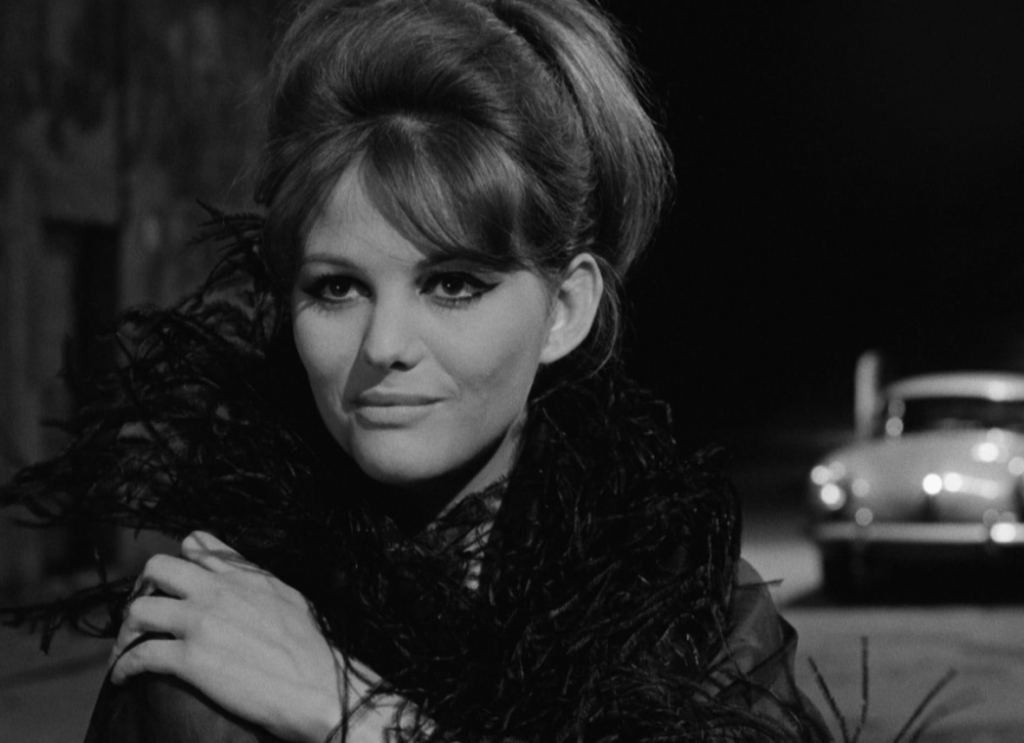
Claudia Cardinale’s rise to stardom was swift and firmly rooted in the golden era of postwar Italian cinema. By the early 1960s, she was landing substantive roles that showcased a remarkable range for a newcomer. In Luchino Visconti’s drama Rocco and His Brothers (1960), for example, Cardinale made a strong impression in a supporting role as a kind-hearted young fiancée, bringing warmth and authenticity to a gritty story. Around the same time, she took on leading parts that proved her ability to carry a film: in Mauro Bolognini’s adaptation Il bell’Antonio (1960) she played a young bride facing an unexpected marital crisis, and in Valerio Zurlini’s Girl with a Suitcase (1961) she portrayed Aida, an abandoned singer whose mix of resilience and vulnerability won audiences’ hearts. These performances, among others, quickly established Cardinale as one of Italy’s brightest young stars. Critics praised her sultry on-screen allure coupled with genuine acting depth. By 1962, she was being heralded not just as a beauty but as a talent, often noted for how she could command attention even alongside veteran co-stars.
The year 1963 marked Cardinale’s definitive breakthrough to international acclaim. She featured in two of the decade’s most celebrated films, working with Italy’s top directors back-to-back. First, in Federico Fellini’s surreal masterpiece 8½(1963), Cardinale appeared as a luminous muse in the imagination of a film director (played by Marcello Mastroianni). Though her role in 8½ is more emblematic than narrative, it was significant in that Fellini insisted on using Cardinale’s own voice on-screen – a deep, husky voice that added a new dimension to her allure and let audiences hear her true presence for the first time.
She then co-starred in Luchino Visconti’s epic The Leopard (1963), playing Angelica Sedara, the beautiful and ambitious daughter of a bourgeois mayor who catches the eye of an aristocratic prince’s nephew (Alain Delon) during the tumult of Italy’s unification. In the film’s grand ballroom scenes, Cardinale’s radiant performance opposite screen giants like Delon and Burt Lancaster demonstrated that she could hold her own and captivate the audience in a lavish historical production. With the critical and commercial success of 8½ and The Leopard, Cardinale became an international name. She was often mentioned alongside established Italian actresses like Sophia Loren and Gina Lollobrigida, yet Cardinale’s persona was distinct. Younger and emerging just as Italian cinema was attaining global prestige, she combined youthful innocence, smoldering sensuality, and a confident acting prowess that made her stand out in the crowded field of 1960s film stars.

International Breakthrough and Hollywood Films (1963–1968)
With her reputation cemented at home, Cardinale soon attracted the attention of international filmmakers. The mid-1960s saw her deftly balancing European art cinema with big-budget Hollywood projects. Unlike some peers who relocated to Hollywood entirely, Cardinale approached the international scene on her own terms. In 1963, immediately after her Italian triumphs, she appeared in the Hollywood comedy The Pink Panther, directed by Blake Edwards. Playing a glamorous princess caught up in a jewel heist caper, Cardinale revealed a talent for light comedy and cosmopolitan charm. Audiences around the world were introduced to her elegance and playful screen persona as she sparred subtly with the likes of David Niven and Peter Sellers. This film’s success helped launch Cardinale as a recognizably international star.
Over the next few years, Cardinale took on a variety of English-language roles, demonstrating her versatility across genres. She ventured into big-budget adventures like Circus World (1964) opposite John Wayne, and took on other Hollywood genre films that tested her range in thrillers and war dramas. Not every one of these films was memorable, but Cardinale consistently stood out with her exotic appeal and commitment to character. One highlight was the Western action film The Professionals (1966), in which she portrayed a kidnapped bride who is far more self-reliant and clever than the men expect. Sharing the screen with Hollywood heavyweights like Burt Lancaster and Lee Marvin, she brought a fiery spirit to her role and later cited this film as a favorite among her American ventures.
Throughout this period, Cardinale was careful not to become confined by Hollywood’s studio system. She declined long-term studio contracts that would tie her exclusively to American films, preferring to remain a free agent. “I like to live in Europe,” she often said, indicating her allegiance to the creative freedom of European cinema.
This independence allowed her to accept one of her most iconic roles: Jill McBain in Sergio Leone’s Once Upon a Time in the West (1968). This epic Spaghetti Western — a co-production bridging Hollywood and Cinecittà — cast Cardinale as a widowed former prostitute who becomes the unexpected heroine amid a brutal conflict over land and power. Her performance as Jill was groundbreaking; she imbued the character with strength, resolve, and a quiet sorrow, elevating what could have been a stock femme fatale into the emotional core of the film. In a genre traditionally dominated by men, Cardinale’s commanding presence opposite Charles Bronson and Henry Fonda proved that a female lead could carry as much narrative weight and moral complexity as her male counterparts. The film’s enduring popularity owes much to her portrayal, and it solidified Cardinale’s status as a cinematic force across continents.
By the close of the 1960s, Claudia Cardinale had become a true international icon. She had seamlessly navigated between languages and film industries, all while maintaining the essence of what made her unique. Whether in a sophisticated European art film or a Hollywood adventure, she brought authenticity and star quality.

Return to Europe and Diverse Roles (1970s–1980s)
As the 1970s began, Cardinale refocused her career on European projects, reasserting her commitment to the Italian and French cinema she loved. After tasting Hollywood’s glamour, she was drawn back by roles that offered greater depth. One of her first major post-Hollywood successes was Il giorno della civetta (The Day of the Owl, 1968), a gritty Sicilian crime drama about the Mafia’s grip on a village. Cardinale’s portrayal of a widow entangled in the search for her husband’s murderer earned her a David di Donatello Award (Italy’s top film acting honor). It was a powerful reminder that on her home turf, speaking her native languages, Cardinale could deliver performances of intense authenticity. Around the same time, she showed her versatility by winning another Best Actress award for a completely different turn in A Girl in Australia (1971), a bittersweet comedy in which she played a mail-order bride navigating culture shock Down Under. Whether in serious social commentary or lighthearted romance, Cardinale proved her staying power as a leading lady into the 1970s.
During this decade and the next, she embraced a variety of challenging roles across Europe. She formed an important collaboration with director Pasquale Squitieri, who became her partner in life as well. Under his direction, Cardinale took on gritty, politically charged characters. In I guappi (1974), set in the 19th-century Naples underworld, and Corleone(1978), a Mafia saga, she portrayed women caught in violence and upheaval, bringing gravitas and emotional truth to these stories.
Perhaps the most acclaimed of their collaborations was Claretta (1984), in which Cardinale inhabited the role of Claretta Petacci, the devoted mistress of fascist dictator Benito Mussolini. Playing a real historical figure marked a new level of dramatic challenge, and Cardinale’s nuanced performance—conveying naiveté, passion, and ultimate tragedy—won her the Nastro d’Argento (Silver Ribbon) award as Best Actress. By the 1980s, Cardinale had gracefully transitioned into more mature parts, often portraying resilient mothers, dignified matriarchs, or complex historical women rather than the ingénues of her youth.
Even as she primarily worked in Italy and France, Cardinale occasionally joined exceptional international projects. Notably, she was cast by German director Werner Herzog in Fitzcarraldo (1982) as the love interest of a man obsessively hauling a steamship over a mountain in the Amazon jungle. Though her screen time in that now-legendary film was limited, she lent a humane counterpoint to Klaus Kinski’s frenetic lead, and her involvement itself signaled her enduring global appeal. By the late 1980s, Claudia Cardinale had compiled a filmography that spanned over 30 years and dozens of films. She remained a steadfast presence in European cinema, a bridge between the classic studio era and more modern narratives. The industry recognized this longevity and excellence: film festivals honored her with career awards (including a Lifetime Achievement Golden Lion in Venice and an honorary Golden Bear in Berlin), celebrating her as a living legend of the silver screen.
Unique Screen Presence and Acting Style
Much of Claudia Cardinale’s enduring impact can be attributed to her distinctive screen presence and the thoughtful way she approached her roles. On the surface, she was often celebrated as a classic cinematic beauty: the camera loved her luminous eyes and warm smile, and she naturally drew comparisons to other glamorous stars of the 1960s. But Cardinale was never content to be just an ornament on film. From early on, she gravitated toward characters with inner strength, wit, and complexity, ensuring that audiences saw more than a pretty face. She projected a blend of sensuality and dignity that made her stand out. Whether she was playing a vulnerable young woman struggling against societal constraints or a bold heroine in a Western, Cardinale gave her characters a palpable sense of reality and self-possession.
One hallmark of her acting style was its understated authenticity. Cardinale could express a great deal of emotion with subtle shifts in expression or tone, avoiding the exaggerated melodrama that was common in mid-century cinema. This restraint made moments when her characters did erupt in passion or sorrow all the more powerful. It also enabled her to cross cultural and language barriers in her work. Her deep, slightly husky voice – initially masked by dubbing in her early movies – eventually became one of her trademarks, reinforcing the impression of a strong, grounded woman on screen.
Cardinale’s unique presence also helped expand the scope of female roles in her era. She brought a modern sensibility to the traditional archetypes of Italian and Hollywood films. In her hands, the ingénue might turn out to have unyielding resolve, or the love interest might display equal moral agency as the male protagonist. This was quietly trailblazing. For instance, her portrayal of Jill McBain in Once Upon a Time in the West offered a new template for women in Westerns — not just as romantic fodder or victims, but as multifaceted protagonists with their own arcs.
Over time, many actresses and filmmakers have cited Cardinale as an influence for precisely this reason: she embodied how one could be both a movie star and a true actress. She carried her fame gracefully, yet remained focused on the craft of performance rather than the trappings of celebrity. In doing so, Claudia Cardinale set a standard for screen acting that continues to inspire, proving that strength and softness, glamour and authenticity, can all co-exist in one performance.
Later Career and Legacy
By the 1990s and into the 21st century, Claudia Cardinale had gracefully assumed the status of a revered elder stateswoman of cinema. She continued to act into her sixties and seventies, albeit in fewer projects and often in character roles that capitalized on her legendary screen presence. Rather than headlining big commercial films, she gravitated towards art-house projects and meaningful cameos. For instance, she returned to the theater stage for the first time in 2000, proving that even after decades in film, she was unafraid to challenge herself anew. Largely, however, this period of her life was marked by celebration of her past achievements. Major film festivals around the world honored Cardinale with lifetime achievement awards. The Venice Film Festival presented her a Golden Lion for career achievement, and the Berlin International Film Festival gave her an Honorary Golden Bear in 2002 – each a testament to her impact on international cinema. Institutions like New York’s Museum of Modern Art organized retrospectives of her films, drawing old and new audiences to appreciate her work afresh. Fittingly, one of her final on-screen roles was in The Island of Forgiveness (2022), a drama filmed in Tunisia – bringing her career full circle to the land of her birth.
Passing and Tributes (September 2025)
Claudia Cardinale checked out on September 23, 2025, in France, eighty-seven years old. The world reacted the way it always does when a star burns out—like they’d just remembered she existed, scrambling to put flowers on her grave before the dirt even settled. Italy, that old stage where she first lit the screen on fire, called her a national treasure. Presidents, men who usually can’t string together two words without choking on them, suddenly found poetry in their throats. Mattarella called her extraordinary, unforgettable, the whole circus of adjectives. Macron, across the border, said she was freedom and talent wrapped up in a body, her name destined to rattle around forever in the “eternity of cinema.” Funny how death makes politicians sound human for a few seconds.
The rest of them joined in—directors, critics, washed-up co-stars—they dusted off their memories and posted their little elegies. They said she was the kind of actress who ripped a hole in the screen, who made it clear that women in film weren’t just ornaments—they could drive the damn story, carry the weight, outshine the men. And then the montages started rolling out, clips of her waltzing like a ghost in The Leopard, staring down the barrel of myth in Once Upon a Time in the West, floating through Fellini’s dream in 8½. Those reels spun again, making everyone ache for a time when movies had real marrow in their bones.
She’s gone, sure. But in some filthy theater, or on some glowing little screen, Claudia’s still there—eyes cutting through the dark, making you forget the beer in your hand, making you feel something like life. That’s the trick. The body dies, the reels don’t. And for the poor bastards who still love the movies, that’s as close to immortality as anyone gets.