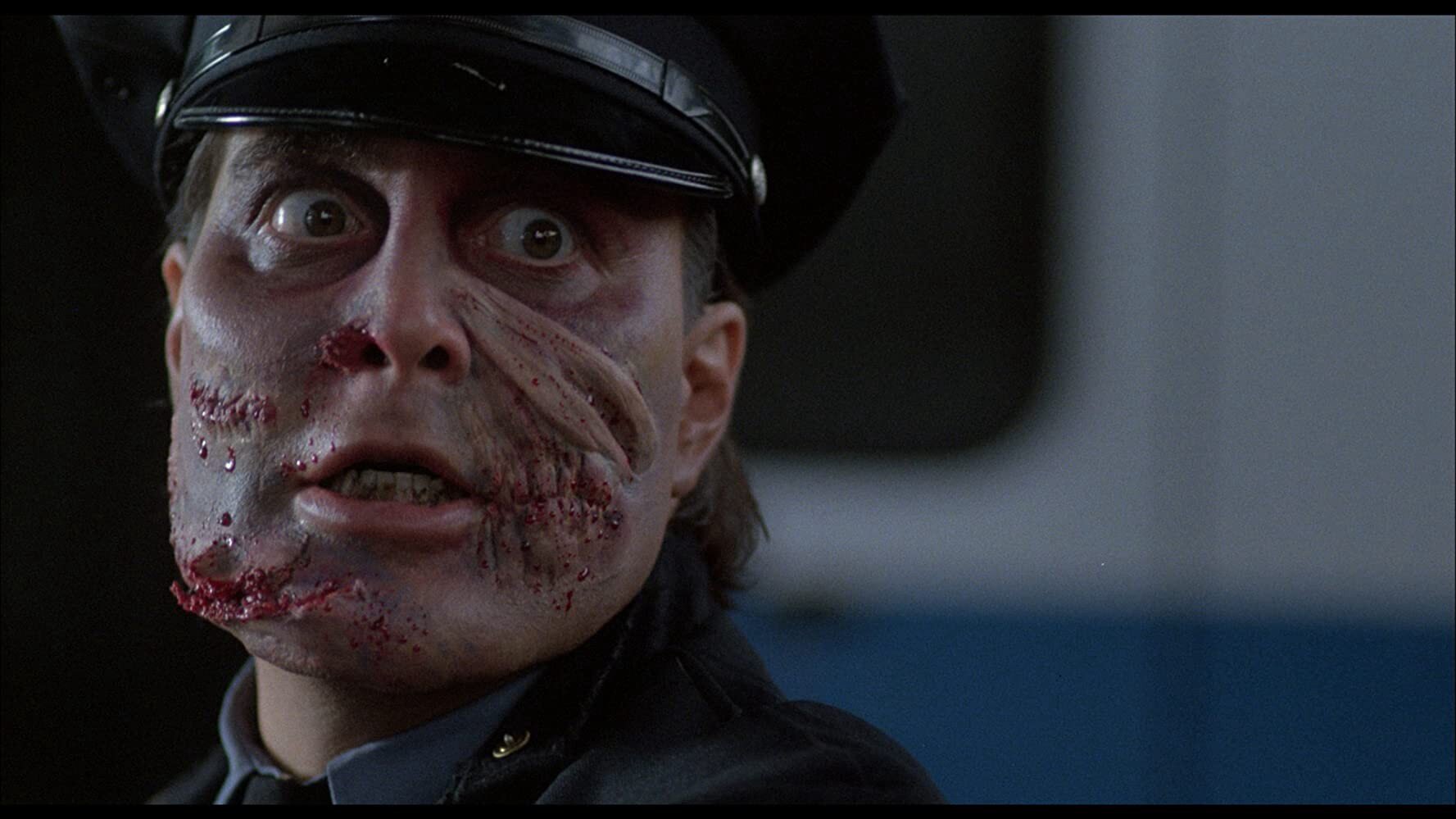
There are bad sequels, and then there are sequels in name only, where the studio just slaps a recognizable title onto something completely unrelated in a desperate attempt to trick video store renters in 1991. Curse III: Blood Sacrifice—originally titled Panga, which sounds more like a yoga studio than a horror film—lands squarely in the latter category. This is not a sequel. This is not even a movie in the conventional sense. This is 90 minutes of watching Jenilee Harrison wander through sugarcane fields while Christopher Lee stares into the distance, visibly contemplating whether it’s too late to call his agent.

The Setting: Colonial Horror, But Not the Good Kind
The film takes place in 1950s East Africa, though it looks more like a discount safari ride at a bankrupt theme park. Geoff Armstrong (Andre Jacobs) and his wife Elizabeth (Jenilee Harrison) run a sugar plantation, which is about as sympathetic a backdrop as a Bond villain’s lair. Early on, Elizabeth and her sister interrupt a goat sacrifice, because nothing screams “white lady entitlement” like barging into a sacred ritual and announcing, “Excuse me, what’s going on here?” Naturally, this offends the local witch doctor, who retaliates not with a sternly worded letter, but with an ancient sea demon. As you do.
So begins the “horror,” although to call it horror is like calling a stubbed toe “trauma.” People vanish, blood splatters, and somewhere in the sugarcane fields, a monster lurks—though we only catch glimpses of it because, surprise, the budget for the creature was apparently equivalent to a McDonald’s Happy Meal.
The Cast: Lee, Harrison, and the Ghost of Dignity
Christopher Lee, bless his gothic heart, shows up as Dr. Pearson, the only man in Africa apparently capable of explaining supernatural curses. His presence is like hiring Shakespeare to do punch-up on a Chuck Norris script. Lee delivers every line with the kind of gravitas usually reserved for Hamlet, even though he’s discussing a goat curse. You can practically see him thinking, If I just keep talking in this voice, maybe no one will notice I’m in a movie where the monster lives in a sugar field.
Jenilee Harrison, meanwhile, was clearly cast for her ability to look perpetually confused while running in slow motion. Best known from Three’s Company, she’s not exactly equipped to carry a horror movie. Watching her react to a demon curse is like watching someone try to find their car keys in a Walmart parking lot: lots of sighing, not much terror.
Andre Jacobs as Geoff is so bland you forget he’s in the movie until he gets cursed, at which point you wonder if maybe that’s a blessing.
The Plot: Goat Sacrifice Gone Wrong
Here’s the plot in a nutshell: Woman interrupts goat sacrifice. Witch doctor gets mad. Demon shows up. People die. Repeat. Eventually, Elizabeth has to lure the witch doctor into a fire to break the curse. Yes, the final showdown in this horror epic boils down to setting a guy on fire in a field. Take that, ancient evil.
The monster? Barely seen. When it does appear, it looks like a rejected Sesame Street character designed by H.R. Giger after a bad acid trip. Its big moment involves popping out of the cane fields, shaking its claws, and then disappearing again. Somewhere, the shark from Jaws is laughing.
By the end, the curse is lifted, the demon is gone, but Dr. Pearson finds a bloody machete on the beach, which is supposed to leave us unsettled. Instead, it leaves us wondering if the props department just forgot to clean up.
Production Values: Or Lack Thereof
The film was shot in South Africa, which means it at least had access to gorgeous landscapes. Too bad they’re wasted on endless shots of sugarcane fields, which, while agriculturally important, aren’t exactly cinematic. You’d think a movie about an ancient demon would use the exotic setting for atmosphere, but no: it looks like an infomercial for plantation tourism, if plantation tourism involved demonic goats.
The creature effects were done by Chris Walas, who gave us the brilliant transformations in The Fly. Here, though, it seems like he sent over some sketches and said, “Good luck.” The monster is so underwhelming it could double as a parade balloon if you tied it to a string.
Themes: White People Ruin Everything
If there’s an accidental message buried in this mess, it’s that colonial arrogance never ends well. Elizabeth interrupts a sacred ritual, dismisses the culture around her, and is shocked—shocked!—when it backfires. But instead of leaning into that as commentary, the film treats the locals as spooky caricatures, the witch doctor as a bargain-bin Bond villain, and the whole curse as a mere inconvenience for the white plantation owners. The Serpent and the Rainbow this ain’t.
Christopher Lee’s Thousand-Yard Stare
Let’s take a moment to appreciate Christopher Lee. The man fought in WWII, played Dracula, worked with Tim Burton, and even released heavy metal albums in his 80s. He’s a legend. So watching him in Curse III is like finding the Mona Lisa used as a dartboard in a dive bar.
Every time Lee opens his mouth, the movie briefly seems legitimate—until you remember he’s talking about a sea demon living in a sugarcane plantation. His line readings are flawless, but his eyes tell another story: I did this for the paycheck. Please, God, let this be over.
The Horror That Never Was
For a horror film, Curse III is shockingly light on scares. Most of the runtime is filled with people walking through fields, looking concerned. When deaths happen, they’re so poorly staged you’re not sure if it’s murder or a workplace accident. One victim gets pulled into the cane by the monster in a scene that looks less like horror and more like someone tripping into a hedge.
Even the final confrontation feels phoned in. A fire. Some screaming. A machete. Roll credits. The supposed demon of the sea gets less screen time than the goat it replaced.
Final Thoughts: Curse IV, The Viewer’s Revenge
The true curse of Curse III isn’t demonic vengeance—it’s that you’ll waste 90 minutes of your life and still not know why this was marketed as part of The Curse franchise. It’s the cinematic equivalent of being sold a Rolex and getting a plastic watch from a cereal box.
Yes, Christopher Lee is in it, and yes, his presence alone keeps it from being unwatchable. But only barely. For everyone else, it’s an endurance test, the kind of movie you’d show to film students as a warning: This is what happens when you put brand recognition over story, budget, or basic competence.
So, who should watch this? Maybe hardcore Christopher Lee completists. Maybe anthropologists studying how low-budget horror films exploited Africa as a backdrop. But for everyone else, heed my advice: If someone tries to hand you a copy of Curse III: Blood Sacrifice, interrupt them like Elizabeth interrupted that goat sacrifice. Run away. Don’t look back.