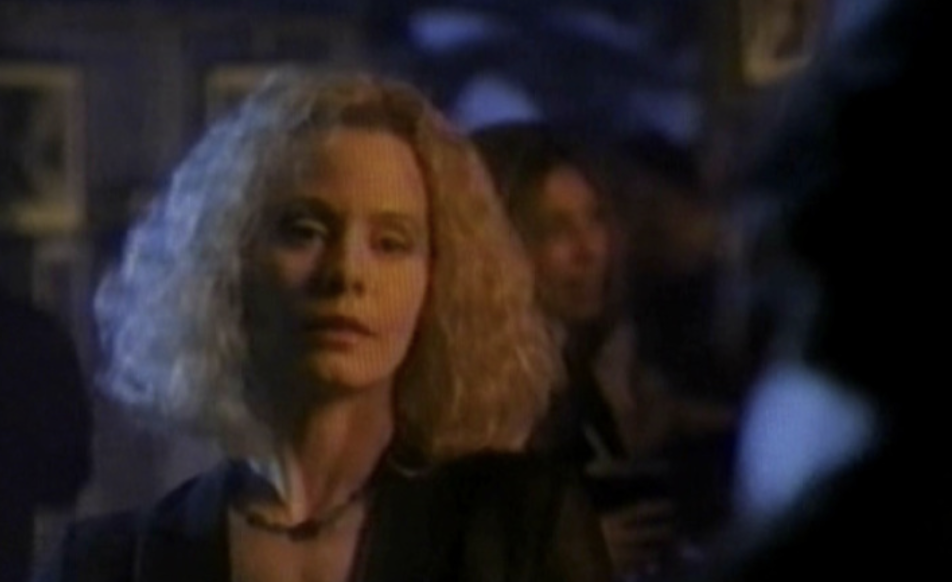
There’s a certain joy in watching a film that doesn’t just dip its toes into absurdity but cannonballs into it, arms flailing, making sure everyone around gets soaked in the splash. Children of the Night is that kind of movie. Directed by Tony Randel (of Hellbound: Hellraiser II fame), this 1991 horror-comedy takes the well-trodden path of vampire flicks and smears it with camp, slime, and a sly wink at the audience. It’s a movie that knows it’s ridiculous—and instead of apologizing, it doubles down, lighting a cigarette and pouring you a stiff drink while the vampires chew scenery (and jugulars).

Baptism by Blood
The film kicks off with two teenage friends, Cindy and Lucy, deciding that the best way to “cleanse” themselves before college is to go skinny-dipping in a flooded, abandoned church crypt. Because nothing says “fresh start” like dunking yourself in stagnant vampire soup. Naturally, Lucy drops her crucifix into the water, and wouldn’t you know it—there’s an ancient bloodsucker, Czakyr, sleeping right below, just waiting for someone to lose their jewelry. Cindy doesn’t make it out alive, proving yet again that horror movies have a strong bias against youthful optimism.
This sequence sets the tone for the whole film: gothic atmosphere laced with absurdity, where sex, religion, and gore swirl together into a cocktail that’s as much parody as it is homage.
Enter the Schoolteacher, Exit Your Sanity
Peter DeLuise shows up as Mark Gardner, a clean-cut schoolteacher roped into vampire-slaying duty when the town of Allburg goes full Nosferatu. Mark’s the kind of guy who looks like he should be grading math tests, not wielding stakes—but that’s part of the fun. His chemistry with Ami Dolenz’s Lucy (the designated “virgin with special blood”) has the awkward, endearing flavor of a Hallmark romance dipped in pig’s blood.
DeLuise is a surprisingly solid anchor. He plays it straight enough to keep the movie from tipping into outright parody but with just enough self-awareness to let you know he’s in on the joke. Ami Dolenz, meanwhile, gives Lucy a wide-eyed charm that makes her both sympathetic and just naive enough to keep stumbling into trouble. She’s the perfect damsel—not helpless, exactly, but always in just enough danger to keep the stakes (pun intended) high.
Karen Black and the Joy of Chewing Scenery
And then there’s Karen Black, because no B-horror of the late 20th century would be complete without her singular brand of intensity. As Lucy’s mother, she brings a level of manic energy that could power a small town. Watching Karen Black in any horror film is like watching a cat chase a laser pointer: unpredictable, thrilling, and vaguely unhinged. She elevates scenes that could have been throwaway melodrama into camp classics.
The Drunken Preacher and the Crossmobile
If you only remember one thing from Children of the Night, let it be this: the drunken preacher with a weaponized “crossmobile.” Garrett Morris, comedy veteran and eternal scene-stealer, plays the preacher who turns his vehicle into a makeshift holy-rolling machine of vampire destruction. Imagine Mad Max redesigned by the Vatican gift shop. Crucifixes jut out like spikes, Bible verses are quoted with slurred determination, and vampires explode in showers of ichor when they get too close.
It’s insane. It’s hilarious. It’s the kind of gonzo image that cements a movie’s cult status.
Czakyr: The Big Bad with Big Shoulders
David Sawyer’s Czakyr is the head vampire, a lumbering, bat-like brute who looks like he wandered in from a stage production of Cats that went horribly, wonderfully wrong. He’s not Bela Lugosi suave; he’s not even Christopher Lee menacing. He’s more like the vampire version of that drunk uncle who ruins every family BBQ. And yet, he works.
Czakyr’s menace is less about subtlety and more about sheer presence. He’s the kind of monster who doesn’t sneak up on you—he crashes through the wall, drools on the carpet, and dares you to say something about it.
Blood, Splinters, and Punchlines
The film balances its gore with comedy like a circus act juggling chainsaws. Stakes fly, throats tear, and blood gushes in bright, syrupy torrents, but it’s all so knowingly over-the-top that you laugh as much as you wince.
One of the film’s best gags comes at the end, when the vampires are defeated and the townsfolk return to normal. Do they thank their saviors? No. They complain about the “splinters in their chests” left by the stakes. Only in a Fangoria-backed horror flick would mass vampirism be treated like a minor civic inconvenience.
Humor with Fangs
The dark humor of Children of the Night isn’t about clever wordplay or meta-commentary. It’s physical, grotesque, and silly. The movie treats vampirism like a small-town infestation, somewhere between termites and rabies, and the solutions are equally blue-collar: stake ‘em, torch ‘em, and get on with your life.
It pokes fun at religious imagery, small-town repression, and horror tropes without ever slipping into mean-spirited parody. You laugh with the movie, not at it—even when it’s ridiculous. Especially when it’s ridiculous.
The Fangoria Stamp of Approval
It’s no accident that Fangoria Films produced Children of the Night. This is tailor-made for gorehounds and VHS junkies, the kind of movie that feels like it belongs on a double bill with Ghoulies or Critters. It has the same mischievous energy: a willingness to be gross, goofy, and gleefully unpretentious.
The Verdict: Midnight Movie Gold
Is Children of the Night a good movie by traditional standards? Not really. The acting wobbles, the effects are rubbery, and the story is stitched together like Frankenstein’s prom tux. But is it a fun movie? Absolutely.
It’s the kind of horror-comedy that makes you nostalgic for late-night cable marathons, when you stumbled across something strange, bloody, and hilarious at 2 a.m. and couldn’t look away. It’s a movie that understands the joy of horror isn’t just in the scares—it’s in the absurdity, the mess, the laughter that sneaks in with the blood.