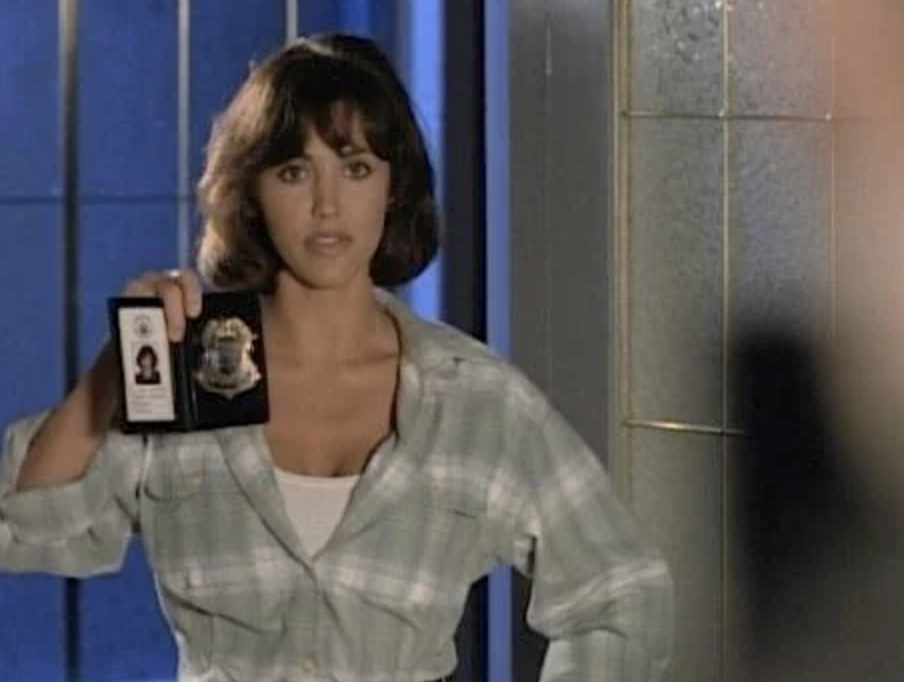
Amelia Rose Blaire Dechart has the kind of screen presence that doesn’t ask permission. She arrives like a late-night knock on the door you weren’t expecting but somehow knew was coming. There’s a coolness in her work—measured, watchful, a little dangerous around the edges—yet it’s never empty. Under the sharp angles, you can feel the training, the patience, the way she’s built herself role by role instead of chasing some shortcut to the top.
She was born in New York City and raised in Los Angeles, which is a nice way of saying she grew up between two kinds of noise: the East Coast grind and the West Coast gloss. New York gives you intensity. L.A. gives you the illusion of ease. If you’re smart, you learn to take something useful from both and not get seduced by either. She did. She didn’t come into acting like a lottery winner. She came in like a student who decided this was the craft she’d bleed for.
The long apprenticeship
She began studying acting at fifteen at The Sanford Meisner Center for the Arts in Los Angeles. Fifteen is young to choose something that hard, and Meisner is not the cozy kind of method. It’s repetition, emotional truth, attention to the other person. It turns acting into listening that’s so raw it sometimes scares you. Starting that early means the discipline is baked into her. It also means she learned before adulthood that talent alone is a rumor unless you show up and work.
She spent a summer in London studying Shakespeare with the British American Drama Academy. That’s a very specific kind of fire. Shakespeare training doesn’t let you hide behind minimalism. It asks for breath, body, clarity, and nerve. You have to be big enough to cross a stage and still precise enough to land every word. If you can do that at a young age, you build a spine that carries into every modern scene afterward.
From there she worked with Lindsay Crouse, an actor who knows what it costs to be good, and Crouse pointed her toward the Atlantic Theater Company conservatory in New York. Atlantic is serious training—built on Practical Aesthetics, on doing the thing rather than talking about the thing. You learn to make clear choices, to play action instead of mood. It’s how you get actors who can walk into a set, read the room, and deliver without drama.
After graduating, she completed Atlantic’s L.A. master classes with teachers like David Mamet, Felicity Huffman, Clark Gregg, and others. Mamet doesn’t teach you to be pretty. He teaches you to be exact. Huffman teaches you to live inside discomfort. Gregg teaches you how to keep it human when the writing gets slick. Her education was an argument for craft. Not stardust. Craft.
You can see it in the way she works: she doesn’t mug for the camera. She doesn’t float. She lands. Every line feels like it comes from a reason, not a desire to be liked.
The climb through television’s trenches
Before the bigger roles, she spent years doing what the working actors do—guest spots, short arcs, the kind of jobs that teach you speed and humility. She appears early in a lot of shows you’ve heard of if you’ve been awake through the last twenty years of American TV: Strong Medicine, Drop Dead Diva, 90210, Grimm, Touch, Perception, Royal Pains, The Mentalist, Grey’s Anatomy, Blue Bloods, Criminal Minds.
That list isn’t just a résumé. It’s proof of survival. Every one of those gigs means you got cast, walked into a machine already running, and had to matter inside it without derailing it. It teaches you how to be sharp in small doses. It teaches you to leave an impression without making a mess.
And she did. Even in single-episode roles, she carries that thing casting directors love: you feel like there’s a whole other story behind her eyes. She doesn’t play “types.” She plays people with a pulse.
True Blood: the breakthrough in crimson light
Then came True Blood. On August 23, 2013, she was promoted to series regular as Willa Burrell, part of the show’s last, strange, blood-soaked stretch. True Blood was already a known beast by that point: sensual, violent, politically charged, half romance and half nightmare with jokes in the cracks. Dropping into a show like that late in the run is tricky. The ecosystem is established. The fans are protective. The tone is specific. You either slot in perfectly or you get rejected like a bad transfusion.
She slotted in. Willa is complicated—strong will, vulnerable center, caught between loyalty, desire, and the shifting moral landscape the series lived in. Blaire played her without the soapiness that role could have leaned into. She made Willa feel like a young woman discovering how hungry the world is and trying to decide what kind of creature she wants to be inside it.
Nineteen episodes isn’t a cameo. It’s a statement. And it’s the role that planted her flag.
Scream: letting the mask slip
In 2015 she took a recurring role as Piper Shaw on MTV’s Scream, and that’s where she really got to sharpen the knife. The series lives on paranoia and teenage dread, the American slasher tradition dipped in social-media neon. Piper is smart, charismatic, and quietly terrifying—one of those characters who can smile at you while measuring where to sink the blade.
Blaire understood that kind of role. She played Piper with a controlled calm that made her scarier than any jump scare. Horror villains don’t work when they’re cartoons. They work when they feel human enough to sit next to you at lunch. She made Piper that.
Twelve episodes and a lot of fan memory later, Piper stayed one of the show’s defining presences. People who like the series tend to talk about her the way people talk about weather that still makes them uneasy.
Film work: indie shadows and sharp edges
On film, her work sits mostly in smaller projects—shorts, indies, focused genre pieces. The Colony, Angels in Stardust, Commencement, Caught, Sitter Wars, and others. She’s never been afraid of the smaller room. Some actors panic unless the budget is huge. Some actors understand that a small film can give you space to be strange, specific, and real.
Her choices suggest she cares more about the role than the spotlight. There’s a quiet confidence in that. Like she knows the work will add up if she keeps choosing honestly.
Life off-camera: partnership and play
She got engaged to actor Bryan Dechart in 2017 and married him in 2018. Their relationship doesn’t feel like publicity scaffolding. It feels like two working actors who found a teammate. And then they took that partnership into a space most “traditional” performers used to ignore: gaming and streaming.
They stream video games on Twitch under the brand Dechart Games. That matters because it shows a kind of modern adaptability. She’s not stuck in the old model of fame where you pretend you’re too cool for anything that isn’t a red carpet. She’s part of the culture as it exists now—interactive, communal, messy, funny, and alive.
On New Year’s Eve 2023 they announced they were expecting their first child. There’s something quietly beautiful about that being shared in the same space where they share play. Life and work braided together, not separated by some fake wall.
What she really is
Amelia Rose Blaire Dechart is a craft-first actor with a genre heartbeat. She’s built herself through real training, real reps, and real choices—moving through television’s factory floor, then stepping into cult spaces (True Blood, Scream) where presence matters more than polish.
She brings intelligence to thrillers and humanity to darkness. She can play the girl you trust, the girl you fear, and the girl who is both in the same breath. That kind of range doesn’t come from luck. It comes from listening, studying, and keeping your ego on a short leash.
She’s still young enough to surprise people. But she’s already seasoned enough that when she walks into a role, you feel the floor get a little steadier.
That’s not hype. That’s an actor who knows her tools.