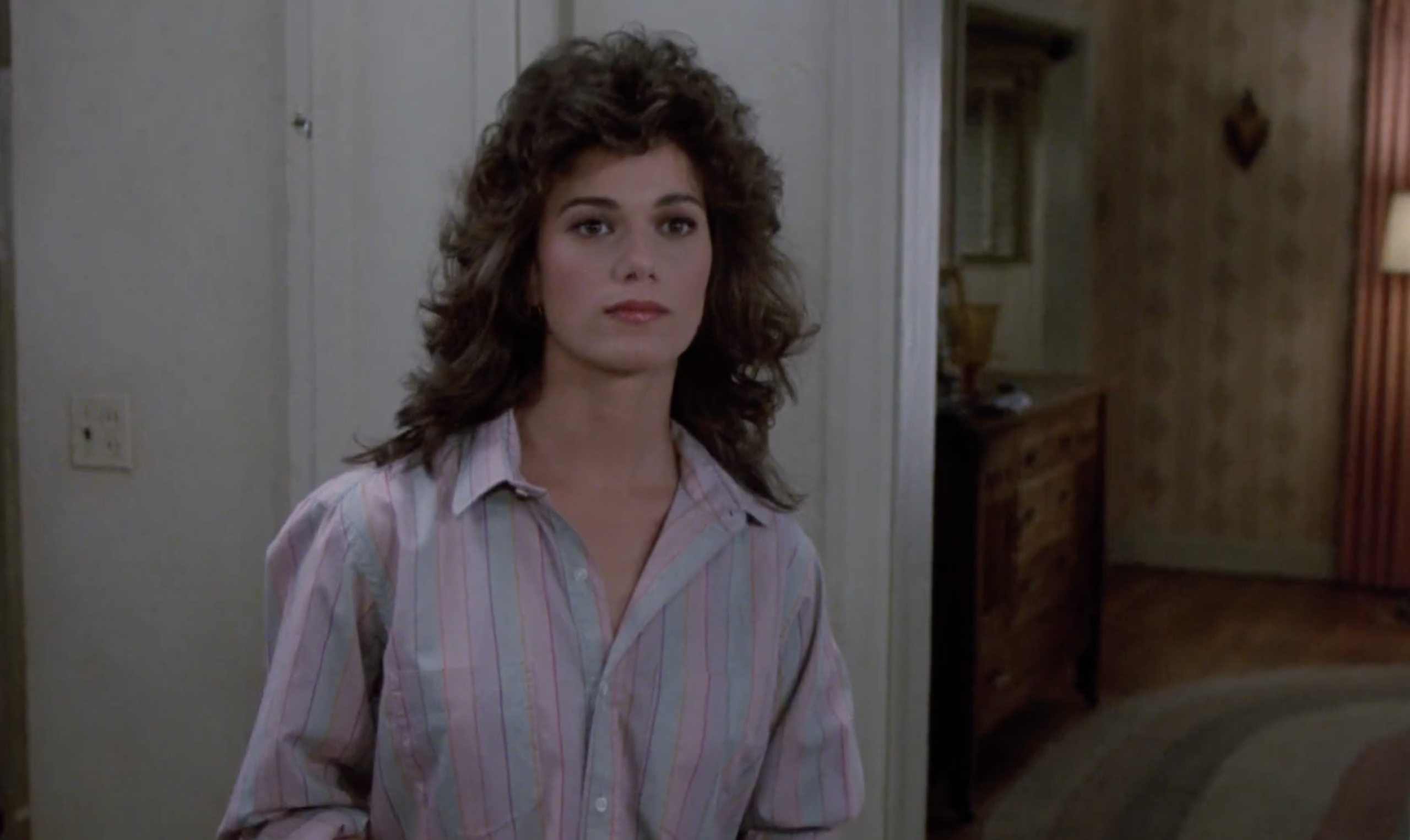
Candace Helaine Cameron Bure came into the world on April 6, 1976, in Panorama City, California, a sun-drenched neighborhood that seemed to grow child actors the way other towns grew citrus. Her mother, Barbara, managed her children’s early steps into show business, while her father, Robert, balanced the household as a teacher. Candace was the youngest girl in a four-child family that already included future teen idol and evangelist Kirk Cameron, making show business feel less like an impossible dream and more like an available path.
She started small — roles on St. Elsewhere, Who’s the Boss?, Growing Pains — the usual rotation for a Los Angeles kid with a headshot, an agent, and the right kind of precocious sparkle. But in 1987, at just eleven years old, Candace landed the job that would define not only her youth, but part of her public identity for the next four decades.
She became D.J. Tanner.
For eight seasons on Full House, from 1987 to 1995, Cameron grew up on television as America’s sensible, heart-first big sister. She played the kind of character who solved family crises with hugs, hard lessons, and an astonishing emotional vocabulary for a seventh-grader. She also balanced movie roles — Some Kind of Wonderful, Punchline, and the camp-infused gem Camp Cucamonga — alongside her meteoric sitcom success.
When Full House ended, she drifted into the kinds of made-for-TV dramas that let her stretch beyond the Tanner good-girl mold: abused teens, date-rape survivors, murder mysteries. Then came her biggest shift — family life. After marrying hockey player Valeri Bure in 1996, she paused her acting career to raise their three children, stepping back from Hollywood at a moment many actors would have doubled down.
But Candace Cameron Bure has never stayed away for long.
She reemerged gradually in the 2000s: pop-culture retrospectives, holiday films, guest appearances, and then a key career revamp — the world of Hallmark Channel movies. Beginning in 2008, she became one of Hallmark’s most recognizable faces, starring in more than two dozen films and anchoring the long-running Aurora Teagarden mystery franchise. At the same time, she found new fans through ABC Family’s Make It or Break It and reentered the pop-culture mainstream in 2014 by finishing third on Dancing with the Stars.
Then came nostalgia’s strongest tidal wave: Fuller House.
Reprising D.J. Tanner — now D.J. Tanner-Fuller — Candace led Netflix’s hit revival from 2016 to 2020. The series re-cemented her place in family-friendly entertainment and helped launch her onto The View, where she co-hosted from 2015 to 2016. While the job drew both praise and criticism, it also reinforced something that’s been consistent throughout her entire career: Candace Cameron Bure doesn’t shrink from strong opinions or complicated public conversations.
In 2022, she made another industry-defining move, leaving Hallmark for Great American Media, where she now serves as Chief Content Officer. With an emphasis on faith-based and “traditional” family programming, her departure sparked headlines, debate, and public pushback — controversy she faced head-on, framing the shift as an alignment with her deeply held values rather than a retreat from cultural change.
Outside her screen work, Bure is a bestselling author of four inspirational books, covering faith, wellness, balance, graciousness, and the quieter battles she’s fought — including her early-twenties struggle with bulimia. She’s a longtime supporter of Compassion International, an outspoken conservative Christian, and one of the most visible faith-centered performers in modern Hollywood.
She is also, fittingly, the Cherry Blossom — her masked character on The Masked Singer in 2025, a tribute to her friend and TV father Bob Saget.
Candace Cameron Bure has spent nearly forty years in the public eye, yet her persona has remained consistent: earnest, enthusiastic, unapologetically wholesome, sometimes divisive, but always unmistakably herself. She is a survivor of child stardom, a builder of nostalgic comfort television, a creator of modern holiday-movie mythology, and a woman who has shaped her career around the kind of stories she wants to tell — whether Hollywood approves or not.
A big sister, on screen and off.
A believer in purpose.
A brand unto herself.
And to generations of viewers, simply:
D.J.