
She wasn’t Bettie Page, and she sure as hell wasn’t Marilyn. Candy Earle was something else entirely—one of those bruised cherries of mid-century Americana that never made it into the sundae but stuck to the counter, melting in the neon light. She went by more names than a cheap grifter—Candy, Candee, Candice, Emily Carter, Tasha Stevens, Tasha Stephens—like she was always running from the rent, or maybe herself. You saw her in rags like 38-26-34 and French Follies, the kind of magazines you’d roll up and hide inside a newspaper so your landlady wouldn’t start banging about morality again.

Candy was a busty brunette with the kind of “all-natural” figure the 1960s hadn’t yet learned how to fake with scalpels and silicone. She didn’t need it. She had curves that looked like they were carved out of motel sheets and cheap bourbon, the kind of curves that made men forget their wives were waiting at home with a roast in the oven. In a decade that pretended it was all about astronauts, Camelot, and civil rights marches, Candy was the dirty postcard slipped under the door: the secret everyone kept.
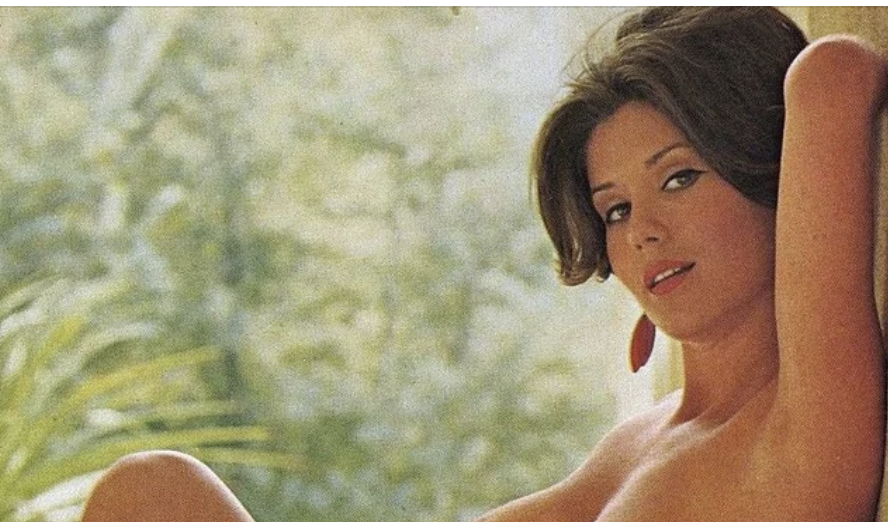
Her career wasn’t polished—hell, it wasn’t even steady. No one knows too much about her. Her real name, where she was from. Sometime in the late 1960s she came to California. She showed up in those forgotten men’s digests, the kind you found in barbershops or under the front seat of a Ford Galaxie. She was never going to be a household name, but in the circles that cared—the pin-up collectors, the grease-stained dreamers at the drive-in—Candy Earle was enough. She was there in satin gloves, maybe leaning against a finned Cadillac, maybe in a pair of heels that could gut you like a stiletto.
And here’s the kicker: she never really left. Not in the way ghosts don’t. You can still find her face if you look hard enough—traded like relics, old negatives changing hands at swap meets and on the digital black market of eBay. She’s not in the history books, but she’s in the basements and attics, sealed in plastic, a flicker of lust that somehow outlasted the Cold War.
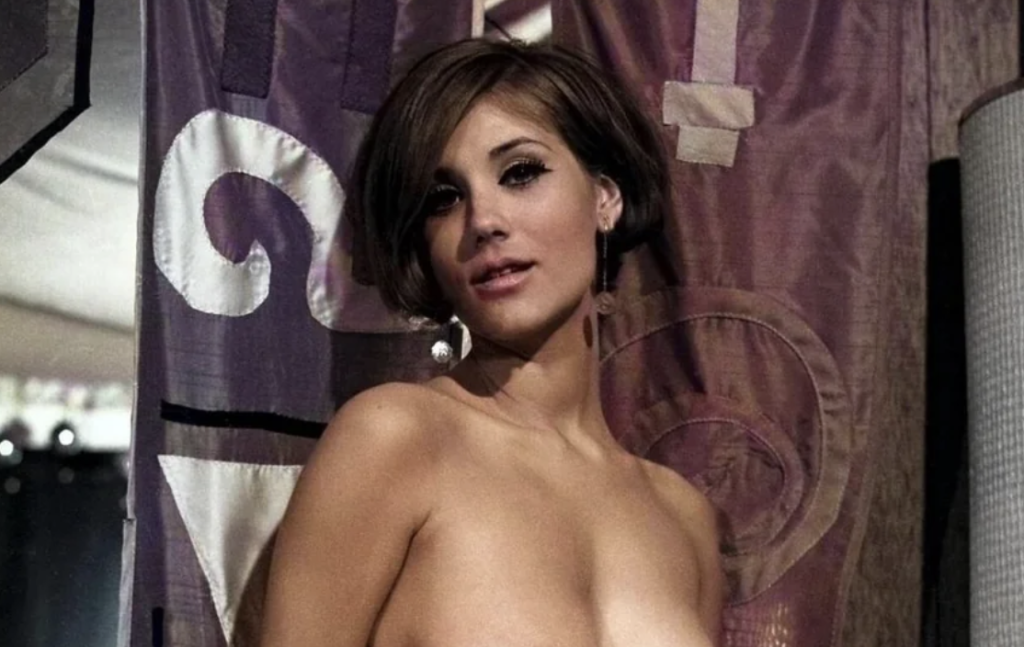
Candy Earle is still out there, waiting—waiting for a new generation weary of the Botox smiles, the tattoo sleeves, and the piercings that look more like hardware store inventory than beauty. She’s the ghost of curves past, the brunette promise of an hourglass figure the old guard of men still dream about when no one’s watching. Back in the sixties, they called her busty, “all-natural,” a pin-up made for satin sheets and cigarette smoke. Today, she feels like a secret cure for nostalgia, a reminder of a world before filters and fillers. The curvaceous Candy Earle: not forgotten, not gone—just waiting to be rediscovered, her glossy images still whispering the kind of beauty that can’t be manufactured, only remembered.
