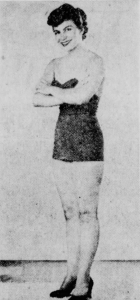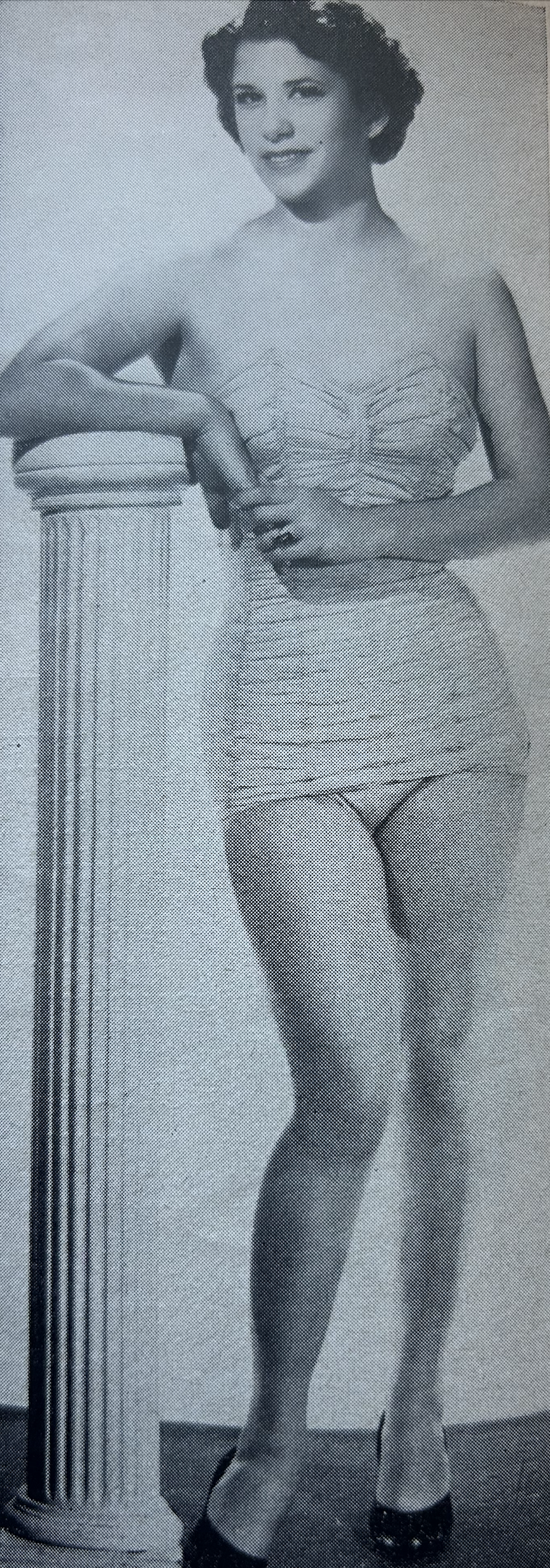
In the kaleidoscopic world of mid-20th-century women’s wrestling—a landscape rougher than lipstick-stained posters let on—few figures flared as fast or burned as brightly as China Mira. Born Zulema Carmen Mira in Florida in 1932, she didn’t need a flashy entrance or pyrotechnics to captivate a crowd. Jet black hair, a statuesque 5-foot-6 frame packed with 140 pounds of athletic muscle, and the kind of Spanish-American magnetism that made promoters salivate and audiences swoon—Mira didn’t just walk into arenas, she landed like a headline.
In the 1950s, women’s wrestling still fought for legitimacy in smoky gymnasiums and gritty civic centers, but Mira’s presence was proof that brute strength could coexist with beauty. Fans followed her from Tampa to Toledo, from Charleston to Cleveland. “That dark complexion and those brown eyes,” one promoter wrote, “they sell just as many tickets as her headlocks.”
But to pigeonhole Mira as a pin-up would be to miss the meat of her mythos. Even as a child, she was scrapping with the neighborhood boys on Florida sandlots, sacrificing ribs, arms, and fingers to pickup games of football and baseball. She wasn’t molded in the image of a wrestling glamour girl—she forged it herself in bruises and sweat, a tomboy turned trailblazer.
Her family was Cuban and Spanish by blood, and she wore her heritage like armor. Fluent in Spanish, she could charm the crowd in Havana just as easily as she could throw down in Columbus. She traveled far beyond the regional loops that defined many of her peers, wrestling in Canada, Spain, and throughout Europe. But her most defining bouts came stateside—particularly in the heartland where wrestling was as real to the fans as church on Sunday.
In the ring, Mira was elusive as a shadow, quick on her feet, but not afraid to stand and trade when the temperature rose. Her signature move, the Ms Half Nelson, was no fluke; it was a grinding, suffocating submission maneuver that could leave even the toughest women scrambling for breath and mercy.
Her opponents read like a hall of fame roll call: Penny Banner, Ida May Martinez, Ethel Brown, Barbara Baker, and of course, June Byers—the woman Mira had set squarely in her sights. “I’m working hard for a shot at Byers,” she told a Louisville paper in 1956, her eyes steeled with intent. “I think I’ve earned it.” And she had. But wrestling—especially women’s wrestling—was never purely a meritocracy. Titles were as much about politics and timing as they were about talent. Mira knew it. But that didn’t stop her from chasing the crown.
In her street clothes, Mira could pass for a Powers model or a starlet wandering off the Paramount lot. A sportswriter once wrote that if Mira had traded her ring boots for a bathing suit, Hollywood would’ve lined up with offers. But she wasn’t built for stage kisses and pinup smiles—she was built for shoulder throws and suplexes, the theater of violence that was women’s wrestling before the spectacle swallowed the sport.
Off the mat, Mira lived a life not unlike many of her peers—a mix of athletic discipline and modest indulgence. She swam, bowled, danced, and favored salads and sweets. She was glamorous, sure, but not fragile. There was a steel spine beneath the satin robes.
In the end, Mira’s legacy is less about the titles she didn’t win and more about the archetype she helped shape. She was the kind of wrestler who made you believe—believe that a woman could hit hard and still look like a Hollywood dream, believe that the mat wasn’t just for men, and believe that beauty and brawn weren’t opposites, but allies.
She was gone from the spotlight as quickly as she entered it, a victim perhaps of the business’s fickle nature, or maybe just someone who never needed the crown to feel complete. There were plenty of women who got their shots at Byers. But none of them made the journey from Florida tomboy to international headliner with the style, strength, or searing individuality of China Mira.
You may not see her name in the first breath of wrestling history. But look deeper. She’s there—sprinkled in the memories of fans who still remember her with a mixture of awe and affection. She’s in the lineage of every woman who dared to be both tough and beautiful. And she’s in the echo of every half nelson cinched with grace and grit.
Because once upon a time, a dark-eyed dynamo from Florida stepped into the ring and gave a generation something they’d never seen before.
And maybe never will again.