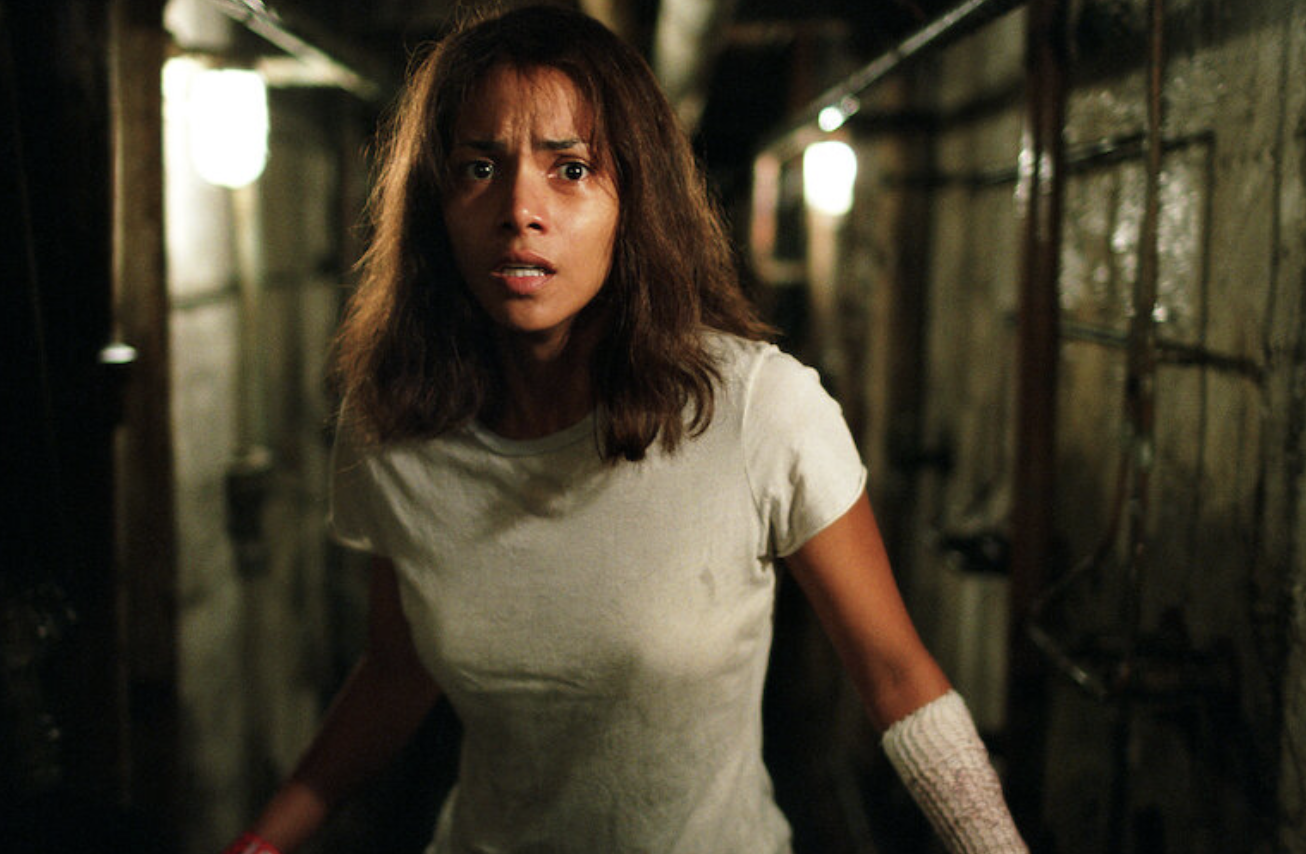
Lights, Camera, Panic Attack
Before Cloverfield, monster movies had gotten a little… polite. The beasts were big, sure, but they stomped through cities like they had to file for a permit first. Enter Matt Reeves’ Cloverfield, the cinematic equivalent of being mugged by a Godzilla-sized panic attack — a found-footage horror film that throws you into ground zero with nothing but a camcorder, a shaky hand, and a prayer.
Produced by J.J. Abrams and written by Drew Goddard (who apparently wanted to see how many viewers could vomit from motion sickness before the third act), Cloverfield revitalized the kaiju genre by making the end of the world look like a drunk student’s film project. And somehow, it works.
This isn’t your grandpa’s monster movie — it’s The Blair Witch Project on Red Bull, featuring a cast of twenty-somethings who run, scream, and make terrible life choices while New York City gets eaten alive.
Found Footage, Lost Stomach
Let’s start with the obvious: the camera work. It’s frantic. It’s chaotic. It’s like someone duct-taped a GoPro to a toddler during an earthquake. The cameraman, Hud (played by T.J. Miller in his film debut), never once considers the concept of stability. If you make it through the first twenty minutes without mild nausea, congratulations — your vestibular system is stronger than mine.
But that’s exactly what makes Cloverfield so effective. The found-footage style isn’t a gimmick — it’s the movie’s nervous system. Every tremor, every blurry glimpse of the monster, every panicked yell feels real. It’s not cinematic destruction viewed from a distance — it’s raw, chaotic survival recorded by someone who didn’t get a film degree.
It’s the first kaiju film that doesn’t feel like a spectacle; it feels like surveillance. The world doesn’t end with orchestral grandeur — it ends with a shaky “Oh my God!” and a battery warning flashing red.
Meet the Victims (a.k.a. The Cast)
Our heroes — or more accurately, witnesses — are a gaggle of New York twenty-somethings whose combined survival skills could fit inside a latte cup. Rob (Michael Stahl-David) is moving to Japan for work, which means his friends throw him a farewell party that feels like a deleted scene from Friends.
There’s Beth (Odette Yustman), the ex who’s madly in love with him but too emotionally constipated to say so. Lily (Jessica Lucas), Rob’s friend with actual common sense. Jason (Mike Vogel), Rob’s brother and the party’s adult supervision until he gets splattered by a bridge. Marlena (Lizzy Caplan), Hud’s crush who didn’t sign up for this. And Hud himself — our camera-wielding narrator, an enthusiastic dork whose optimism is slowly devoured by existential terror (and, later, something with claws).
They start the night sipping champagne and end it sprinting through rubble with parasites eating people’s faces. It’s the most realistic depiction of a New York party ever filmed.
When New York Became the World’s Worst Airbnb
At the heart of Cloverfield is a single, terrifying concept: what if the monster movie happened to you? No news anchors, no cutaways to the President’s war room — just chaos, confusion, and a giant nightmare creature that treats skyscrapers like pool noodles.
The first attack is a masterpiece of cinematic disorientation. A noise outside, a rumble, an explosion — and then the Statue of Liberty’s head comes rolling down the street like a tourist attraction on strike. It’s one of the greatest “Oh holy hell” moments in horror history.
From there, the movie becomes a breathless run through Manhattan’s apocalypse. Buildings crumble, people scream, and the military does what the military always does in these movies: shoot at something much too large to care. The scale is immense, but Reeves smartly keeps the focus tight — we never get a clear look at the monster until much later. It’s not about seeing the creature. It’s about feeling it.
The Monster That Launched a Thousand Conspiracies
Clover (as the creature is affectionately known by fans) is one of cinema’s great “blink and die” monsters. It’s enormous, alien, and beautifully wrong. Designed by Neville Page to be both terrifying and weirdly tragic, the beast moves like a newborn deer that accidentally grew the size of a battleship. It’s not evil — just confused, scared, and crushing everything in its path like an uninvited toddler at a LEGO convention.
And then there are the parasites — smaller, spider-like horrors that drop off the big one like demonic fleas and introduce an entire subgenre of “don’t get bit, or you’ll explode.” When poor Marlena pops like a blood balloon in the field hospital, it’s equal parts horrifying and hilarious — the cinematic equivalent of a jump scare that apologizes afterward.
Fans spent years debating where the creature came from. Alien? Deep-sea mutation? Government experiment? Personally, I like to think it’s just a metaphor for the Internet: destructive, uncontrollable, and made stronger every time people talk about it.
Romance in the Time of Apocalypse
Amid all the chaos, Cloverfield hides a surprisingly earnest love story. Rob’s decision to trek across monster-infested Manhattan to rescue Beth is romantic in that “this is stupid but I respect it” kind of way. It’s Romeo and Juliet, except the balcony’s on fire and Juliet’s impaled on rebar.
The final moments between Rob and Beth under Greyshot Arch — as bombs fall, the ground shakes, and the camera records their final declarations — are oddly moving. You almost forget they’re about to be vaporized. Almost.
It’s a rare monster movie that makes you care about the humans. Usually, you’re just waiting for them to die interestingly. But here, you actually root for these idiots. Maybe it’s the sincerity. Maybe it’s the chaos. Or maybe it’s Stockholm Syndrome. Hard to tell.
Marketing Madness: The Monster Before the Monster
No review of Cloverfield is complete without acknowledging its viral marketing — a campaign so mysterious it made the Zodiac killer look like an open book. The trailer dropped before Transformers in 2007 with no title, just a date. The Internet lost its collective mind.
Was it a Godzilla reboot? A Lost spin-off? A found-footage alien invasion? JJ Abrams watched the chaos unfold and smiled like a man who had weaponized secrecy. There were fake websites, hidden clues, even a made-up soft drink company (“Slusho!”) that fans dissected like scripture. By the time the movie came out, the monster could’ve been Big Bird with anger issues and people still would’ve shown up.
And when it did show up — massive, terrifying, and gloriously incomprehensible — audiences realized they hadn’t been tricked. They’d been teased by masters.
A Love Letter to Panic
What makes Cloverfield endure isn’t just its clever marketing or monster mayhem. It’s the emotion underneath. This isn’t about the end of the world; it’s about how people react when the world stops making sense. The fear, the denial, the dumb optimism — it’s all heartbreakingly human.
Matt Reeves directs like a man juggling grenades. Every scene feels improvised yet purposeful. Every explosion feels personal. And the final shot — a tender flashback to Coney Island, a carefree day now doomed by hindsight — hits harder than any bomb.
It’s the rare horror movie that doesn’t just scare you; it exhausts you, emotionally and physically. You stumble out of it sweaty, shaky, and a little in love with its madness.
Final Thoughts: Found Footage, Found Genius
Clovefield is what happens when you drop a camera into an apocalypse and let chaos do the rest. It’s raw, ridiculous, and relentlessly gripping. It’s also one of the most audacious studio films of the 2000s — proof that horror can still surprise you if it punches you in the gut hard enough.
Yes, it’s shaky. Yes, it’s loud. Yes, it might make you seasick. But it’s also thrilling, funny in a gallows kind of way, and sneakily profound. Beneath all the screaming and debris, there’s a message about connection, mortality, and how humanity can’t help but film its own destruction.
4.5 out of 5 stars.
Because when the apocalypse comes, we’ll all be Hud — filming the end of the world, and hoping for one more good shot.