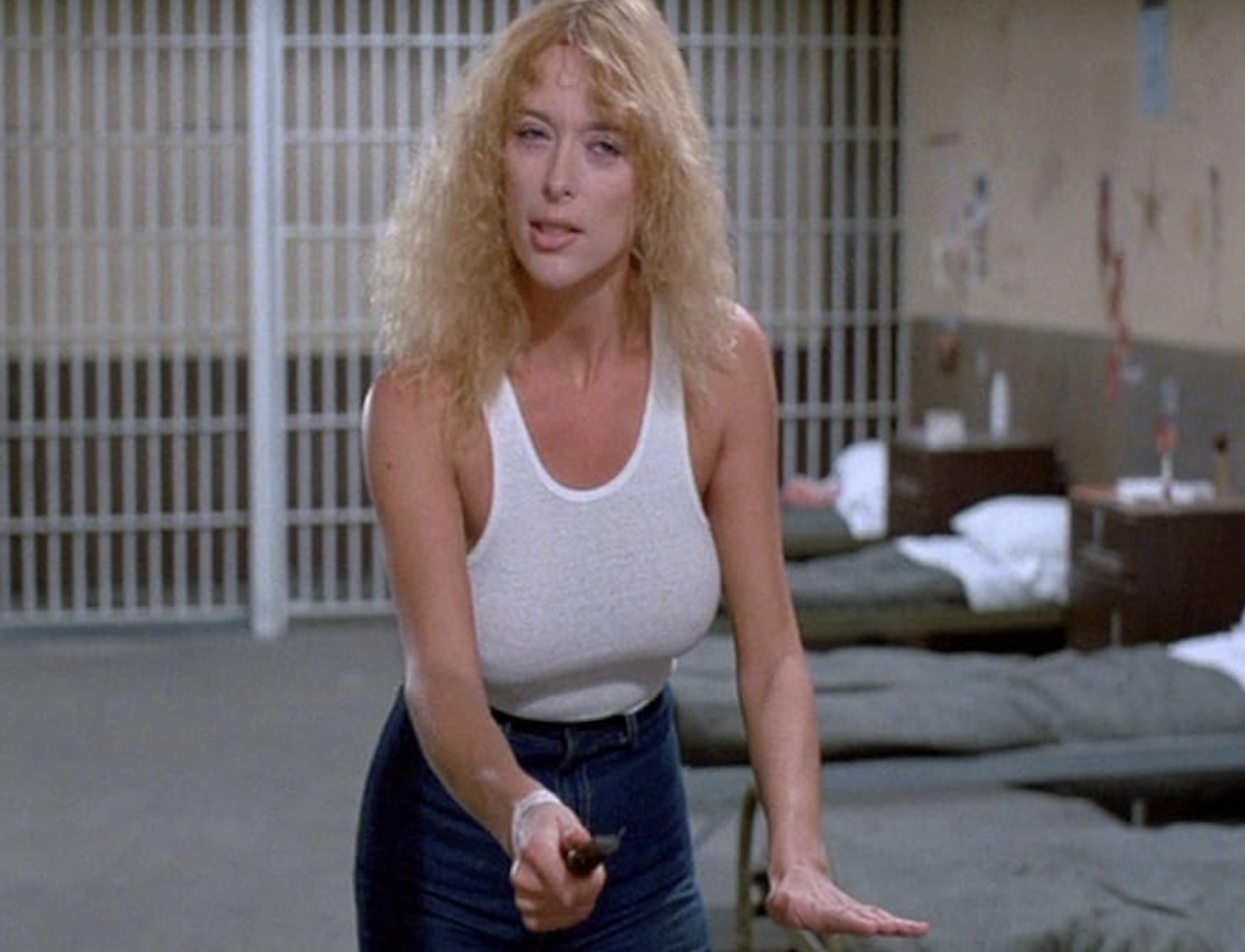
Jane Curtin never looked like she was having fun, and that was the point.
She came out of Massachusetts Catholic—Cambridge-born, Wellesley-raised—the kind of upbringing that teaches you to sit still, speak clearly, and distrust excess. Irish on both sides, which means humor was a survival tactic, not a performance. You learn early how to say something sharp without raising your voice. You learn that restraint can hurt more than shouting.
Comedy, when she found it, wasn’t a rebellion. It was an application of discipline.
She dropped out of college in the late ’60s, which sounds wild until you remember the era. Everyone was dropping out of something. Jane didn’t drop out to chase chaos. She dropped out to work. She joined a comedy troupe, wrote plays, showed up sober, and learned her lines. That last part already set her apart.
Then came 1975, and the madhouse opened its doors.
Saturday Night Live needed people who could anchor the madness, and Jane Curtin walked in like a ballast. Around her were drugs, bravado, genius, ego, and mess—Belushi exploding, Radner spinning, Chevy chasing attention like oxygen. Jane stayed upright. She didn’t float away. She didn’t self-destruct. She stood there and let the storm hit her face without blinking.
She became the straight woman, which is comedy’s most misunderstood role. People think it means boring. It means precision. Someone has to tell the truth so the insanity has something to bounce off. Jane’s expression—flat, skeptical, faintly disappointed—was a masterclass in controlled judgment. She didn’t mug. She didn’t wink. She let the joke die in the room if it deserved to.
On “Weekend Update,” she sat behind the desk like she was born there. The newsreader who actually seemed offended by nonsense. When Dan Aykroyd called her “Jane, you ignorant slut,” she didn’t break. She fired back, calm as a firing squad: “Dan, you pompous ass.” No hysteria. No apology. Just clean impact. That exchange became legendary not because it was loud, but because it was exact.
Behind the scenes, she didn’t love the culture. She hated the drugs. She hated the chaos. She wanted to do the work and go home. That alone made her an outsider. Comedy loves martyrs and addicts. Jane Curtin refused both roles.
When SNL ended its first era, many of her castmates chased movies and flameouts. Jane stayed with television, the medium that rewards consistency over spectacle. It was a practical choice, and it paid off.
In the 1980s, she landed Kate & Allie, playing Allison Lowell, a divorced mother trying to keep a household functional while the world kept knocking things over. It was a sitcom about adult compromise, which already put it at odds with flashier trends. Jane didn’t play Allie as a joke machine. She played her as a person who’d run out of patience but not purpose.
The industry noticed. She won back-to-back Emmys. That doesn’t happen by accident. That happens when you make difficulty look normal.
Later, 3rd Rock from the Sun gave her a different challenge. Surrounded by aliens pretending to be human, she played the only actual human who seemed vaguely alienated by everyone else. Dr. Mary Albright was smart, guarded, emotionally cautious, and slowly undone by love she didn’t ask for. Jane played her like someone watching her own life unfold from a slight distance, unsure whether to step closer or run.
Again, she grounded the absurd.
Jane Curtin’s film career was never about domination. She picked roles that fit, then went home. Coneheads let her revisit her strangest creation—Prymaat Conehead—with affectionate absurdity. She never oversold it. Even under a cone, she played the truth of the character: a mother trying to raise children in a world that didn’t make sense.
Later films found her playing mothers, authority figures, women with history etched into posture rather than dialogue. She aged into roles without apology. Hollywood doesn’t always allow that. Jane took it anyway.
Offscreen, she lived like someone who understood entropy. Married once, stayed married for decades, raised a daughter, lived in Connecticut instead of chasing relevance. She served as a UNICEF ambassador. She read books aloud. She hosted public radio programs. She showed up prepared.
There’s a reason people call her the “Queen of Deadpan.” Deadpan isn’t emotionless. It’s emotion under control. It’s knowing exactly how much to give and refusing to give more. Jane Curtin’s comedy came from observation, not desperation. She never needed the room to love her. She needed it to listen.
She was never the loudest person on stage, but she was often the smartest. She didn’t chase cool. She didn’t sell vulnerability as currency. She didn’t mistake chaos for creativity. In a business that rewards collapse, she chose longevity.
When her husband died in 2025, it closed a long chapter quietly, the way she lived most things. No spectacle. No statement. Just endurance.
Jane Curtin’s legacy isn’t built on catchphrases or viral clips. It’s built on trust. Directors trusted her. Writers trusted her. Audiences trusted her to tell the truth without begging for applause. She proved that comedy doesn’t require collapse—that discipline can be funny, that intelligence can land jokes harder than volume.
She stood still while the circus spun around her, and somehow she outlasted it.
That might be the sharpest joke of all.