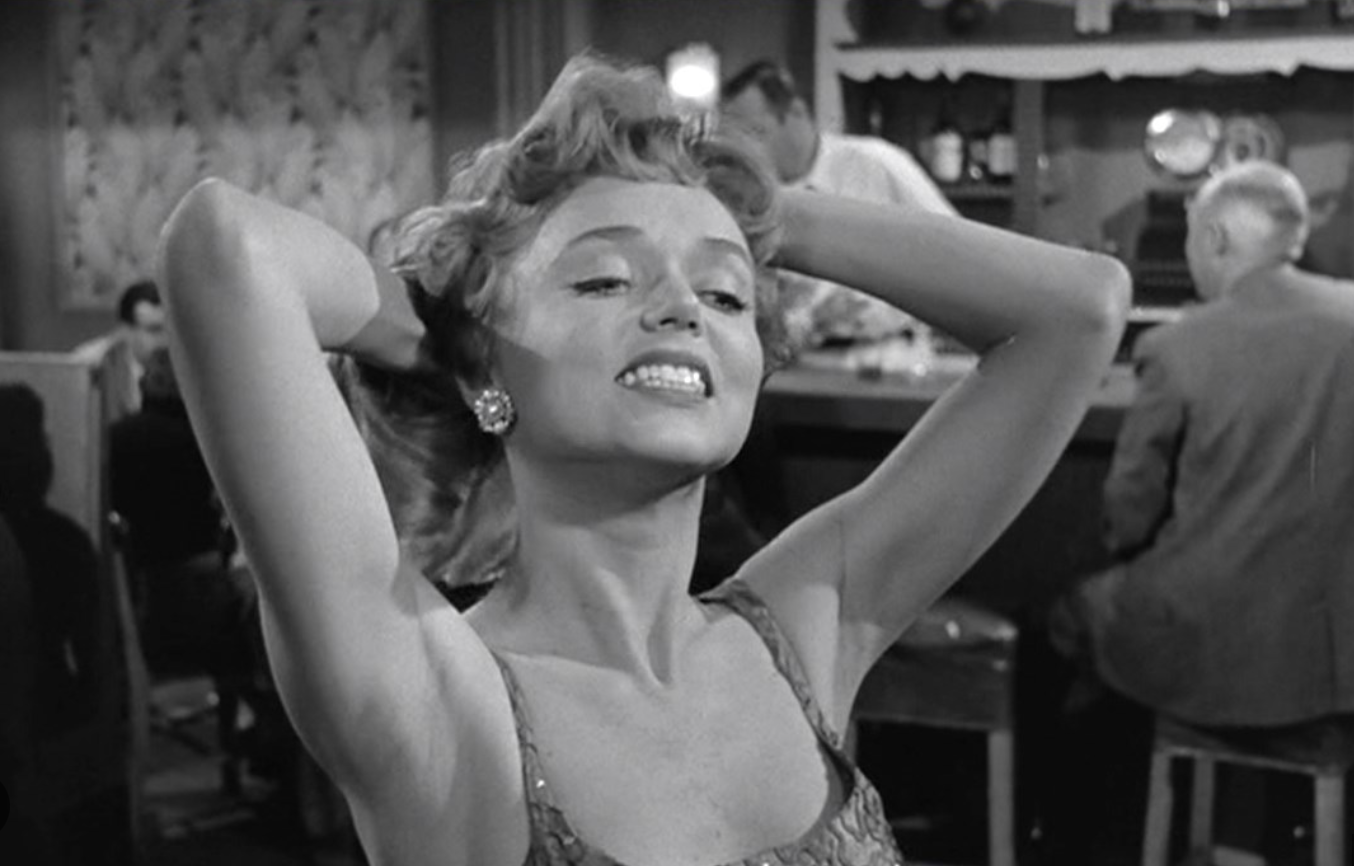
Joyce Ebert was born on June 26, 1933, in Munhall, Pennsylvania, the kind of town that knows how to make steel and doesn’t ask much about dreams. She grew up where work mattered and art was something you justified later. That background never left her. It showed in the way she approached acting—not as decoration, not as vanity, but as labor. Serious, bruising labor.
She went to Carnegie Mellon University, back when it was still teaching actors how to stand upright under pressure instead of how to market themselves. Drama school sharpened her instincts, but it didn’t soften her edges. She wasn’t built for light comedy or charming indifference. She was built for emotional weight. For women who suffer loudly or silently and don’t apologize for either.
By the late 1950s, it was already clear she was dangerous in the right role. In 1959, she won the San Diego Shakespeare Festival’s Atlas Award playing Juliet at the Old Globe Theatre. Juliet is often treated like a young girl in love. Joyce Ebert played her like someone already halfway toward tragedy, aware that desire comes with consequences and still choosing it. That’s a harder read. It stays with you longer.
She moved easily between theater and music, even creating the role of Betty Parris in the world premiere of Robert Ward’s operatic The Crucible at the New York City Opera in 1961. Opera demands volume, stamina, and control. You can’t fake anything when your voice is naked in the air. Joyce Ebert handled it because she understood discipline. She didn’t treat singing as a novelty. It was another form of truth-telling.
That same year, she made her Off-Broadway debut at the Phoenix Theatre as Ophelia in Hamlet. Ophelia is a role that destroys weak actors and exposes strong ones. Joyce Ebert didn’t play her as fragile. She played her as pressured. A woman crushed by expectations rather than insanity. Her madness felt earned, which is the most unsettling kind.
The 1960s were good to her in the way that only theater can be good—recognition without celebrity, respect without safety. In 1964, she won both the Clarence Derwent Award and the Obie Award for her performance as Andromache in The Trojan Women at Circle in the Square Theatre. Andromache doesn’t beg for sympathy. She endures loss after loss with dignity so severe it hurts to watch. Joyce Ebert made that endurance unbearable in the best way.
Awards followed her, but they never defined her. She wasn’t chasing the next trophy. She was chasing the next role that could crack her open. Television and film came and went—useful, respectable, secondary. Her real home was the stage, where the work ended when the lights went out and not a second sooner.
Then came Long Wharf Theatre in New Haven, Connecticut. That’s where Joyce Ebert became something rare: a pillar. She appeared in more than eighty productions there, playing leads, supporting roles, mothers, widows, queens, and women whose names history forgets. Long Wharf wasn’t glamorous. It was serious. It valued actors who showed up ready and stayed present even when the applause was thin.
She played in Widowing of Mrs. Holroyd, Dinner at 8, and countless other productions that required precision and emotional honesty. She was the kind of actress directors trusted with the hardest scenes because she wouldn’t flinch. She could stand in silence and let the audience squirm. She understood timing the way boxers understand distance.
In 1977, she earned a Drama Desk nomination for her role as Maggie in Michael Cristofer’s The Shadow Box, a play about terminal illness and the slow erosion of hope. That kind of material attracts actors who want attention. Joyce Ebert wanted accuracy. She played Maggie without sentimentality, without asking the audience to comfort her. That restraint made it devastating.
She married twice—first to Michael Ebert, later to Arvin Brown, a respected director. These were partnerships rooted in the theater, not publicity. Her personal life stayed mostly offstage, which was intentional. Joyce Ebert didn’t confuse exposure with intimacy. She gave everything to the work and guarded the rest.
By the time the 1990s arrived, she had nothing left to prove. In 1996, she received the Connecticut Critics Circle’s special achievement award, a recognition that acknowledged not one role but a lifetime of them. That kind of honor usually comes too late or not at all. She accepted it without ceremony.
She died of cancer on August 28, 1997, in Southport, Connecticut, at the age of sixty-four. Sixty-four isn’t old. It’s just old enough to realize how much you still wanted to do. Theater doesn’t grant immortality. It grants memory, and only if someone was paying attention.
Joyce Ebert never became famous in the way magazines understand fame. She didn’t headline films. She didn’t tour talk shows. She didn’t dilute herself to stay visible. What she did instead was harder: she built a body of work so dense and consistent that it became unavoidable to those who cared.
She was a dramatic actress in the truest sense. Not melodramatic. Not showy. Dramatic as in shaped by conflict, consequence, and choice. She understood that tragedy isn’t loud—it’s precise. She knew when to speak and when to let the silence do the damage.
Bukowski would’ve liked her because she didn’t posture. She worked. Night after night. City after city. Stage after stage. No safety net. No illusions about fairness. Just the grind and the brief, blinding moments when everything landed exactly where it should.
Joyce Ebert belonged to the kind of theater that doesn’t exist much anymore—the kind built on ensemble, rigor, and trust. Where actors carried entire seasons on their backs without demanding acknowledgment. Where the reward was the work itself.
She left behind no myth, no scandal, no glossy legend. She left performances. Dozens of them. Maybe hundreds. Some remembered. Some gone forever. That’s the deal theater makes with you.
Joyce Ebert accepted it.
She gave herself to the stage knowing it would never give her back in equal measure. That wasn’t tragedy. That was commitment.
And commitment, when done right, is its own kind of victory.