Some people get famous because they chase the spotlight.
Justine Bateman got famous because she walked into it at sixteen and never bothered to flinch. She played Mallory Keaton on Family Ties—the character America loved to underestimate. It was the role that made her a household name, and the one that tried hardest to define her. But she had other plans, and they weren’t the kind that fit neatly into the Hollywood filing system.
She grew up in a house where ambition wasn’t a dirty word, not with a mother who’d crossed oceans as a Pan Am flight attendant and a father who’d built his own creative career. And she had Jason—little brother, future sitcom darling—trailing behind her like a reminder that talent sometimes runs in families like a fever.
Justine didn’t go to college when everyone else did. Paramount didn’t allow it. A line producer reminded her, almost kindly, that she belonged to them. When Family Ties ended, she stepped off the soundstage like somebody walking away from a life she’d borrowed. It didn’t scare her. Very little seems to.
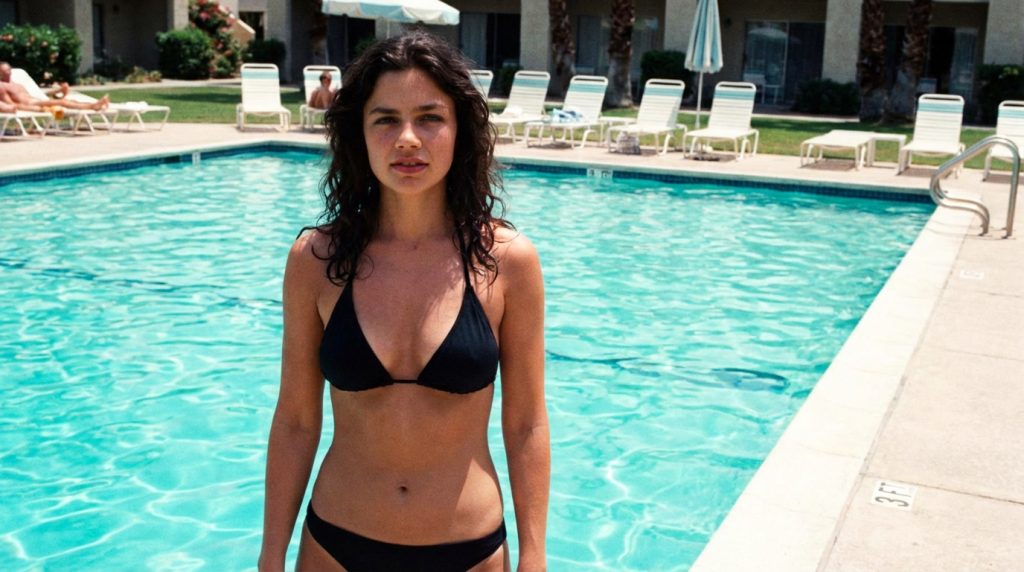
The face the world thought it owned
Mallory Keaton was written as shallow—the pretty one, the light punchline—but Bateman played her with teeth, timing, and a kind of deadpan intelligence that made the stereotype uncomfortable. By the end of it, she’d carved a character out of a caricature. She earned award nominations, hosted SNL, and for a while became the exact kind of fame object that her later books would carve open with a scalpel.
Because fame is something she’s studied the way some people study ancient ruins. Not from a pedestal—never that—but from the inside out, peeling off the plaster to see the machinery.
Hollywood’s favorite misfit
She kept acting, sure—Satisfaction, Men Behaving Badly, Desperate Housewives, Californication, a little Arrested Development cameo where she leaned into the meta-joke of being Jason’s sister. But the whole time, you could feel the tension: she wasn’t built to be someone else’s idea of what an actress should be.
That’s why she walked away. Reinvented herself. Got into web series before web series had budgets. Won a Streamy. Landed indie films. Touched theater with the same deliberate ferocity she brings to everything else—Miller, Mamet, Wedekind. Heavy, sharp-edged stuff, the kind of work that lets an artist bleed a little.
The second career Hollywood never saw coming
Then she rewired herself completely.
Not metaphorically—literally.
She went back to school and got a degree in computer science and digital media management from UCLA. The actress the world thought it had categorized suddenly knew more about algorithms and digital ethics than most studio executives.
And that’s where Justine Bateman became dangerous.
The filmmaker who doesn’t blink
Her directorial debut, Five Minutes, hit Toronto and Tribeca. Violet premiered at SXSW—Olivia Munn wrestling with intrusive thoughts while Bateman peeled apart the way fear puppeteers a life. Then came LOOK and FEEL, films she didn’t just direct—she architected.
She wasn’t chasing trends. She was interrogating them. She wasn’t asking permission. She was building something else entirely.
The one-person riot against AI
When the industry turned toward synthetic faces and machine-made performances, Bateman locked her jaw and refused to be polite about it. She wrote about it, testified, organized, warned anybody who’d listen that letting AI replace human creativity was the artistic equivalent of swallowing poison because the bottle looked shiny.
She founded CREDO23—a certification for work made without generative AI. An organic label for stories made by actual humans with actual skin and actual instincts.
Hollywood shrugged at first.
Then the strikes came.
And suddenly everyone realized she’d been right the whole time.
A woman who refuses to sand down her edges
Fame never tamed her.
Aging never shamed her.
Politics didn’t scare her.
Opinion didn’t soften her.
She stood in front of Congress arguing for net neutrality. She told the world exactly what she thought of the tabloid machine that tried to twist her into a partisan prop. And when two royal celebrities flew into a fire-ravaged neighborhood for a photo op, she called them what she saw: disaster tourists. No PR varnish, no trembling diplomacy.
That’s the thing about Justine—she’s allergic to false notes. Always has been.
The woman she became
She designs clothes.
She flies planes.
She scuba dives.
She raises a family.
She makes films that bite back.
She writes books that peel apart the illusion of glamour like old wallpaper.
She doesn’t smooth the wrinkles on her face. She earned them.
She doesn’t hide from the world. She interrogates it.
She doesn’t try to be timeless. She tries to be true.
And that’s why she’s lasted—because she refuses to be consumed by the very machine she understands better than anyone.
Justine Bateman didn’t escape Hollywood.
She dissected it.
Then she built something better in its place.

