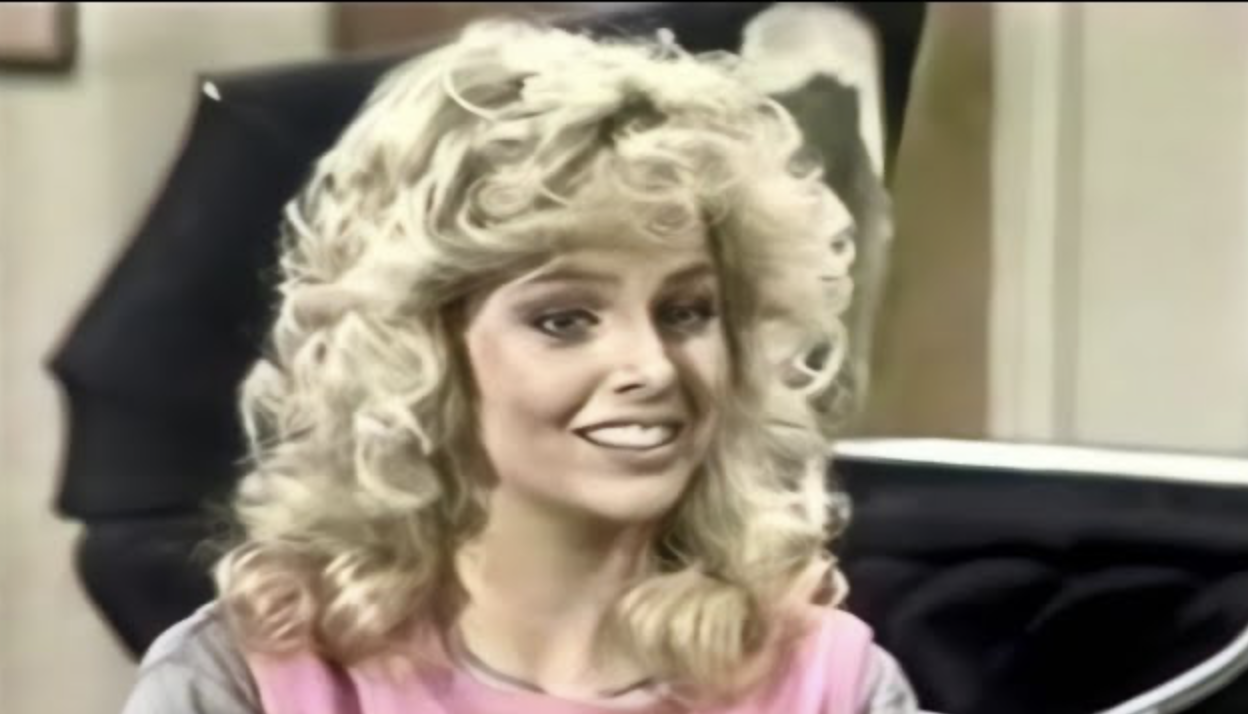
Kathryn Crosby—born Olive Kathryn Grandstaff—had one of those old-Hollywood careers that looks, on paper, like a rocket ship…and in real life, like a deliberate exit at the exact moment the spotlight got hottest. She worked steadily in films in the 1950s under the stage name Kathryn Grant, landed high-profile parts in studio pictures, and then—after marrying Bing Crosby—chose a different kind of life: raising a family, building a second identity, and eventually becoming a registered nurse. She died in 2024 at age 90.
Texas roots, a Fine Arts path, and a new name
Kathryn was born November 25, 1933, in West Columbia, Texas, and later earned a Bachelor of Fine Arts from the University of Texas—a background that framed her as more than “another pretty face” arriving in Hollywood. When she began acting professionally, she used the name Kathryn Grant, and started working in films in 1953, during an era when the studios still expected actresses to be ready-made “types” the camera could sell.
A 1950s film run that put her in the room with legends
Her career is often summarized with a few titles because they carry real cultural weight: Operation Mad Ball (a brisk, smart studio comedy), Anatomy of a Murder (prestige courtroom drama), and The 7th Voyage of Sinbad (fantasy adventure spectacle). Those credits matter because they connect her to major Hollywood lanes, and to big names that were the gravitational centers of the era.
-
Big studio comedy: She appeared in Operation Mad Ball with Jack Lemmon, a film that sits right in that late-’50s sweet spot where American comedy still had a tailored, theatrical rhythm—fast dialogue, clean setups, and actors who could carry a scene with timing instead of volume.
-
Prestige courtroom drama: She appeared in Otto Preminger’s Anatomy of a Murder, a film remembered not just for the performances (and the era’s daring subject matter), but for the sense that the courtroom could be a stage where morality is argued, not declared. Being in that picture placed her in a serious cinematic room, not just a glamorous one.
-
Adventure/fantasy spectacle: She also worked in the effects-driven world of The 7th Voyage of Sinbad, a film that still gets revisited because it represents a time when imagination was built with craftsmanship—sets, costumes, and stop-motion wonder—rather than digital certainty.
Her filmography also includes work opposite major leading men of the period (including Tony Curtis in Mister Cory and Victor Mature in The Big Circus), and the record of her career suggests she wasn’t locked into one single “type.” She could read as elegant, capable, and warm—an actress who fit comfortably into the studio system’s idea of polish, but could still give the impression there was a person behind the surface.
The moment her public story changed: meeting Bing
One of the more unusual details about her biography is the way she and Bing Crosby met: she wasn’t simply “discovered” at a party or cast into his orbit through a studio; she reportedly met him while doing interviews connected to a Hollywood column she wrote for her hometown newspaper. That detail matters because it hints at something often overlooked in her story: she had interests that weren’t purely performative. She wasn’t only building an acting résumé—she was also building a voice.
They married in 1957—she was 23, he was 54—and from there, the center of gravity shifted. It wasn’t just that she became “Bing Crosby’s wife.” It’s that she made a choice that Hollywood rarely celebrates, because it doesn’t fit the usual myth: she stepped away before the industry could step away from her.
Curtailing the acting career—without disappearing
After the wedding, Kathryn largely pulled back from acting, but she didn’t vanish. She appeared in public-facing projects that were adjacent to Bing’s world—most notably Christmas television specials that included the family, and even commercials where the image being sold was domestic stability and recognizable charm. In other words, she didn’t “quit” so much as she redefined what participation looked like.
This is the part of her story that’s easy to misread. The superficial version is: actress marries famous singer, career ends. The more accurate version is: actress chooses to stop auditioning for a system that demands endless availability, and instead builds a life in which entertainment is no longer the main engine of identity.
The second act: nursing
In 1963, she did something that still feels startling for a former film actress: she became a registered nurse, training at Queen of Angels Hospital in Los Angeles. That isn’t a cute side detail—it’s a full pivot into an identity defined by responsibility rather than image. Nursing isn’t glamorous. It isn’t applause-based. It’s competence, endurance, and care under pressure.
For a person who had already experienced the strange unreality of Hollywood attention, nursing is almost the opposite pole: you are seen at your most human, by people at their most vulnerable, and the work matters whether anyone praises you or not. That decision tells you a lot about her temperament: she wasn’t addicted to spotlight. She was capable of trading it in.
Broadcasting and public life on her terms
Later, she hosted a morning talk show on KPIX-TV in Northern California. That’s another version of performance, but it’s fundamentally different from being a studio actress. Hosting is conversational. It’s controlled by your presence rather than your casting. It’s less about being chosen and more about holding the room.
After Bing Crosby died in 1977, she re-entered public life selectively. She performed in stage productions including Same Time, Next Year and Charley’s Aunt, and she appeared in the 1996 Broadway revival of State Fair, playing Melissa. These weren’t attempts to reclaim “movie-star status.” They were curated choices—work that kept her connected to performance without requiring her to rebuild her entire identity around it.
Legacy work: golf and community continuity
For 16 years ending in 2001, she hosted the Crosby National golf tournament in Bermuda Run, North Carolina. This is the kind of public role that can look minor until you realize what it actually represents: consistency. Showing up. Being the public face of an event year after year. It’s not stardom; it’s stewardship.
Later years and death
She later married Maurice Sullivan; he died in a 2010 car accident that seriously injured her. She lived into her 90s, and died on September 20, 2024, in Hillsborough, California, at age 90.
Why Kathryn Crosby still feels relevant
Kathryn Crosby’s story doesn’t fit the typical arc that biographies crave—no big scandal, no bitter downfall, no melodramatic comeback. What makes her interesting is quieter: she repeatedly chose agency. She had a legitimate Hollywood run, married into an even bigger public narrative, and then built “offstage” identities—mother, nurse, host, community figure—without treating them like consolation prizes.
In an industry that often teaches people to equate attention with value, her life reads like a counterargument: you can step away from the camera and still live a life that’s fully real, fully accomplished, and—depending on your values—more meaningful than the career you left behind.