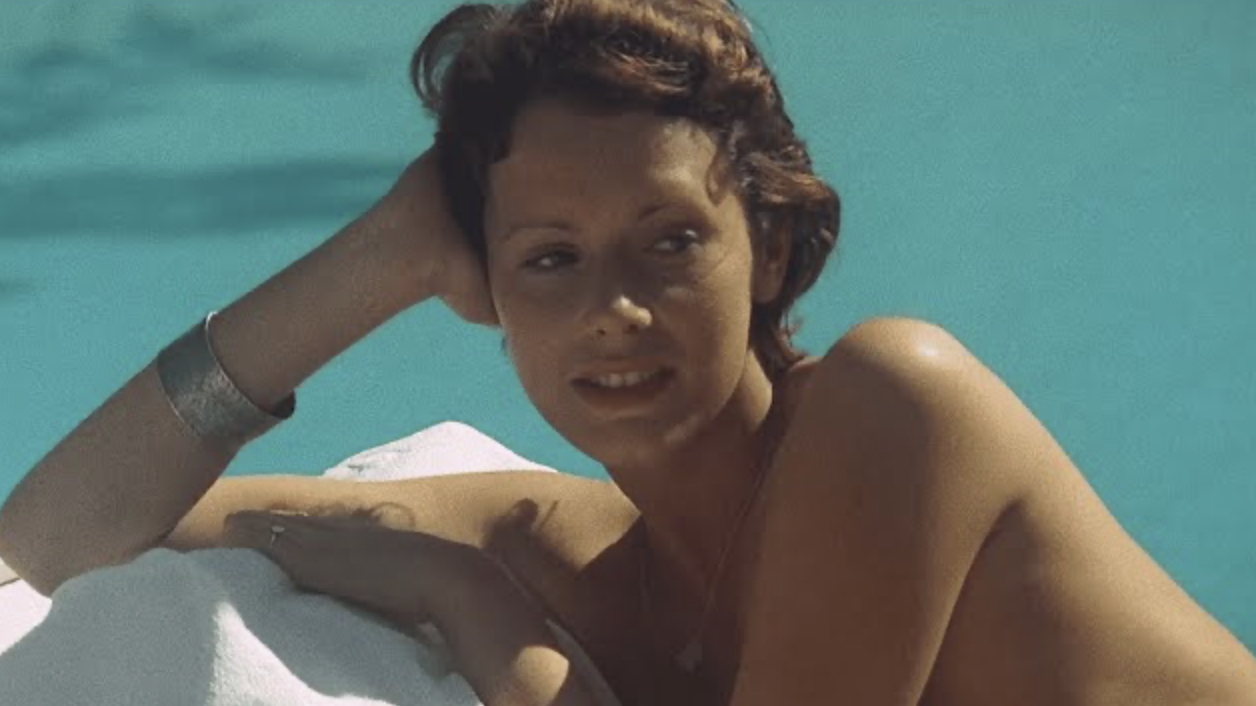
She was born in Dana Point in 1969, which means ocean air, expensive sunsets, and the quiet understanding that beauty doesn’t guarantee safety. Melinda Patrice Clarke grew up around acting the way some kids grow up around machinery—close enough to see how it works, close enough to know it can bite you if you’re careless. Her father was an actor. That fact alone strips away most illusions. When you grow up watching someone chase roles, memorize lines, and wait for phones to ring, you learn early that the business isn’t magic. It’s labor. Emotional labor, mostly.
She didn’t enter Hollywood wide-eyed. She entered alert.
There was loss early. One of her sisters died young, taken by a malignant heart tumor. That kind of grief doesn’t announce itself loudly; it settles in your posture. It teaches you that nothing is permanent—not families, not bodies, not security. That knowledge shows up later, whether you want it to or not.
Melinda Clarke started working at the tail end of the ’80s, when television was loud, glossy, and allergic to subtlety. Her first major stop was daytime television, on Days of Our Lives, playing Faith Taylor. Soap operas are where actors learn stamina. You don’t get time to prepare, you don’t get time to doubt. You show up, you cry on cue, you kiss strangers, you say things you’d never say in real life, and then you do it again tomorrow. It’s not glamorous. It’s training.
From there, she drifted into genre work—the kind that doesn’t apologize for itself. In 1993, she starred in Return of the Living Dead 3, a film soaked in blood, metal, and grief. Horror doesn’t ask actors to be polite. It asks them to commit. Melinda Clarke committed. Pain, desire, terror—she leaned into it instead of blinking. That’s where people first noticed something different. She wasn’t trying to be likable. She was trying to be real.
And then television figured out what to do with her.
She became Velasca, the Amazon chieftain on Xena: Warrior Princess, all fury and myth and bare feet on dirt. Then she showed up as a siren on Charmed, singing men into oblivion. Then she appeared on Firefly as Nandi, a brothel madam with more dignity than most heroes. These weren’t damsels. These were women who understood power and used it without apology.
Then came Lady Heather.
Six appearances across years on CSI, playing a dominatrix who never flinched. Lady Heather didn’t beg. She didn’t explain herself. She didn’t soften her edges to make men comfortable. Melinda Clarke played her like someone who’d already accepted the world’s judgment and decided it wasn’t worth negotiating with. Audiences remembered her because she didn’t ask to be remembered.
She even dropped into Seinfeld once, playing Jerry’s girlfriend with a taste for hairlessness. A small role, played straight, because comedy is about confidence, not volume. You don’t push the joke. You stand still and let it trip over itself.
Then The O.C. happened, and suddenly Melinda Clarke wasn’t just a scene-stealer—she was the storm system circling the entire show.
Julie Cooper entered the series as a guest star, meant to pass through quietly. Instead, she stayed. The audience wouldn’t let her go. Julie was devious, selfish, glamorous, desperate, and terrified of losing the life she’d clawed together. Critics called her shallow. They missed the point. Shallow people don’t scheme that hard. Shallow people don’t survive like that.
Julie Cooper was a woman performing wealth the way an actor performs a role—because for her, it was one. Melinda Clarke understood that instinctively. She played Julie as someone always balancing on the edge of exposure, smiling through fear, lying because the truth would cost too much. Fashion helped. Juicy Couture tracksuits, plunging necklines, jewelry that screamed security while hiding panic. Clarke didn’t mock Julie. She protected her. That’s why the character worked.
She stayed on The O.C. for four seasons, transforming what could’ve been a stock villain into something human. Viewers hated Julie Cooper. Then they understood her. Then they missed her. That’s the arc of a good performance.
She didn’t disappear after that. She leaned sideways.
She played herself—fictionalized—on Entourage, married to Malcolm McDowell’s Terrance McQuewick, because if you’re going to mock Hollywood, you might as well do it honestly. She moved through television films, guest spots, voice work. She voiced characters in The Animatrix, Avatar: The Last Airbender, King of the Hill. Voice acting is humbling. No face. No body. Just sound and timing. It keeps you honest.
Then came Nikita.
Amanda wasn’t a villain you loved to hate. She was a villain you feared. Calculated, cold, brilliant, unrepentant. Melinda Clarke leaned fully into it. Fans didn’t want Amanda redeemed. They wanted her worse. Clarke understood that too. Evil doesn’t need excuses. It needs clarity. She gave it that. For four seasons, Amanda wasn’t softened, wasn’t rescued, wasn’t forgiven. She stood as proof that women on television didn’t have to be redeemed to be compelling.
Somewhere along the way, action figures were made in her likeness. That’s a strange immortality—plastic proof that a character mattered enough to be molded, boxed, and sold. Velasca. Jessica Priest. Not ingénues. Not love interests. Warriors and killers.
She became known for playing outsiders, manipulators, women who controlled rooms instead of decorating them. That reputation stuck because it was earned. Casting directors don’t keep calling you for dangerous roles unless you deliver danger without flinching.
Offscreen, life moved differently. She married young, divorced, became a mother. Raised a daughter while navigating an industry that still doesn’t forgive women for aging or prioritizing anything other than availability. Later, she married again, quietly, back in Dana Point. Full circle. Same ocean. Different scars.
In recent years, she’s reclaimed her past without nostalgia. She co-launched a podcast revisiting The O.C., not as a reunion cash grab but as an autopsy. What worked. What didn’t. Why it mattered. Then she launched another podcast with her daughter, which might be the most honest evolution possible: passing the mic without surrendering your voice.
Melinda Clarke never played the game the way it was advertised. She didn’t chase sweetness. She didn’t beg for sympathy. She played women who wanted things and weren’t ashamed of it. Women who knew how the world worked and adjusted accordingly. That made people uncomfortable. That’s usually how you know you’re doing something right.
She’s still working. Still sharp. Still capable of walking into a scene and tilting it off balance with a look.
Hollywood doesn’t reward that kind of consistency with monuments. It rewards it with silence when you stop. Melinda Clarke never stopped. She just learned how to survive without needing applause.
And that—more than fame, more than nostalgia—is the real trick.