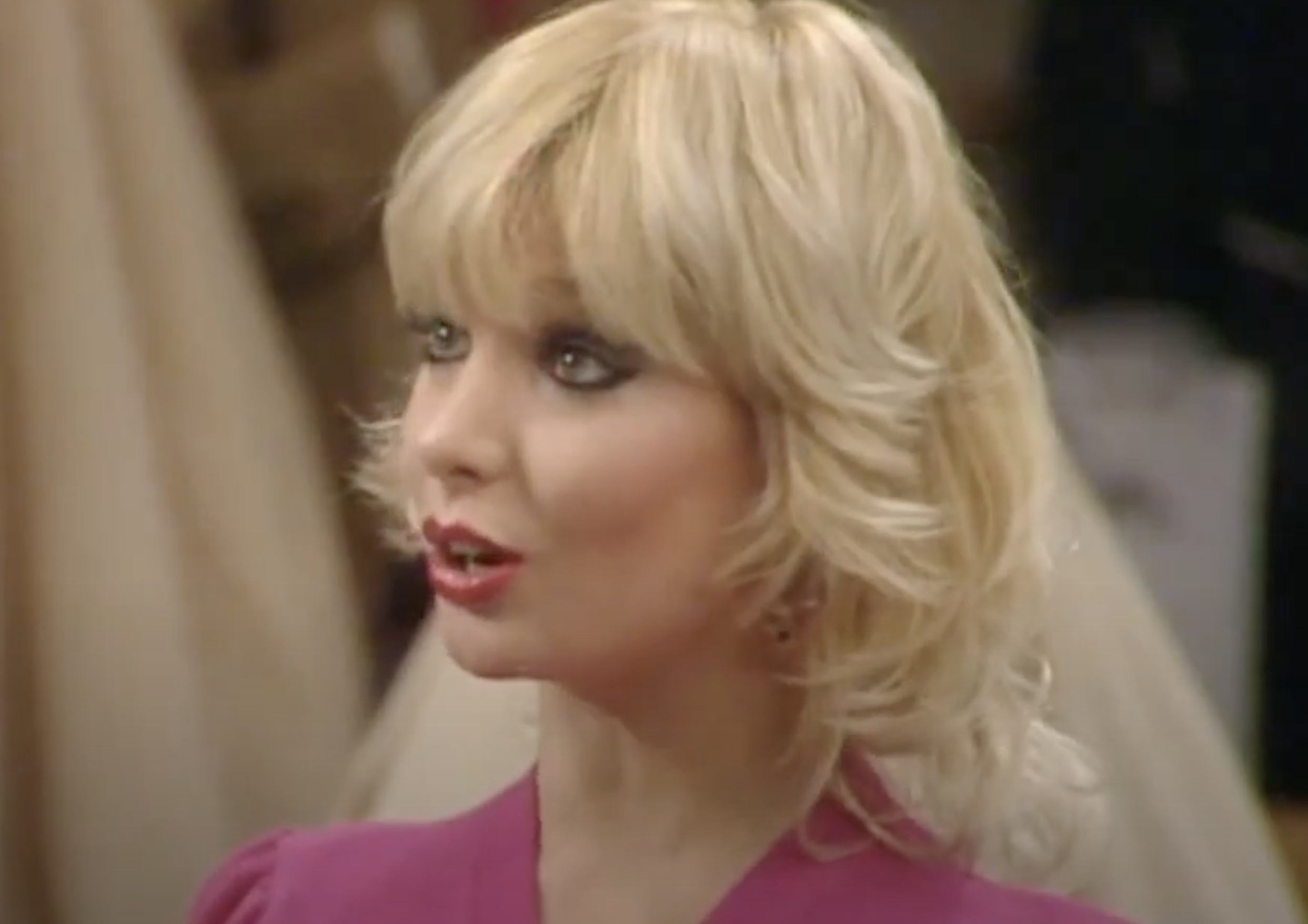
Olivia Barash was born on January 11, 1965, in Miami, Florida, but her real origin story began in New York City—the place where lights burn hot, stages growl with ambition, and kids learn early that talent isn’t enough unless you can outwork everyone else in the room. Olivia started performing professionally at age eleven, but even before that she was absorbing the rhythms of the stage: acting, singing, dancing her way through classic musicals.
She played Baby June in Gypsy—yes, that Baby June—the child tornado at the heart of one of Broadway’s most merciless stories, and she did it opposite Angela Lansbury. Imagine that: a kid going toe-to-toe with one of the greats and holding her own. She became the first child actress to win the New York Critics’ Circle Award, a sign that the industry had its eye on her long before Hollywood ever came calling.
Her family moved west while she was still young, dropping her into the sun-soaked chaos of Los Angeles. She attended Palisades High, graduating in 1982, but by then she’d already logged more screen credits than actors twice her age.
One of her earliest, strangest onscreen moments came in the pilot of The Incredible Hulk, where she reenacted the infamous “flower girl” scene from Frankenstein, except this time the gentle giant wasn’t Boris Karloff—it was Lou Ferrigno, green-skinned and raging. Olivia’s character befriends the Hulk, only to watch her father shoot him in fear, triggering the Hulk to fling the man into a lake. TV in the ’70s didn’t do subtle.
She popped up in Mary Hartman, Mary Hartman, that surrealist fever dream disguised as a soap opera, then landed a lead role in the CBS sitcom In the Beginning (1978)—a show about a conservative priest and a liberal nun trying to run a mission in Baltimore. It fizzled after five episodes, but Olivia held her own in the chaos of network TV. That same year she co-starred in Child of Glass, playing the ghost of a murdered antebellum girl. It was a role that could’ve gone corny in lesser hands; with her, it landed somewhere closer to eerie and aching.
Her teenage years were spent on sets, but her real transformation happened in the ’80s, when she started to slip into the edges of punk cinema and underground culture. That’s where Olivia Barash fully came alive.
In 1984, she stole scenes in Alex Cox’s cult classic Repo Man as Leila—the quirky, intense UFO cultist with hair that defied gravity and eyes that hinted she had seen something no one else understood. Repo Man became a cornerstone of outsider filmmaking, and Olivia fit right into that radioactive world.
She followed it with Tuff Turf (1985), playing opposite Robert Downey Jr. and James Spader. It was the kind of ’80s teen drama that explored rebellion as a rite of passage rather than a wardrobe choice. Olivia played Ronnie—a character simmering with attitude, vulnerability, and the complicated energy that made her impossible to forget even in a star-packed cast.
Television called her back in 1987 with Fame, where she played Maxie Sharp, giving her a chance to mix acting with music again—a merging of her two lifelines. Then Paul Schrader cast her in Patty Hearst (1988), putting her in the middle of a story about violence, brainwashing, and American mythology.
In 1990, Oliver Stone personally wrote her into The Doors—a sign of the respect she commanded among filmmakers who liked their actors a little unruly, a little electric. She played a folk singer on the Sunset Strip and performed her own original song, “Who’s Walking Away,” a track published under Warner Chappell after she signed with them in 1992. From there, music became her primary heartbeat. Through the ’90s and beyond, she wrote, recorded, performed—becoming not just an actress playing musicians, but a musician in her own right.
Her film work continued in bursts: Floundering (1994), a cameo in Repo Chick (2009), experimental shorts, indie features, and projects where filmmakers wanted not just a performer but a presence.
That’s Olivia Barash’s whole career in one truth:
She never chased the spotlight. She chased authenticity.
She built a life in the margins—where cult cinema breathes, where music thrives without polishing, where actors age without losing their pulse. She was a child star who didn’t burn out because she refused to play the usual game. She slipped into the underground, into the fringes, into the subcultures where the stories are strange and raw and real.
And she never disappeared.
She just grew up on her own terms.