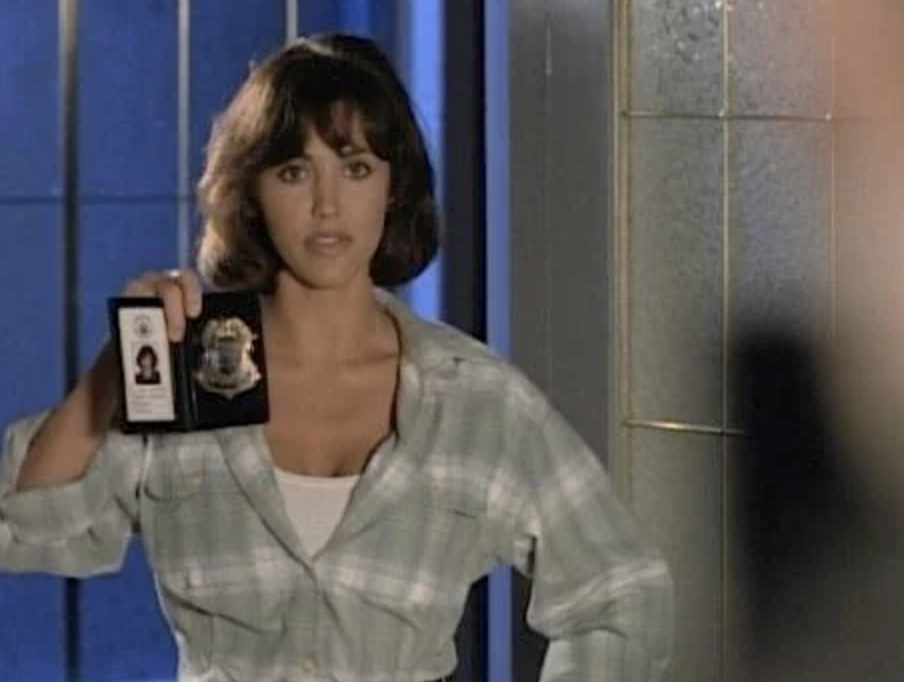
Sandra Dorsey never waited for permission. She didn’t sit by the phone hoping Hollywood would call, didn’t mistake fame for usefulness, didn’t confuse applause with purpose. She was one of those women who understood early that the industry eats the unprepared alive—and instead of feeding herself to it, she learned how to build her own kitchen.
She was born on September 28, 1939, in Atlanta, Georgia, a city that hums with history and tension, a place where art always feels like it has to fight for oxygen. Dorsey grew up with discipline in her bones and music in her lungs. Long before anyone thought of her as an actress in films—horror or otherwise—she was already a teacher, a director, a builder of systems. The kind of woman who doesn’t just walk on stage but asks who owns the lights, who trained the performers, and who’s going to clean up afterward.
In 1977, she founded Dorsey Studios in Atlanta. That alone tells you everything. While others chased coasts and casting calls, Dorsey planted a flag in the South and said, we can make artists here. She taught acting and singing, first in New York City, then back home, shaping performers who would never know her name once the curtain went up—but who would carry her work in their posture, their breath, their nerve.
She taught at the Alliance Theatre. At Emory University. At Oglethorpe University. At the University of Georgia. She belonged to the Screen Actors Guild, Actors’ Equity, television and radio unions, arts councils, academic societies. She even served as SAG president for the state of Georgia. That’s not glamour. That’s infrastructure. That’s someone who understands that art collapses without organization.
And still—she performed.
On Broadway, no less. Five productions, each one demanding, each one a reminder that she wasn’t just a mentor hiding behind credentials. She appeared in Illya Darling with Melina Mercouri. Gantry with Robert Shaw and Rita Moreno. Drat! The Cat! with Elliott Gould. On the Town with Bernadette Peters and Phyllis Newman. Mata Hari, directed by Vincente Minnelli, with Pernell Roberts. These aren’t footnotes. These are battles survived.
She toured nationally as Fraulein Kost in Cabaret, directed by Harold Prince—one of those roles that requires steel under silk. She wrote and directed Biba Revue at Maxim’s in Chicago. She directed and choreographed Amahl and the Night Visitors in Atlanta. She served as musical director for An Evening with Rodgers and Hammerstein. She directed Jacques Brel Is Alive and Well and Living in Paris, a show that doesn’t tolerate falseness. Brel eats pretenders for breakfast.
By the time she stepped into film, Sandra Dorsey was already unkillable.
Her first screen role came in 1976 with Grizzly, a drive-in horror picture that knew exactly what it was. Dorsey understood those films. She didn’t look down on them. She knew genre was just another stage, another place to do the work honestly. She followed it with They Went That-A-Way & That-A-Way in 1978, then appeared in Norma Rae in 1979 alongside Sally Field and Beau Bridges—a film about labor, dignity, and resistance. It fit her perfectly.
Her husband, Joe Dorsey, appeared alongside her in several projects. They worked together without spectacle. No celebrity marriage nonsense. Just two professionals sharing a craft and a life.
Then came the role she’d be remembered for by a generation that grew up on VHS tapes and late-night cable.
Sleepaway Camp III: Teenage Wasteland.
Sandra Dorsey played Lily Miranda, the camp owner—maternal, controlling, doomed. Horror fans remember her for one reason: a lawnmower, a decapitation, a death scene that’s brutal, absurd, unforgettable. It’s been called one of the best death scenes in the film, maybe the series. What most viewers didn’t know is that Dorsey approached it the same way she approached Broadway and teaching—commit fully, don’t apologize, make it real.
There’s a quiet joke buried in the film. Her character Lily, and Michael J. Pollard’s Herman, were named after Lily and Herman Munster. The campers were named after The Brady Bunch. Dorsey got the joke. She understood camp. She understood that horror and comedy share a bloodstream.
It was her second collaboration with director Michael A. Simpson, after Impure Thoughts in 1986. By then, Dorsey knew how to navigate low-budget filmmaking without ego. She knew how to make chaos productive.
She appeared in television as well—The Dukes of Hazzard, TV movies like Passing Glory with Rip Torn, Frankensteinwith Parker Posey, Angel City. None of it flashy. All of it solid. Her final feature film role came in 1995 with Disney’s Gordy, where she played Maxine. After that, she stepped away from the screen—not because she had nothing left, but because she’d already given more than most.
Sandra Dorsey was never chasing immortality. She was building continuity.
She spent decades shaping performers who would never know how much of their confidence belonged to her. She organized unions. She taught vocal technique. She directed with precision. She choreographed with purpose. She knew that art is not just expression—it’s survival.
When she died on September 26, 2023, two days before her 84th birthday, from pancreatic cancer, there were no studio retrospectives, no red-carpet tributes. That’s how it goes for builders. The house stands, but no one remembers who laid the foundation.
Sandra Dorsey didn’t need to be remembered loudly.
She lived like someone who knew the difference between being seen and being necessary.
She was necessary.