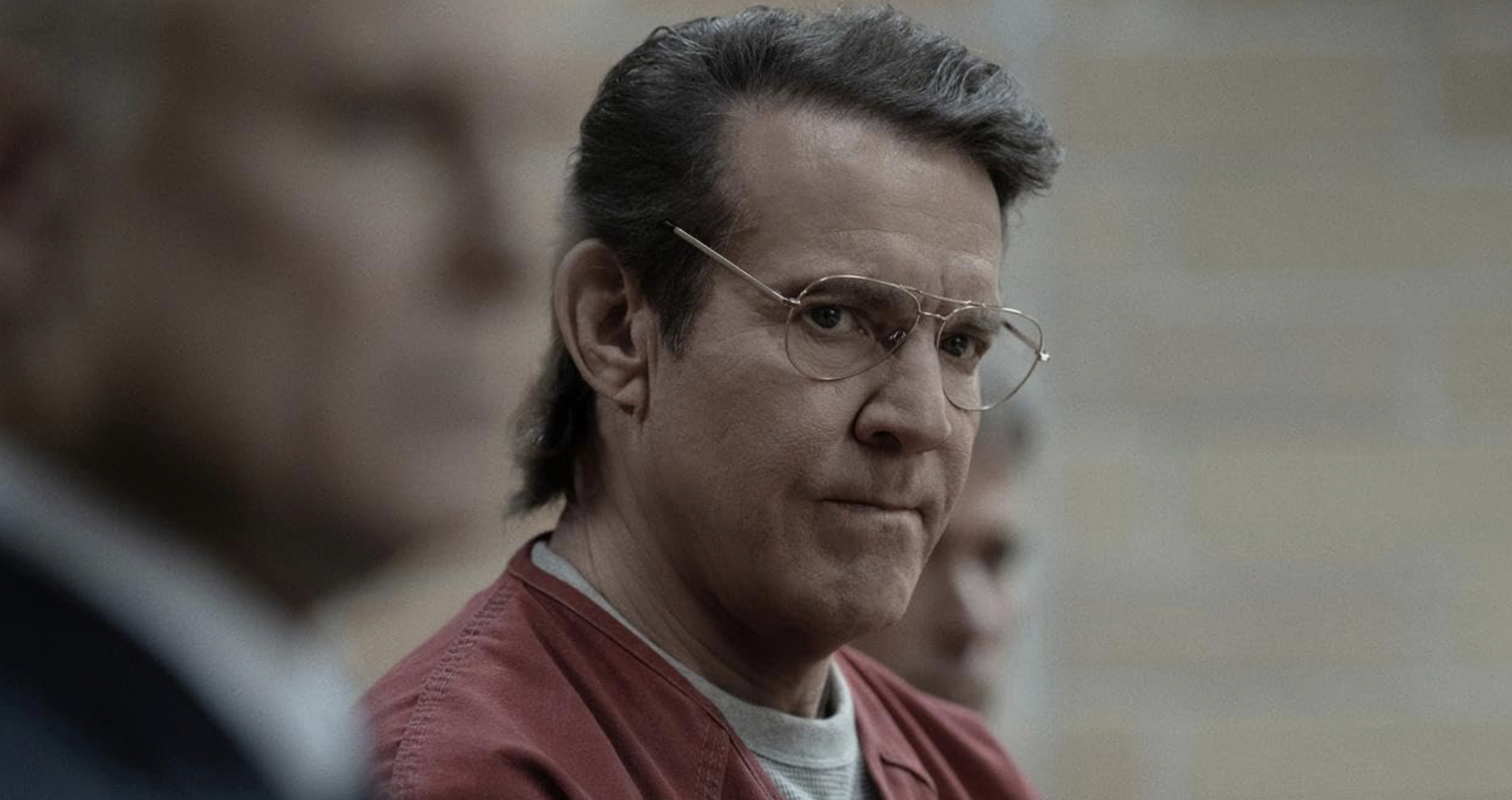
A slasher that mostly stabs itself
The Love Butcher is the kind of movie that wants to be shocking, daring, and psychologically complex—but mostly ends up looking like it tripped over its own premise and landed face-first in a rake. Twice. It’s a 1975 slasher about a crippled gardener with a dead-brother complex who moonlights as a wig-wearing, woman-murdering alter ego named Lester. On paper, that sounds like an unholy mash-up of Psycho, Maniac, and a guest star from Columbo. On screen, it’s more like watching a community-theater thriller that accidentally got released and no one had the heart to stop it.
Caleb and Lester: the discount Norman Bates
Our protagonist (and antagonist) is Caleb, a lonely, physically disabled gardener in an affluent Los Angeles neighborhood. He’s haunted by visions of his dead brother, Lester, a swaggering, handsome womanizer who exists mainly to insult him and feed the world’s cheapest dual-personality setup. Lester isn’t so much a character as a human You Suck sign.
When Caleb “becomes” Lester, he takes off his glasses, puts on a wig, changes clothes, and suddenly he’s a lady-killing ladies’ man… who then actually kills ladies. It’s the kind of psychological portrait that might impress you if you’ve never met a human being or seen any movie made before 1960. The film seems convinced this is deep, layered stuff. In reality, it’s cosplay with bloodstains.
The dual role might have worked if the script had any interest in subtlety. Instead, it plays mental illness like a costume change: glasses on, sad crippled Caleb; glasses off, sexy murder-bro Lester. It’s like a very deranged Clark Kent, only with fewer ethics and even less hairstyling budget.
Misogyny, now with garden tools
The women of The Love Butcher mostly exist to die creatively, complain, or have terrible taste in men. Sheila, the young neighbor who fires Caleb after an argument, is first on the menu. Later, he gets into her house by pretending to be a Mexican record salesman—complete with a caricature that ages like milk left in a parked car—because she likes rock music. That’s the bar here: “She likes records, so she’ll let a complete stranger in at night.” Sure.
Her death, via being drowned in her pool with a running hose shoved down her throat, is meant to be shocking and perverse. Instead, it feels like the filmmakers spent all afternoon brainstorming “What’s the sickest thing we can think of?” and absolutely no time asking, “Does this actually work in a scene?” The violence is ugly, but not in a way that exposes anything about the characters—just in a “we’re trying so hard to be nasty” way.
Flo, the reporter’s girlfriend, fares no better. She’s attacked, tormented, and slowly broken down until she literally begs to be killed. It’s grim, but not in a meaningful way; it’s suffering for the sake of suffering. The movie mistakes cruelty for depth, as if making everything more sadistic automatically makes it more sophisticated. Spoiler: it doesn’t. It just makes it awkward.
The world’s least inspiring investigation
Russell, the local reporter poking around the murders, is supposed to be our stand-in for Reason and Curiosity. Instead, he’s more like a slightly animated filing cabinet: vaguely functional, deeply uninteresting, and destined to be thrown away. By the time he figures out Caleb is the killer, he heads over to save Flo and promptly gets butchered for his effort, which feels less like tragedy and more like the movie finally admitting it has no idea what to do with him.
The police exist mostly as background noise—sirens, uniforms, generic “we’re baffled” dialogue. They neither contribute much nor pose a real threat to Caleb/Lester until the script remembers it needs an ending. It’s like watching a city occupied entirely by extras and one part-time journalist, and honestly, you can’t blame the killer for having such an easy time of it.
Trauma as a discount twist
Late in the film, Caleb’s backstory is finally wheeled out like a half-frozen turkey: a childhood memory at Lester’s funeral, where their mother tells him she wishes he had died instead. This is meant to tie everything together—his self-loathing, the hallucinations, the fixation on Lester, the violence.
In a better film, this could be devastating. Here, it lands with a thud. It’s just one more “See? He’s messed up!” sticker slapped onto a character who’s already been reduced to a walking pathology. There’s no exploration, no nuance, no sense of how that trauma shaped his day-to-day existence beyond “he hates himself and kills women.” It’s like the movie skimmed a pop-psychology pamphlet and decided that was enough for a feature-length script.
Tone-deaf and tonally lost
The biggest problem with The Love Butcher isn’t just that it’s mean-spirited; it’s that it has no idea what mood it’s aiming for. Sometimes it wants to be a grim psychological horror. Sometimes it seems to be flirting with camp—Lester’s “suave” persona, the disguises, the absurd record-salesman bit. Sometimes it falls into accidental comedy when the low budget and stiff performances collide.
But the movie never commits to any of those lanes. The result is tonal whiplash: you’re not sure if you’re supposed to be horrified, amused, or just quietly depressed at the production values. The kills are too over-the-top to feel grounded, yet too joyless to qualify as fun exploitation. It’s stuck between grindhouse and gloomy character study and fails at both.
Low budget, low imagination
You can forgive a lot in a cheap 70s horror film: cardboard sets, weird cuts, sound that occasionally sounds like it was recorded in a cereal box. The real sin here is how little the movie does with what it has. The affluent neighborhood setting is ripe for satire or social commentary—violence blooming under well-tended lawns, repression behind white picket fences. Instead, it’s just window dressing for a story that might as well take place anywhere with houses and hoses.
Even Caleb’s job as a gardener could have been used more creatively. There’s something inherently creepy about someone hired to care for your property ending up fixating on you. The movie occasionally brushes against that idea, then wanders off to try another clumsy disguise or prolonged torment sequence. You’re left with the feeling that there’s a sharper, nastier, actually good movie buried somewhere under all this.
Mental illness as costume party
To be clear: this film has absolutely no interest in treating Caleb’s psychology as anything but an excuse. His disability, his trauma, his dissociation—these aren’t explored, they’re exploited. His hallucinations of Lester are cartoonishly cruel. His “transformation” is nothing more than removing glasses, changing outfits, and acting like a smarmy creep. It’s “split personality” as written by someone whose research consisted of misremembering Psycho.
Dark subject matter isn’t the problem. Horror can and should push into uncomfortable territory. But here, the handling is so shallow and sensational that it feels less like a horror film and more like a really tasteless PSA from a parallel universe where nuance died in pre-production.
Final verdict: love, butchered
In the end, The Love Butcher is exactly what its title promises: something once resembling a human emotion, hacked up beyond recognition. It’s a slasher that wants to disturb you, but mostly just irritates and occasionally bores you. The kills are nasty without being clever, the psychology is loud but empty, and the story leans so hard on its “twisted” premise that it never bothers to build anything solid around it.
If you’re digging through obscure 70s horror looking for hidden gems, this isn’t one—it’s more like a sharp rock that keeps cutting your fingers while offering nothing in return. There’s unintentional humor to be had—some of Caleb/Lester’s antics are so ridiculous they edge into so-bad-it’s-funny—but you have to wade through a lot of unpleasant, unearned ugliness to get there.
If this movie were a garden, it’d be a patch of dry dirt with a single, dying rose and a handwritten sign that reads: “NO REFUNDS.”