Henry James did not haunt this set, and it shows
The Turn of the Screw is one of the great ambiguous ghost stories of all time: eerie, psychologically rich, and soaked in repressed dread. The Turning (2020) is like its chaotic younger cousin who skimmed the book, forgot the ending, and tried to wing the rest while everyone was already rolling.
On paper, this had promise:
-
Mackenzie Davis as the governess
-
Finn Wolfhard as the deeply unsettling boy
-
Brooklynn Prince as the creepy-adorable girl
-
A gorgeous Irish estate standing in for American gothic
-
Steven Spielberg lurking in the background as a passionate producer
In practice, it’s a stylish pile of vibes with a third act that doesn’t so much “end” as it just… stops, like the movie itself lost interest.
Welcome to the Fairchild Estate, Please Check Your Logic at the Door
The story kicks off with Miss Jessel, the live-in tutor, fleeing the estate at night only to be attacked by a scruffy man we later learn is Peter Quint. It’s a decent, spooky cold open that suggests we’re in for something dark and unnerving. Technically, yes. Narratively, not so much.
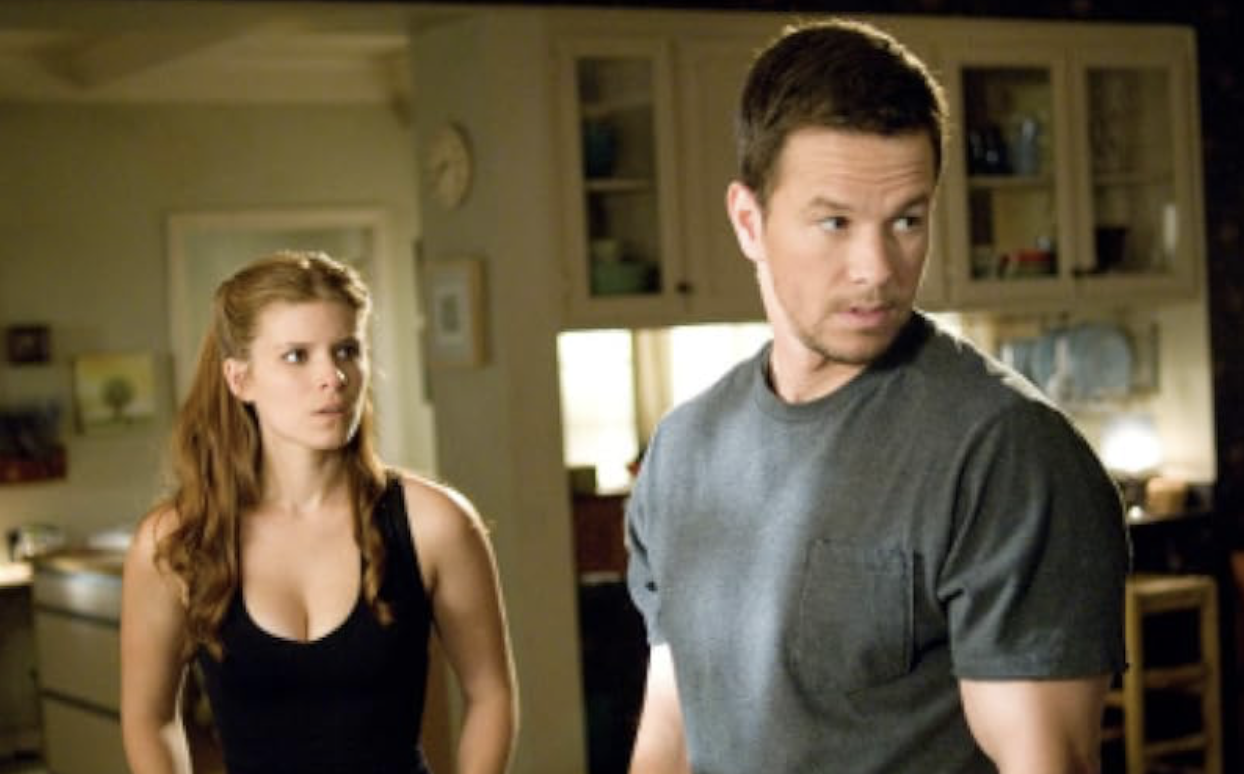
Cut to 1994 (for reasons?), where Kate Mandell (Mackenzie Davis) takes the job as governess for seven-year-old Flora Fairchild, whose parents died in a car crash. Before she leaves, she visits her mother in a mental institution. Her mom suffers from delusions, a detail the film keeps circling like a vulture: “Remember, mental illness runs in the family. This will be Important™.”
At the estate, Kate meets:
-
Flora, nervous, sweet, slightly off
-
Mrs. Grose, the caretaker who radiates “I’m Definitely Hiding Stuff”
-
The enormous mansion, which does most of the actual acting
Kate promises Flora she won’t abandon her like Miss Jessel did. This is cute, given we already know we’re watching a movie about abandonment on a structural level.
Enter Miles, Red Flag in a School Uniform
Miles (Finn Wolfhard) comes home from boarding school under a big, clanging bell of “this is not a well-adjusted child.” Kate soon gets a call from the school’s principal: Miles was expelled for strangling another boy.
So to recap, Kate’s new job conditions:
-
Haunted house energy
-
Kid with dead parents
-
Other kid expelled for light strangulation
-
No support system except one cryptic housekeeper
Naturally, she stays.
Miles and Flora pull pranks on Kate, which range from mildly unnerving to “I would have quit, blocked this number and changed my identity.” Kate freaks out at them, and Miles tries to smooth it over by offering to teach her to ride horses—a job previously held by Quint, the dead, drunken riding instructor. Nothing says “healing” like picking up the hobbies of your home’s dead predator.
Ghosts, Gaslighting, and Generic Gothic Dread
From here, we enter the “maybe ghosts, maybe mental illness, maybe lazy screenplay” stretch. Kate starts seeing:
-
Figures in windows
-
People in mirrors
-
Shadows in the halls
-
Quint lurking around like a wet cigarette
She discovers Miss Jessel’s journal, filled with increasingly disturbing notes about Quint’s obsession, stalking, and abuse. Mrs. Grose eventually admits she knew about the relationship and hints she had a hand in Quint’s death, which sounds juicy but never quite turns into anything satisfying.
The movie keeps giving you puzzle pieces but refuses to tell you if you’re building a haunted house, a psychological breakdown, or a studio note that says “leave it ambiguous, audiences love that.”
That Pond, That Vision, That “Is This Finally Going Somewhere?”
For a brief, shining moment, it looks like the movie is actually going to commit to a direction. Kate finds Miss Jessel’s dead body in a pond on the grounds. She has a vision of Quint assaulting and killing her. She confronts Mrs. Grose, who basically says, “Yes, I knew, also I definitely helped Quint die, but let’s emotionally process that never.”
Then Quint’s ghost pushes Mrs. Grose over the banister. She dies. This, finally, feels like plot.
Kate grabs the kids. They pile into the car and drive away. At this point you might reasonably think: “Okay, third act escape, confrontation, resolution—let’s go.”
Ahahahaha. No.
Surprise! That Plot You Liked Was Just a Daydream
Everything I just described? The escape, the banister death, the pond corpse, the sense of forward motion?
Kate imagined it.
The movie pulls the rug out from under that sequence with the cinematic equivalent of “just kidding,” revealing it as a fantasy in Kate’s head when she looks at her mother’s art and hears Mrs. Grose’s earlier comments about hereditary delusions.
We’re snapped back to the “real” timeline where:
-
Mrs. Grose is alive
-
Kate is unraveling
-
The kids are whispering about her
-
Quint might be a ghost or might be in her head or might be the scriptwriter’s unpaid intern
Kate insists that Flora saw Quint’s ghost in the mirror; Flora denies it. When Kate accidentally breaks Flora’s doll, Miles calls her delusional, which is rich coming from a kid expelled for strangling people.
Then the kids walk out. Kate hallucinates (or not) walking into her mother’s institution. A figure turns around; we don’t see the face. Kate screams. Smash to black. Roll credits. Audience: “…wait, what?”
Ambiguity or Just Abandonment?
Ambiguity can be brilliant when it’s earned. Henry James’s original story leaves you unsure whether the governess is seeing real ghosts or projecting her own repressed desires and neuroses. The tension is the point.
In The Turning, the ambiguity feels less like a thematic choice and more like a production meeting compromise:
-
“Is it ghosts?”
-
“Is it psychosis?”
-
“Are the kids possessed?”
-
“Is Kate cursed by generational trauma?”
-
“Yes.”
-
“Should we resolve any of it?”
-
“Absolutely not.”
The movie ends not with you questioning your interpretation, but with you questioning if the entire last 20 minutes were cut by a raccoon with Final Cut Pro. It feels like someone yanked out the third act and replaced it with a very long trailer for a better, nonexistent version.
Wasted Cast, Wasted House, Wasted Opportunity
Mackenzie Davis does everything she can with Kate. She delivers commitment, vulnerability, fear, and that slow creep of doubt. She’s acting in a much better film than the one she’s trapped in.
Finn Wolfhard leans into Miles’ unsettling vibe: charming one minute, menacing the next, like a kid who’s been taking “possessed boarding school boy” lessons. Brooklynn Prince is fantastic as Flora, balancing sweetness and unease.
The house itself is a stunner: grand, decaying, atmospheric—exactly the kind of place people should not be living unless they’re ready for a haunting or an inheritance.
And yet, with all of this… nothing really happens in a way that lands. Scenes hint at psychosexual tension, ghosts, trauma, possession, family history, repression—and then back away like the movie suddenly remembered it wants a PG-13 rating and international box office.
1994: The Year of… What, Exactly?
The choice to set the story in 1994 seems designed mainly to:
-
Avoid smartphones
-
Give Kate a grungy wardrobe
-
Play with some 90s aesthetics
Beyond that, the year adds very little. It doesn’t meaningfully comment on mental health attitudes, the era’s culture, or anything else. It’s just “kind of old but not Victorian,” which is… a choice.
Final Verdict: A Beautiful, Haunted Shrug
The Turning (2020) is a gorgeous-looking, well-acted film that somehow manages to be both too vague and not nearly mysterious enough. It flirts with big ideas—gaslighting, generational mental illness, abuse, grief—then ghosted all of them right before the relationship got serious.
It’s not entirely without merit:
-
Some individual scenes are eerie.
-
The kids are compellingly weird.
-
The production design slaps.
But the story collapses into an ending that doesn’t resolve, reframe, or even properly provoke. It just… stops, like the film drove itself into a narrative cul-de-sac and refused to reverse.
If you want a faithful, unsettling exploration of The Turn of the Screw, read the book or watch The Innocents. If you want to see what happens when a promising adaptation goes through development hell and comes out the other side missing a third act, The Turning is your case study.
Ironically, for a movie about seeing things that may or may not be real, the most haunting question it leaves you with is:
“Did they seriously think that was an ending?”