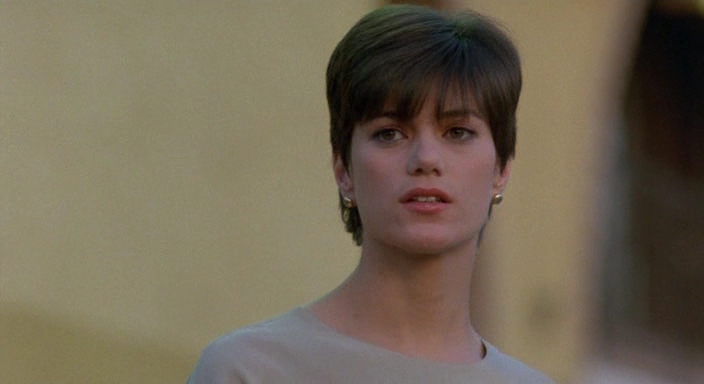
If you’ve ever thought, “I’d love to watch a horror movie that feels like a two-hour housing society WhatsApp rumor,” The Wife is here to serve. And by “serve,” I mean slowly sap your will to live while occasionally flickering the lights.
This 2021 Hindi horror film wants to be a spooky domestic chiller about marriage, trauma, and haunted apartments. Instead, it lands on “Raat Ka Saas-Bahu with one (1) ghost and zero originality.”
Let’s unpack this Ikea-flat of a movie, shall we?
The Setup: Newlyweds, New Flat, No Script
Varun and Arya buy a flat in the city. That’s it. That’s the personality.
We get the standard “young couple moving into a slightly too-nice-for-their-budget apartment” montage. There are cardboard boxes, a few mild arguments, and the general sense that no one involved in this production has ever actually moved house, because they’re weirdly relaxed for people about to live inside a paranormal PowerPoint template.
The haunting starts like it always does: strange sounds, weird sensations, hints that something is off. Except here it feels less like supernatural terror and more like bad plumbing and thin walls. Half the time you expect the ghost to be a neighbor complaining about the society maintenance fees.
“The rest of the story shows whether they solve the source of the haunting,” says the official plot synopsis, which is delightfully honest because it admits the film has only one job. The problem? It barely does that.
Varun: Husband, Victim, Occasionally Conscious
Gurmeet Choudhary makes his lead debut here as Varun, a man whose defining traits are:
-
Has hair
-
Has a wife
-
Is present in the flat
That’s…mostly it.
To be fair, Gurmeet tries. You can occasionally see a flicker of effort, like an actor trapped in a film that does not deserve him. But the character is so underwritten that he spends most of the runtime reacting to things like:
-
“Did you hear that?”
-
“Did you see that?”
-
“Did you feel that?”
It’s not so much character development as it is a paranormal Q&A.
You could swap him out with a slightly expressive houseplant and only notice when it’s time to deliver long, tragic backstory.
Arya: The Wife in The Wife, Barely the Lead in Her Own Trouble
Sayani Datta plays Arya, the titular wife who should, by all logic, be the emotional anchor of the film. Instead, she’s mostly there to scream, look scared, question her own sanity, and occasionally raise valid points that the plot politely ignores.
The movie seems torn between wanting to explore the psychological horror of a woman trapped in a haunted home andwanting to show off Varun as solemn, suffering hero. The result is that Arya becomes a glorified prop in her own story. She hears voices, sees things, freaks out, and then gets sidelined whenever it’s time for “serious” exposition or investigation.
It’s almost impressive how a film called The Wife manages to feel more emotionally invested in its male lead’s feelings than in the actual wife. Bold artistic choice, accidentally misogynistic flavor.
The Haunting: Ctrl+C from Every Other Movie, Ctrl+V into a Zee5 Budget
You know that feeling when you’ve seen the same scene so many times in different movies that it starts to feel like stock footage? The Wife is basically a playlist of those moments.
-
Doors opening by themselves: check.
-
Whispery voices at night: check.
-
Something moving in the background that the characters don’t see: check.
-
Mysterious backstory involving past tragedy in the house: triple check with extra clichés on top.
Every scare is telegraphed. The soundtrack might as well shout: “AND NOW… SOMETHING SPOOKY!” Just when you think they might subvert expectations, they don’t. At one point you can practically hear the editor counting, “3…2…1…JUMP SCARE.”
It’s not terrifying; it’s predictable. And the one thing you don’t want your horror movie to be is predictable. Okay, two things: predictable and dull. Unfortunately, The Wife commits both sins with the dedication of a government employee.
Ghost with No Personality
A good haunting usually has a ghost with a bit of flair—rage, sorrow, mystery, at least a mildly interesting backstory. Here, the entity feels like it was written by committee:
-
Must be tragic
-
Must be wronged
-
Must be angry
-
Must not require too many expensive effects
We do eventually get The Big Reveal about the source of the haunting, involving the past, some conveniently hidden truth, and the standard “we must free this spirit” talk. But the film never gives the ghost genuine emotional weight. They’re less “restless soul of a wronged woman” and more “software bug in the building’s paranormal system.”
By the time the climax rolls around, you’re not scared of the ghost so much as exhausted by the repetition. If this spirit wanted revenge, its main crime is choosing this script to do it in.
Dr. Raima Das, Police, and Other People the Plot Forgets About
There are side characters: a doctor (Shweta Dadhich), a cop, some neighbors, a few glimpses of earlier lives connected to the flat. In a better film, these would form a web of suspicion and emotional conflict. In The Wife, they drop in, deliver a line or two of expositional dialogue, and vanish into the narrative background like unpaid interns.
The doctor exists so someone can say “mental health” out loud without actually exploring it. The cop exists so someone can appear official while clearly being useless. The neighbors exist to prove that, yes, other people technically inhabit this universe.
You know a movie is struggling when the IMDb cast list has more detail than the script.
Production Value: Zee5-Level Haunting
Look, no one is expecting big-budget Hollywood visuals here. But if you’re going to go for slow-burn, atmospheric horror, you need either:
-
Strong visuals, or
-
Strong writing
The Wife has neither.
The apartment set is aggressively generic—a flat that looks like every mid-range Mumbai rental ever shot for TV. The cinematography tries for moody but often lands on “dim and slightly blurry.” The ghost effects are minimal and uninspired, like someone downloaded a “haunted filter” and called it a day.
There are glimmers of craft in a few compositions, but they’re drowned out by overall flatness. When your audience is paying more attention to the wall paint color than the supernatural activity, something has gone very wrong.
Pacing: Death by Slow Burn with No Fire
Slow-burn horror can be incredible. But it needs tension building, character work, and a sense of steadily tightening dread.
Here, “slow burn” is code for “nothing happens for long stretches except mild bickering and the occasional light flicker.” The film drags in the middle so hard it should be classified as a resistance workout. You can tune out for ten minutes, check your phone, come back, and still be fully updated because all you missed was Varun going, “Arya, relax,” and Arya going, “Varun, something is wrong.”
By the time anything significant happens, your emotional investment has already slipped out the door, taken the lift, and moved to another city.
Final Verdict: Not So Much Horrifying as Housekeeping
The Wife had a simple job:
-
Be spooky
-
Say something—anything—about marriage, guilt, or domestic life
-
Not feel like every other forgettable streaming horror
Instead, it leans on tired tropes, flat characters, and a haunting so generic it could be resold as a template. Gurmeet Choudhary and Sayani Datta do what they can, but actors can’t haunt an empty script.
If you’re a horror completionist, you might throw this on in the background while folding laundry. It won’t scare you, but it might motivate you to get your chores done faster just so you have an excuse to turn it off.
In a genre overflowing with ghosts, demons, and cursed spaces, The Wife pulls off a rare feat: it makes supernatural possession less frightening than signing a long-term rental agreement.