Jennifer R. Blake doesn’t move through a career like a tourist. She moves through it like somebody hauling a suitcase up five flights because the elevator’s busted and the gig’s worth it. Musical theatre blood, TV call sheets, fringe festivals, rehearsal rooms that smell like old coffee and new hope—she’s lived in all of them. Not as a visitor, but as a working believer. The kind who knows a show is a show whether it’s on HBO or in a black-box space with fifty folding chairs and a lighting board that’s older than half the cast.
She’s a Boston Conservatory alum—BFA in Musical Theatre—which means she came up the hard way: voice, dance, acting, all drilled into muscle memory until you can do it sick, broke, heartbroken, or half-asleep. Conservatory training isn’t glamour. It’s repetition until your body stops arguing with the music. You learn how to be your own engine. You learn that the job is to show up ready even when you don’t feel ready. That training is the spine that runs through everything she’s done since.
The kind of performer who learns fast because she has to
There’s a moment early in her story that tells you who she is. In 2010, she landed the role of Susan in the Los Angeles premiere of [title of show] at the Celebration Theatre. She learned it in three weeks. Three weeks to step into a meta-musical that’s part confession, part sprint, part inside joke turned into a heartbeat. Most actors want a runway. Jennifer took a slingshot.
And it worked. She didn’t just survive it—she hit it with enough truth and timing to win an Outstanding Performance by a Lead Actress in a Musical award. That’s not a trophy for “nice try.” That’s a trophy for “you owned the room.” The role of Susan is basically playing a version of yourself under fluorescent anxiety. She met that challenge the way real theatre people do: by not blinking.
That production sits in her timeline like a flare. It says she can handle smart, nervous, self-aware work. It says she can be hilarious without flattening the pain underneath. It says she understands that comedy is just tragedy that learned to wear lipstick.
Fringe, off-Broadway, and the appetite for risk
Then there’s McCready The Musical. She produced it and starred as Mindy McCready. That’s a dangerous thing to take on: portraying a real-life singer whose story is tangled in fame, addiction, and heartbreak. It’s not a role you play for applause alone. It’s a role you play because something in you wants to make sense of the wreckage.
She mounted it in Los Angeles in 2015, reimagined it for Hollywood Fringe in 2016, then hauled it to New York Off-Broadway at The Triad Theater the same year. That’s a full-circle hustle: concept to staging to revision to a new city and a new audience. Producing your own work is like being the captain of a ship that might sink, and still deciding to set sail. It means you’re not waiting for permission. You’re making the world you want to work in.
And she wasn’t just the star. She was co-creator and co-producer. That kind of ownership changes you. It turns you into someone who sees the whole machine, not just your part inside it. It teaches you how fragile a show is and how much love it takes to keep it breathing.
Building a theatre life across cities
Her stage résumé reads like a map of where the work lives: Boston, New York, Los Angeles, and back again. She was in the Off-Broadway original cast of The Donkey Show, swinging through multiple roles in a disco fever dream of Shakespeare. That gig alone demands stamina and an ability to change skins mid-dance. One night you’re a Disco Girl, the next night you’re someone else entirely. No one holds your hand. You just do the work.
She impressed critics and audiences in Side By Side By Sondheim at The Attic Theatre in L.A. That show is a tribute to words that cut and melodies that know you better than your therapist. Performing Sondheim isn’t for dabblers. It’s for actors who can think and sing at the same time.
She earned acclaim as Caroline (Ma) in Prairie-Oke!—a role that asks for that strange, specific combination of humor and heartbreak that musical theatre specializes in. She played the lead in Are You There God? It’s Me, Karen Carpenter, another real-life story with sharp edges and a tender center. Those roles tell you her taste: she gravitates toward women who are complicated, damaged, funny, and alive.
Her list keeps going: Hair as Jeannie, Jesus Christ Superstar as Mary Magdalene, Chess, The Crucible, Grease, The Will Rogers Follies. That’s not a random scattershot. That’s a performer who has paid her dues in every corner of the canon, from rock musical chaos to classic drama to big ensemble bruisers. She knows how to be both a lead and the engine inside an ensemble. Some actors only want the spotlight. Theatre actors learn to keep the whole fire lit.
Screen work: dropping into the wild
On camera, she’s worked like a true freelancer—guest spots, co-stars, roles where you show up, make your mark, and vanish before the story forgets you. She co-starred in Behaving Badly (2014). She guest-starred on ABC’s How to Live with Your Parents (for the Rest of Your Life) as Nirvana, which sounds like a punchline until you realize comedy TV is its own high-wire act. One wrong move and you’re dead on arrival. She’s also been on NBC’s Marlon. You don’t get those rooms unless someone trusts you to hit the rhythm fast.
She popped up on shows like Sex and the City, on Late Show with David Letterman, in short-form and sketch spaces. Those gigs are part of a working actor’s diet. Not glamorous all the time, but they keep you sharp. They remind you that acting is a job, not a myth.
She also sang on Ryan Adams’ Love Is Hell, B-sides. That little line in her credits matters because it shows a kind of sideways artistry. She’s not only a theatre singer. She’s a musician in the wider sense—someone who can slip into another artist’s universe and leave a voice-print.
The strange perfect irony of Bukowsical!
One of the funniest turns in her résumé is her involvement in Bukowsical!—a musical based on the life of Charles Bukowski. She was in the production at Sacred Fools in L.A., took it to New York Fringe, and the show won Outstanding Musical. She also participated in the original cast recording.
I’m not bringing that up to be cute. I’m bringing it up because it shows her comfort with risk and weirdness. Not everybody signs on to a musical about a hard-drinking poet and comes out singing. She did. That implies a performer who’s not afraid of grit, not afraid of eccentric material, not afraid to live in the mess and still find the joke.
Making her own lane
She produced and acted in a web series called The Bar, a comedy about the South. Again: making your own work. Building a lane when traffic isn’t letting you merge. That’s the story of her career in miniature. She doesn’t wait for the perfect call. She makes calls happen.
The “almost” that still counts
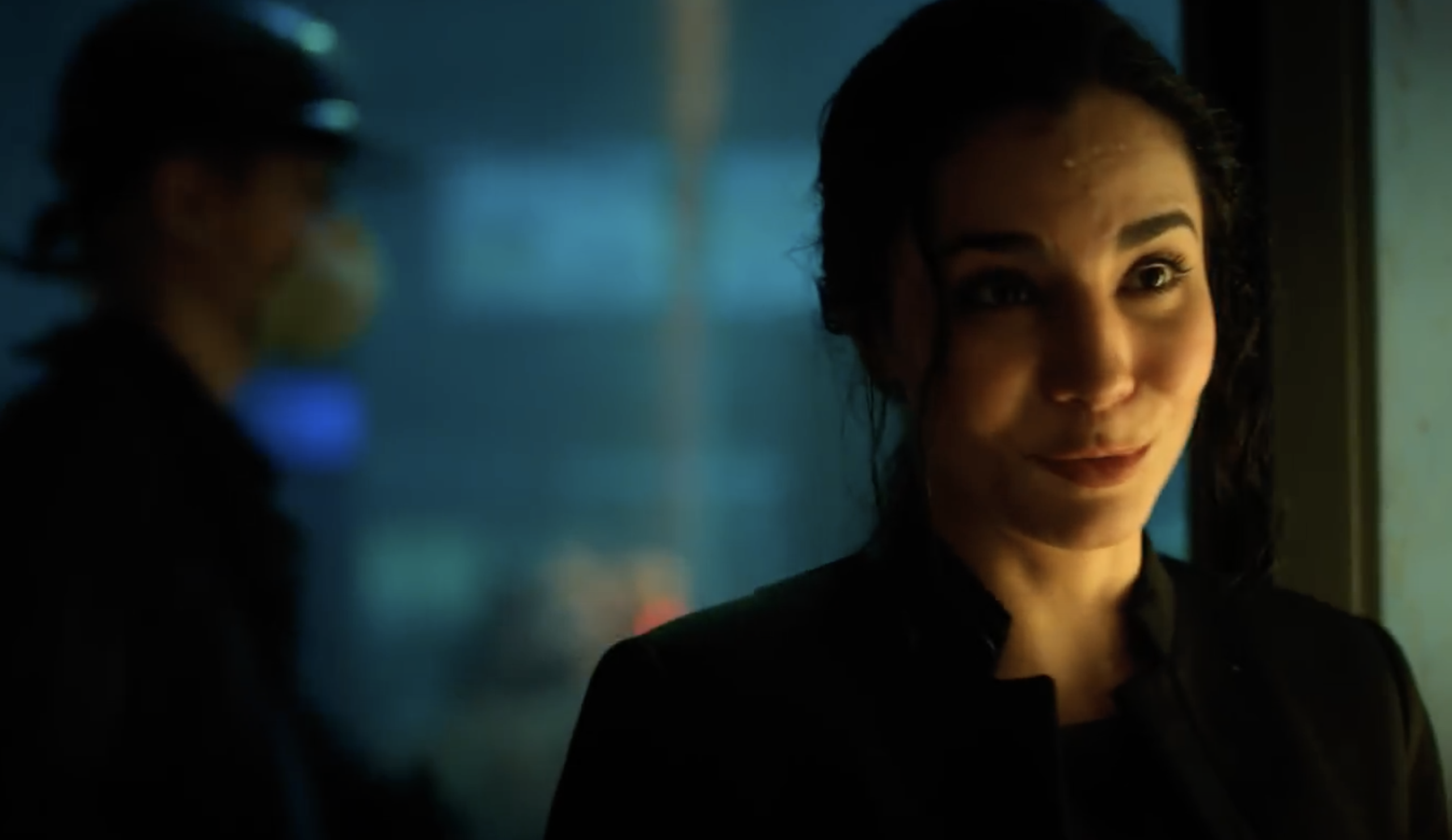
In 2024, she booked a guest-star role as Deena Milsap in HBO’s The Righteous Gemstones. She shot in Charleston with Danny McBride running the ship and Michael Rooker as her husband. Her scenes made the director’s cut, then got trimmed for time when the studio tightened episodes.
That’s the business: you do the work, you bring the heat, and sometimes the edit room is a guillotine. But it still matters. Being cast in that world means people at the highest level saw her and said “yes.” Every actor knows the pain of a cut scene. Every actor also knows it’s still a step up the mountain. She got there. She did the job. The tape exists somewhere with her right in the middle of it, alive and sharp. That doesn’t disappear just because the final runtime got smaller.
What she is, really
Jennifer R. Blake is a theatre animal who learned to survive in every climate. She can headline her own show, swing in a giant ensemble, steal a TV scene in a single breath, and then turn around and produce something from scratch because she refuses to sit still.
Her career isn’t one straight line. It’s a city subway map: branching, looping, sometimes delayed, always moving. She’s the kind of performer who trusts the long game. The kind who knows that talent without hustle is just a dream, and hustle without taste is just noise. She has both.
If you want a single image to hold onto, make it this: a woman in a rehearsal room, script in hand, learning a whole role in three weeks because the show opens whether she’s ready or not. She looks up, smiles like she’s already tired, and goes again anyway. That’s Jennifer. That’s the engine. That’s the story.