Introduction: The Drip That Became a Flood
Let’s get something straight up front: 2005’s Dark Water is not a horror movie—it’s a plumbing nightmare masquerading as a supernatural thriller. Directed by Walter Salles (of The Motorcycle Diaries fame, oddly enough) and featuring an award-winning cast led by the always luminous Jennifer Connelly, this remake of Hideo Nakata’s 2002 Japanese original promises moody atmosphere, psychological depth, and spine-tingling terror. It instead delivers mildew, mood swings, and a spectral child with the charisma of soggy toast.
One could almost be fooled by the trailer, which teases a Ring-adjacent creep-fest. But don’t be seduced. The scariest thing about Dark Water is the apartment’s plumbing bill—and perhaps the thought that someone greenlit this script with a straight face.

Jennifer Connelly: The One Ray of Light in a Waterlogged Script
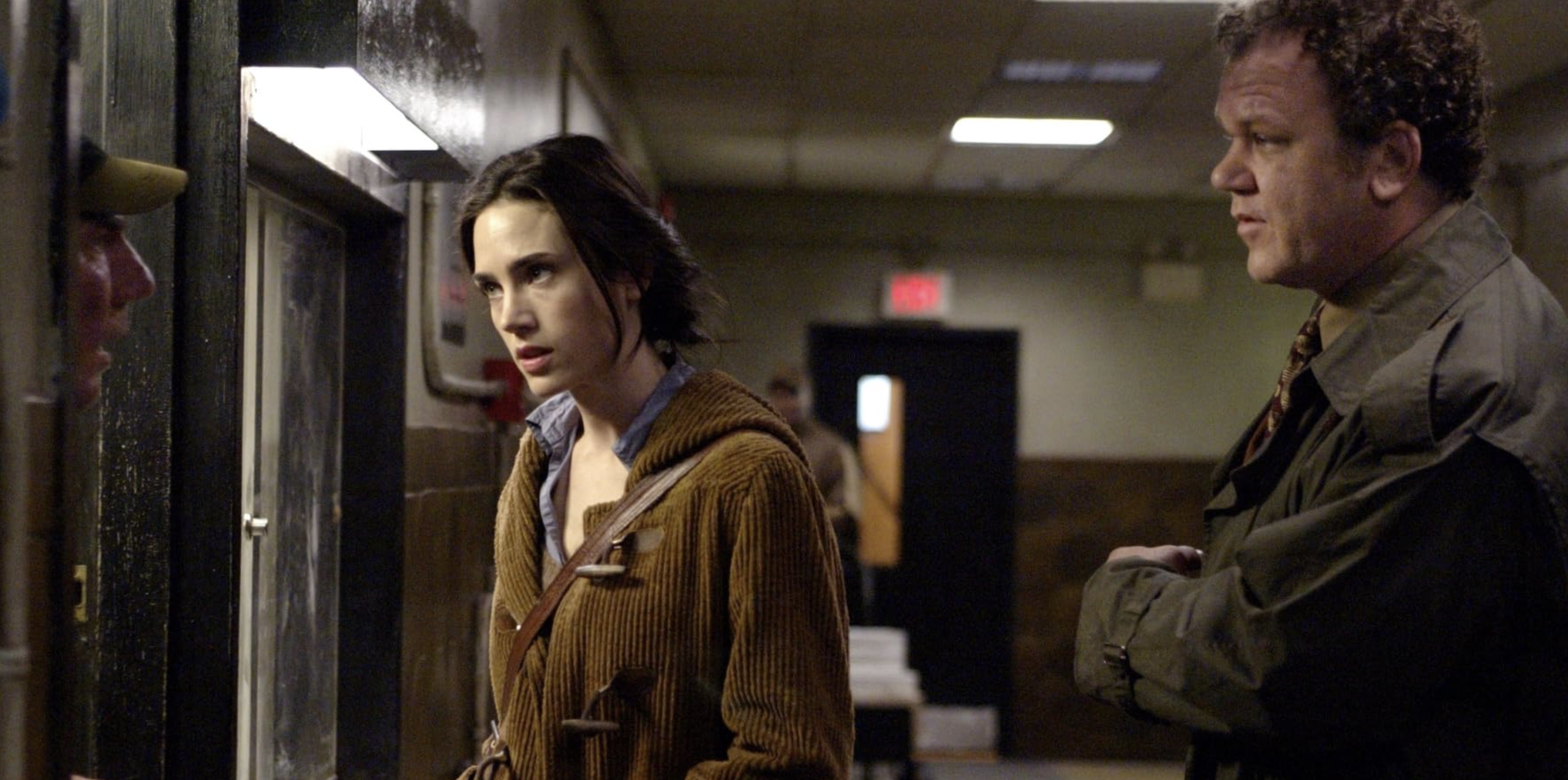
If there’s one reason to suffer through Dark Water, it’s Jennifer Connelly. She acts her heart out, trying to give emotional weight to a character written with the complexity of wet cardboard. Her portrayal of Dahlia Williams—divorced, traumatized, over-medicated, and possibly haunted—is rich with nuance, grief, and the subtle rage of a woman barely hanging on.
She screams in silence, cries in the rain, and haunts the camera with her eyes. She’s basically auditioning for a better movie mid-scene. But all her efforts are soaked in cinematic gloom so heavy it threatens to drown the performance—and not in the poignant way. More like slipping on moldy tiles and cracking your head.
Connelly’s screen presence is, as always, magnetic. It’s just unfortunate that this film treats her talent like it treats its water damage: ignored until it ruins everything.
Plot: The Ghost Story That Could Have Been an Email
The plot of Dark Water is deceptively simple: Dahlia moves into a decrepit building on Roosevelt Island with her daughter Ceci (played with dead-eyed detachment by Ariel Gade). There’s a mysterious leak, a ghost girl named Natasha, a missing child, a sketchy superintendent (Pete Postlethwaite, who looks like he’s rethinking his career choices in real time), and some legal wrangling with her ex (Dougray Scott, phoning it in with international rates).
Despite the potential for tension, the movie unfolds like a tepid cup of tea left on a radiator. There are no scares—unless you count the recurring jump scares of bad plumbing. The ghost? Underwhelming. The mystery? Obvious. The climax? A soggy attempt at maternal martyrdom that’s as depressing as it is nonsensical.
Natasha the ghost is less a figure of terror and more an after-school special cautionary tale about child neglect and poor maintenance oversight. She wants a mommy, and in the end, she gets one. At the cost of the only character we cared about.
Terrifying? Hardly. It’s like The Sixth Sense if Haley Joel Osment had died of boredom and Bruce Willis tried to fix a leaky pipe for two hours.
Atmosphere: All Gloom, No Doom
Cinematographer Affonso Beato deserves some credit for making water stains look vaguely artistic. The entire film is shot through a grey-green filter that suggests rot, sadness, and the ghost of a mold inspector who died of despair.
But this oppressive tone eventually suffocates the viewer. The relentless gloom isn’t eerie—it’s numbing. Rather than building dread, it creates apathy. Rain falls constantly, but it doesn’t cleanse. It drowns. The sound design overemphasizes every drip and splash as if they’re characters in a tragic opera about home maintenance.
Dark Water confuses atmosphere for story and dread for pacing. It’s not “slow burn”—it’s just slow. This is horror in neutral gear, coasting downhill and hoping nobody notices the brakes are out.
Supporting Cast: A Wasted Reservoir of Talent
Tim Roth shows up as Dahlia’s lawyer, Jeff Platzer, trying to balance dry legalese with a touch of compassion. He mostly looks like he’s counting the seconds until his contractually obligated scenes end. John C. Reilly plays the sleazy landlord Cory Murray with oily charm that borders on parody. Pete Postlethwaite grumbles about building maintenance while looking like he’s about to punch the script supervisor.
Even Camryn Manheim pops in as a teacher but is wasted in a role that could’ve been replaced by a note home in Ceci’s backpack. These are great actors stuck in a movie that doesn’t know what to do with them—except let them mope around in damp hallways.
Themes: Abandonment, Grief, and… Tap Water?
There’s an attempt here to elevate Dark Water beyond the average ghost story. The screenplay touches on themes of maternal anxiety, childhood trauma, and class disparity in urban housing. But instead of weaving those into a compelling horror narrative, the film flounders.
It tries so hard to be meaningful that it forgets to be scary. Every ghostly encounter is followed by a therapy-worthy monologue. The horror isn’t supernatural—it’s existential. And not in a good, Hereditary-style way. In a “why am I watching this instead of just doing my taxes” way.
Final Thoughts: A Damp Disappointment
Dark Water is the cinematic equivalent of a water-damaged paperback novel you find behind a broken radiator—once promising, now bloated and unreadable. It wants to be The Ring meets Kramer vs. Kramer, but it ends up as a Lifetime movie with a ghost and a maintenance request.
Jennifer Connelly gives everything. The movie gives nothing in return. Watching her go under—literally and metaphorically—feels less like tragedy and more like the universe playing a cruel joke on someone who said yes to the wrong script.
Verdict: 3/10
-
+3: For Jennifer Connelly’s smoldering commitment and haunting eyes.
-
–7: For the utter lack of scares, directionless pacing, and a ghost story that’s about as terrifying as a mildly stern HOA meeting.
If you’re looking for horror, look elsewhere. If you’re looking for Jennifer Connelly soaking wet and brooding in the rain… congratulations, you’ve found your niche.
