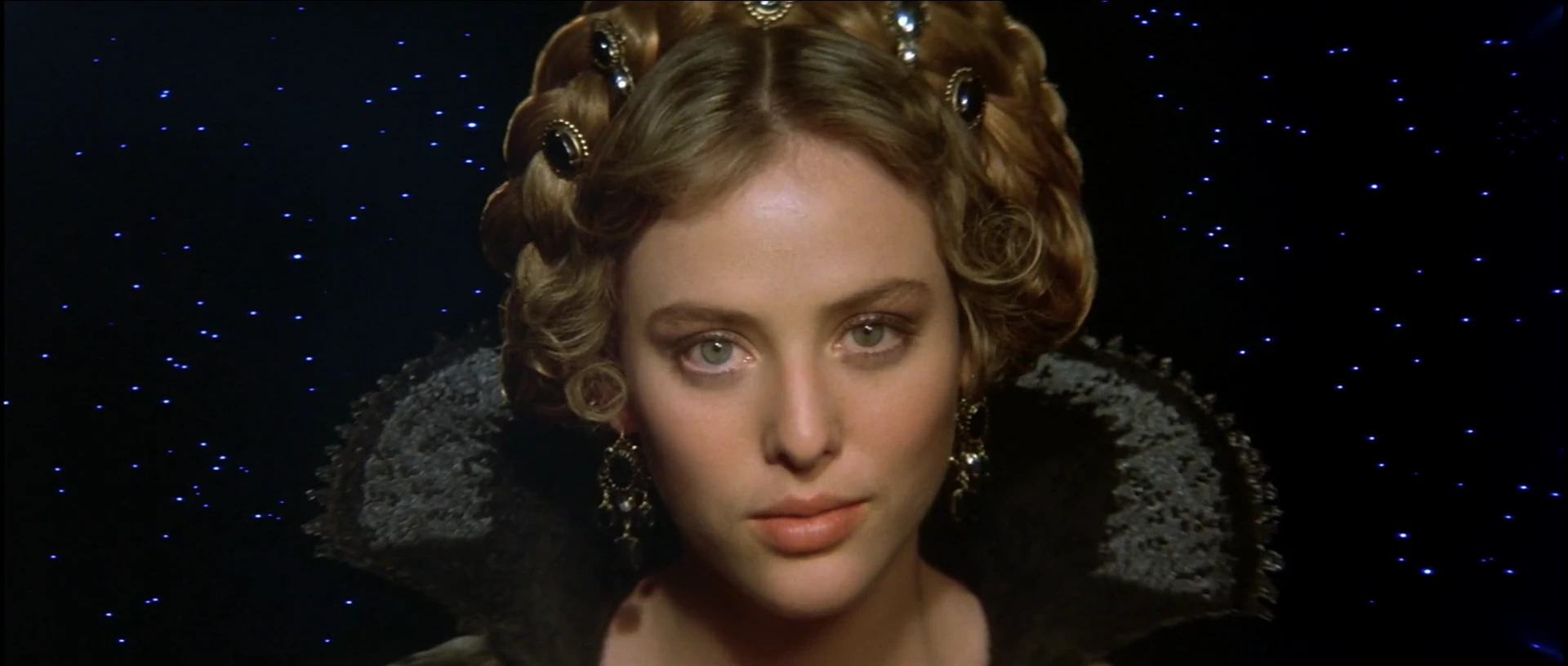
Directed by David Lynch | Starring Kyle MacLachlan, a lot of sand, and an entire warehouse of overacting
Let’s be clear right off the bat—this Dune isn’t the most recent one. No, this is the 1984 Dune, directed by David Lynch in what must have been either a contractual blackmail situation or a very long dare.
What we get is a two-hour-and-seventeen-minute visual migraine, complete with whispering voiceovers, oily bald men in plastic raincoats, a hero with the charisma of a saltine cracker, and sandworms that look like inflatable tube socks with teeth.
This is a movie that assumes you’ve already read the book, read the glossary, joined the fan club, and passed a quiz on galactic feudalism. If you haven’t? Strap in. You’re about to experience the literary equivalent of being hit with a brick made of exposition and velvet worms.
The Plot: Trust Us, It’s In There Somewhere
Dune is technically about Paul Atreides (played by Kyle MacLachlan, looking like a confused exchange student from Planet Shampoo), the heir to House Atreides, who gets caught in a deadly political struggle involving desert drugs, space witches, and eco-fascist worms.
The planet Arrakis is the universe’s only source of “spice,” a hallucinogenic sand glitter that powers space travel and makes people’s eyes turn blue. Why? Because Frank Herbert said so, and Lynch said, “Sure, sounds Lynchian.”
But trying to summarize the plot of Dune (1984) is like trying to explain a dream you had after eating too much Indian food: it started with a space emperor, then Sting was there in a metal diaper, and someone whispered “Muad’Dib” forty times while riding a worm.

Kyle MacLachlan: The Messiah of Monotone
Kyle MacLachlan makes his big-screen debut here as Paul Atreides, a boy born of prophecy and trained to be a cosmic messiah. He spends most of the film wandering through fog machines and reacting to things by whispering to himself like he’s trying not to wake his parents.
His line delivery falls somewhere between stoned philosophy major and a guy narrating his own bathroom trip. When he finally screams “The sleeper has awakened!” you half expect someone offscreen to yell, “He hit his head in the trailer again.”
The Supporting Cast: Kook Parade
The ensemble cast is an unholy circus of weird accents, prosthetic boils, and dramatic pauses. Patrick Stewart shows up with a mullet and a dog like he just wandered off the Mad Max set. Dean Stockwell broods in the corner like he’s wondering if this gig will ruin Quantum Leap. And then there’s Sting, oil-slicked and glistening in futuristic undies, posing like he’s in a Duran Duran video directed by a serial killer.
Let’s not forget the villains—the Harkonnens—a family of sweaty sadists who look like they were designed by someone who lost a bet with H.R. Giger. Baron Harkonnen floats around the room like a flying meatloaf full of pus, cackling and molesting interns.
The Voiceovers: Dune ASMR
Every character in this film has an internal monologue—and they all sound like they’re trying to talk dirty to themselves. There’s no end to the whispered musings: “I must not fear. Fear is the mind-killer,” someone hisses, while staring into the void like a constipated yoga instructor.
If you stripped out the voiceovers, the movie would be about 12 minutes long and 60% less confusing. Instead, Lynch leans into the idea that the real tension of Dune lies in people whispering dramatically in corridors.
The Effects: Sci-Fi by Home Depot
The special effects are what you get when you let your dad design a sci-fi epic using leftover plumbing parts and glow-in-the-dark paint. The sandworms look like sentient socks. The space travel scenes are full of floaty goo and butt-shaped energy portals. There’s a dream sequence where a fetus talks. Why? Shh. Don’t ask.
When Paul rides the worm, it’s supposed to be a triumphant moment. Instead, it looks like he’s standing on a really long beige turd during a dust storm.
Costumes and Sets: Retro-Future Torture Chamber
The aesthetic of Dune is what happens when you throw Flash Gordon, a Renaissance Faire, and a Soviet boiler room into a blender and set it to “Lynch.” There are shoulder pads wider than the spaceships, capes that look like upholstery, and a color palette borrowed from a migraine aura.
The Guild Navigators are giant floating space larvae in glass tanks who fart out time and space like they’re allergic to coherent storytelling. It’s all just weird for the sake of being weird—and not the good kind. The kind that makes you start checking your watch 40 minutes into a 137-minute film.
Pacing: Like Waiting for Worms to Evolve
The movie lurches forward like a worm on Xanax. It spends 90 minutes setting up court intrigue, planetary politics, and faux-mystical mumbo jumbo… then realizes it’s running out of time and speed-runs the climax like someone fast-forwarding through a TED Talk.
By the end, Paul becomes the Messiah, controls the worms, and makes it rain on a desert planet—something that literally undermines the whole book’s ecological message. It’s like ending Titanic with the ship docking safely in New York and everyone clapping.
Final Verdict: Dust in the Windpipe
Dune (1984) is the kind of movie that makes you feel like you’re failing an exam you didn’t know you were taking. It’s dense, dry, and aggressively strange, with the emotional range of a tax seminar and the clarity of a fever dream.
David Lynch himself disowned the film, which tells you everything you need to know. He tried to turn a dense sci-fi novel into an art film, but what we got was a visually muddy, narratively incoherent opera of bad wigs, voiceovers, and Sting in banana hammocks.
If you’re looking for something to help you fall asleep or question your life choices, Dune (1984) is your spice-laced lullaby.
Rating: 3/10 — Fear is the mind-killer. So is this movie.

