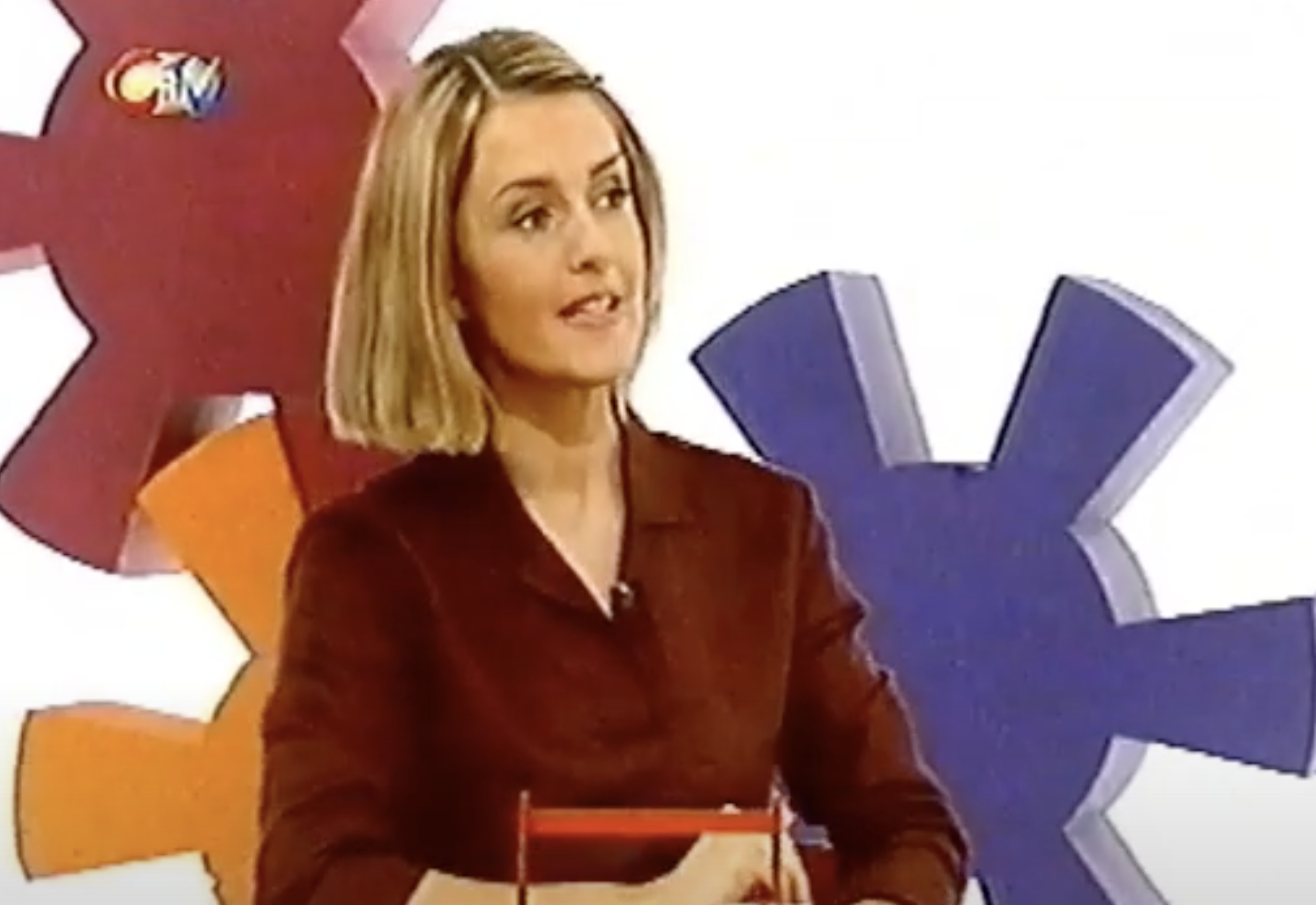
She was born Elizabeth Irene Mitchell in Pittsfield, Massachusetts, on February 10, 1974—the eldest of four in a factory-town Irish Catholic family where you learned two things early: work hard, and don’t complain. Her father, a Vietnam vet and GE worker, brought home the grit; her mother, a bank employee, brought the steadiness. Elizabeth brought the fire.
She wasn’t groomed for Hollywood. She was a Little League kid, sliding into third base until her leg snapped—a break that forced her off the field and into the school play. A strange twist in the road, and suddenly she’d found the thing that made her pulse quicken. The stage lit up something in her. She never looked back.
She tore through Pittsfield High, graduated in ’92, and headed to the University of Pennsylvania, where she double-timed her life—communications major, theater minor, Delta Delta Delta sorority, Friars Senior Society. She graduated magna cum laude in 1996, not because she wanted a gold star but because she couldn’t stand doing anything halfway.
Then came the American Conservatory Theater. The MFA. The training. The seriousness. A soap opera gig was offered and rejected—student loans were calling, and she wasn’t ready to leap off the cliff yet. But SAG already had an Elizabeth Mitchell, so she became Elizabeth Banks. A reinvention, not of identity—just of label. The engine underneath stayed the same.
Her first film was the indie Surrender Dorothy (1998), the kind of small, earnest movie that teaches you how to work when no one is watching. Then came Wet Hot American Summer (2001), where she played one of the most deliciously awful camp counselors ever captured on film. By Seabiscuit and the Spider-Man trilogy, she was already building a resume that didn’t make sense on paper—comic timing, blockbuster charm, indie soul.
Then The 40-Year-Old Virgin (2005) cracked her career wide open. She played the bookstore blonde with unnerving enthusiasm and single-minded lust—and America realized she was dangerous. Funny, yes. Pretty, sure. But sharp as a nail and bold enough to punch through a script and steal the scene out from under the men who thought they were carrying it.
Banks didn’t wait for the industry to give her permission. She founded Brownstone Productions in 2002 with Max Handelman—the college sweetheart she met on day one at Penn, the man who saw her ambition and didn’t flinch. Together they built a machine that would eventually give the world Pitch Perfect.
Through the late 2000s she kept piling on roles: Invincible, Definitely, Maybe, Slither, Zack and Miri Make a Porno, W., Role Models. And on television she slipped effortlessly onto Scrubs, Modern Family, and 30 Rock—earning Emmy nominations for making chaos look effortless.
Then the world changed again.
Effie Trinket.
The powdered, painted, Capitol-born chaperone with a spine of silk-wrapped steel. Banks turned Effie into something bigger than the page: absurd and heartbroken, shallow and profound, fragile and furious. By the time she reached Mockingjay, she’d chiseled Effie down to the terrified human inside the glitter.
She didn’t stop.
She couldn’t.
Pitch Perfect became a cultural juggernaut. Banks stepped into the director’s chair for its sequel—her feature debut—and blew the roof off the box office. $69 million opening weekend. Highest debut ever for a first-time film director. Not a “female” director. A director, period. She did it with jokes, rhythm, and the confidence of someone who had been studying this machine from the inside for years.
Then came Charlie’s Angels (directing, writing, starring), Power Rangers, The Lego Movie series, Call Jane, Mrs. America, Migration. She hosted Press Your Luck. She worked across comedy, drama, horror, animation, blockbuster fare, and indie circuits as if genres were suggestions, not rules.
And then the fever dream:
Cocaine Bear—the violent, hilarious, gore-splattered internet legend she turned into a hit film in 2023. Only Elizabeth Banks could turn a coked-up bear into a metaphor for survival, motherhood, chaos, and the absurdity of American culture.
Alongside all that, she still nurtures Brownstone Productions, still directs, still acts, still produces, still creates. Still fights.
Her personal life is her own kind of story—marriage to Max Handelman since 2003, two sons via surrogacy, and the willingness to say publicly what so many women are pressured to hide: infertility, judgment, choice, the right to build a family on your own terms.
She began converting to Judaism years ago—not out of obligation, but because she wanted to live in her husband’s tradition, learn the rituals, hold the culture close. She jokes she isn’t “technically” converted, but she lives the faith. That’s the Banks way: identity is shaped by practice, not labels.
Politically, she is exactly who you’d expect after watching her career—articulate, outspoken, unapologetic. Gun control, reproductive freedom, voting rights. She sang “Fight Song” for Hillary Clinton at the 2016 DNC. She’s a feminist without the asterisk.
Elizabeth Banks is the rare Hollywood multi-hyphenate who actually does all the things her titles promise. Actress. Director. Producer. Creator. Disruptor. Every move she makes comes with purpose. Every role she takes comes with precision. Every film she directs carries her imprint—humor edged with bite, heart wrapped in boldness.
She doesn’t just climb ladders.
She builds them.
She doesn’t just break ceilings.
She renovates the room above.
And she’s nowhere near done.