In a cinematic landscape often obsessed with spectacle and speed, films like Of Mice and Men (1992) feel like sacred echoes from a quieter, more reflective era. Directed by and starring Gary Sinise, and featuring a career-defining performance from John Malkovich, this adaptation of John Steinbeck’s 1937 novella is a restrained and reverent rendering of one of American literature’s most enduring tragedies. It honors the source material not only in plot, but in spirit — embracing its emotional weight, its aching humanity, and its stark depiction of loneliness and the elusive American dream.
Sinise’s Of Mice and Men isn’t just a good adaptation. It’s a great one — a rare film that both respects its source and understands how to translate its essence to the screen. The result is a lyrical, deeply moving experience that captures the heartbreak, tenderness, and inevitability that made Steinbeck’s novel such a landmark in the first place.
The Story: Dreams and Despair on the American Frontier
The story, as any former high school English student remembers, follows two itinerant ranch workers in Depression-era California: George Milton (Gary Sinise), small, wiry, and sharp; and Lennie Small (John Malkovich), a mentally disabled giant of a man with the strength of a bear and the innocence of a child. Bound by a unique friendship and a shared dream of one day owning a piece of land, George and Lennie move from ranch to ranch, eking out a living and trying to stay out of trouble.
But trouble, as always, finds them.
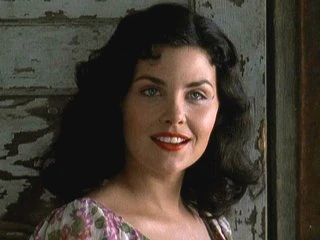
Their dream — a small farm, a vegetable garden, rabbits for Lennie to tend — is a fragile thing, held together by hope and little else. And when they arrive at a new ranch and encounter the jealous, hot-tempered Curley (Casey Siemaszko) and his lonely, unnamed wife (Sherilyn Fenn), the dream begins to unravel. Lennie’s innocent love of soft things, and his inability to understand his own strength, lead inevitably to tragedy.
It’s a simple story, but one told with mythic resonance. And in Sinise’s hands, it feels immediate and timeless.

Gary Sinise: Actor, Director, Steward of the Material
Gary Sinise deserves immense credit for not only directing this film with a steady, sensitive hand, but also for embodying George with a quiet intensity that never overpowers the material. As George, Sinise is gruff but compassionate, worn down by the hardness of the world but still clinging to his sliver of hope.
He doesn’t play George as a martyr, nor as a saint. Instead, he plays him as a deeply flawed, deeply human man — someone who both loves Lennie and sometimes resents the burden of that love. The way Sinise portrays George’s internal conflict, his guilt, his protectiveness, and ultimately his grief, is subtle but gut-wrenching. His final scene with Lennie — rendered with minimal dialogue but maximum emotional force — is one of the most quietly devastating moments in ‘90s cinema.
As a director, Sinise opts for classical storytelling. He lets the story breathe, favors long takes and natural lighting, and never overwhelms the emotion with style. He trusts Steinbeck’s narrative, and he trusts his actors. That restraint, that humility before the material, is part of what makes the film so effective.
John Malkovich: A Performance of Tremendous Pathos
If Sinise is the film’s steadying presence, John Malkovich is its aching, wounded soul. As Lennie Small, Malkovich delivers a performance that is both heartbreaking and fearless — a portrayal of mental disability that avoids caricature and instead evokes enormous empathy.
It’s not an easy role. Lennie’s childlike innocence, his physicality, and his tragic flaw — his inability to understand the consequences of his actions — could easily be misplayed. But Malkovich walks a fine line between physical exaggeration and emotional truth. His Lennie is never a joke, never a freak, never a device. He’s a person. A deeply vulnerable, confused, and loving person, caught in a world that doesn’t have room for someone like him.
There’s a moment early in the film, when Lennie finds a dead mouse in his pocket. He doesn’t understand why it died, only that it was soft and he wanted to pet it. His voice cracks, his face contorts with confusion and sadness — and in that moment, Malkovich captures everything that makes Lennie such a tragic figure. He is all instinct and emotion, a man who loves things to death because he cannot control his strength or his fear.
The chemistry between Malkovich and Sinise is crucial. You believe their friendship. You believe that George has told Lennie about the rabbits a hundred times, and that Lennie has remembered every word — not because he understands the logistics of the dream, but because the dream feels safe. And in that, Malkovich reveals the film’s central truth: that hope is often irrational, but still necessary.
Sherilyn Fenn: The Tragic Object of Longing
Sherilyn Fenn, in a small but vital role as Curley’s Wife, brings unexpected complexity to a character that has often been criticized (unfairly) as a one-dimensional temptress. Fenn imbues her with sadness, sensuality, and desperation. She is not merely a plot device — she is a woman trapped in a life she never wanted, craving attention because it’s the only currency she has left.
Fenn’s scenes with Lennie are played not with menace, but with melancholy. She doesn’t see him as a threat. She sees him as someone who listens, who doesn’t judge, who doesn’t look at her like she’s just a body. And that misunderstanding — that brief, human moment of connection — is what makes their final scene together all the more tragic.
Fenn avoids easy villainy. Her character’s loneliness mirrors George and Lennie’s in subtle ways, and her presence adds another layer to the film’s central theme: that everyone in this world is looking for someone to talk to, someone to understand them, someone to make them feel less alone.
Supporting Cast: Sparse but Solid
The supporting cast is rounded out with strong performances. Ray Walston is especially effective as Candy, the elderly ranch hand who latches onto George and Lennie’s dream with desperate hope. His scenes, especially after the death of his old dog, are quietly devastating. His trembling voice when he says, “I oughtta shot that dog myself,” foreshadows the film’s inevitable conclusion with a weight that hits like a brick.
Casey Siemaszko, as Curley, brings appropriate menace to the screen — a small man obsessed with control, lashing out at bigger men because that’s the only way he knows to assert power. And Richard Riehle, as the gentle mule driver Slim, offers a moral compass for the film’s bleak world. Slim sees more than he says, and his quiet compassion for George in the final scenes underscores the film’s emotional payoff.
Cinematography and Score: Painting Dust and Dream
Kenneth MacMillan’s cinematography is as unshowy and grounded as Sinise’s direction, capturing the dust and vastness of Depression-era California with an earthy realism. The golden light of the wheat fields, the dirty corners of the bunkhouse, the endless sky that looms over every decision — all of it underscores the film’s sense of longing and entrapment.
Mark Isham’s musical score is gentle and melancholic, never overpowering the emotion but rather accentuating it with soft strings and mournful piano lines. It’s a score that knows when to step back and let silence speak — especially in the final moments, when the music fades and all we hear is the wind in the grass.
Themes That Still Resonate
What makes Of Mice and Men such an enduring story — and what this adaptation captures so beautifully — is its brutal honesty about the human condition. It’s a story about people who live on the margins, who cling to dreams not because they believe in them rationally, but because without them, there would be nothing.
It’s about friendship in a world where isolation is the norm. About violence that happens not out of evil, but out of misunderstanding and fear. About mercy that looks like betrayal. And about how the American dream, that great myth of self-made prosperity, can be a trap for those the system was never built for.
Sinise’s film doesn’t offer easy answers or sentimentality. It lets the story unfold naturally, lets its characters suffer without melodrama, and ultimately trusts the viewer to understand that this isn’t a story about monsters or heroes — but about people.
Final Thoughts: A Minor Classic of American Cinema
In the annals of literary adaptations, Of Mice and Men (1992) deserves a place of honor. It’s not flashy. It’s not groundbreaking in its style. But it’s faithful, heartfelt, and emotionally devastating in a way that few films are brave enough to be. It honors its source not just in dialogue and plot, but in tone, theme, and character.
Gary Sinise proves himself a thoughtful and disciplined director, and his performance as George is one of quiet excellence. John Malkovich, meanwhile, gives one of the most memorable portrayals of a literary character in film history. And Sherilyn Fenn, though given limited screen time, leaves an impression that is both haunting and deeply human.
Of Mice and Men is not an easy watch. It is, after all, a tragedy. But it is a necessary one — a story that reminds us that kindness can exist in hard places, that dreams matter even when they fail, and that sometimes, doing the right thing means breaking your own heart.
Final Grade: A
A thoughtful, deeply emotional adaptation of one of America’s great literary works. With strong performances and an unwavering sense of purpose, Of Mice and Men (1992) is a quiet triumph.
