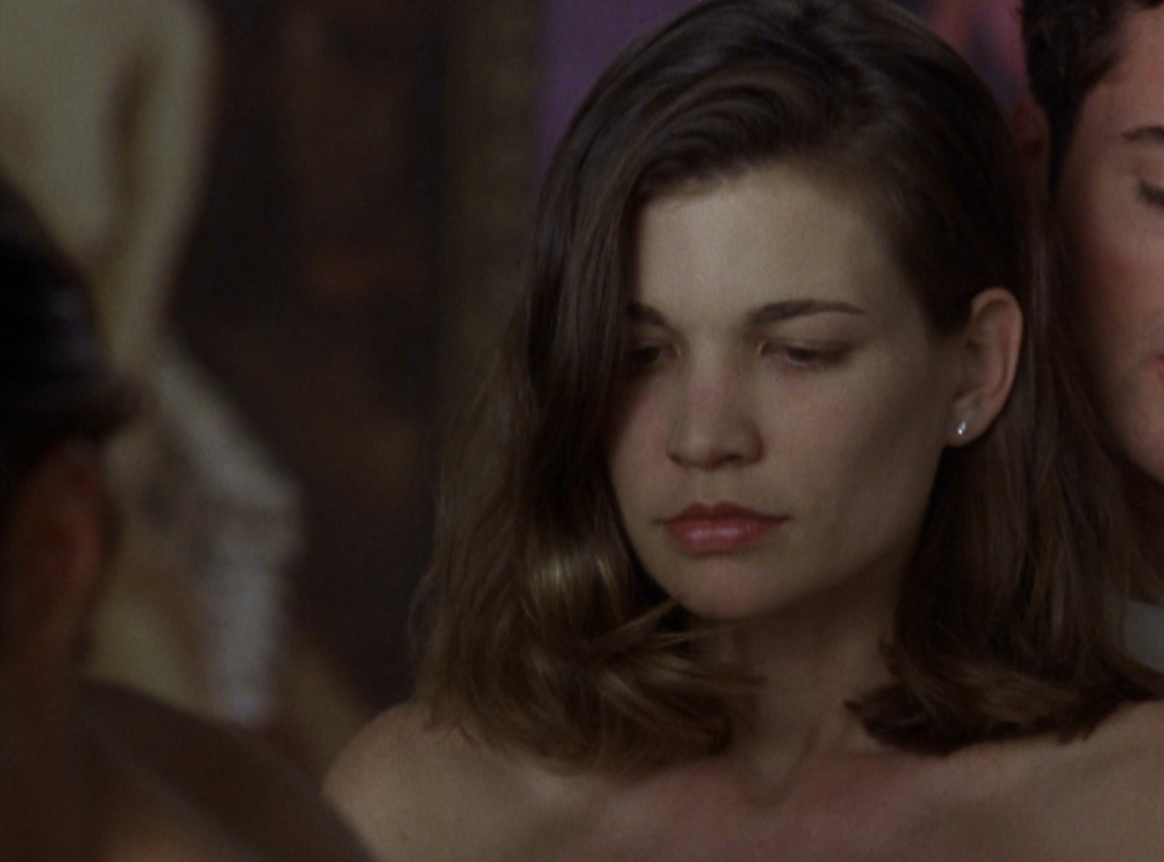
Sue England was born in the summer of 1928, and almost immediately the world decided what she was for. Beauty came first, before craft, before choice, before adulthood had a chance to set its terms. By six years old she was already wearing a crown—“Miss Tulsa,” paraded and praised for symmetry she hadn’t yet learned to distrust. Later came “Oklahoma’s Sweetheart,” a title that sounds harmless until you realize how early it teaches a girl to smile on command.
She grew up understanding that approval arrived fastest when you stayed still and pleasant.
Hollywood found her the way it often did in the 1940s: politely, decisively, and with expectations already attached. In 1945, still a teenager, she made her professional acting debut in This Love of Ours, playing Merle Oberon’s daughter. The role didn’t demand fireworks. It demanded credibility. She delivered enough of it that a columnist singled her out as one of the season’s best fledgling performances. That word—fledgling—followed actresses like her everywhere. Promising. Young. Not yet fully trusted.
She stepped into film at a moment when the industry was rebuilding itself after the war, when studios still believed in grooming talent slowly, but only within narrow lanes. Sue England fit the frame: attractive, capable, non-threatening. She appeared in films like Kidnapped, The Devil on Wheels, and City Across the River, projects that didn’t make stars but kept actors visible. She learned the rhythms of sets, the patience required between takes, the quiet endurance of being useful without being indispensable.
The camera liked her. That didn’t mean it knew her.
By the time television took over as Hollywood’s second nervous system, England followed the migration naturally. TV was faster, hungrier, less precious. It needed faces that audiences trusted immediately. England became one of those faces. She showed up in Father Knows Best, The Cisco Kid, The Lone Ranger. She appeared on Lost in Space, part of a genre that prized sincerity over subtlety. She adapted easily. Television didn’t ask actresses to carry myth. It asked them to serve story efficiently.
She did that.
One of her more telling appearances came on Daniel Boone, where she played a pregnant Native American woman—another example of mid-century television’s casual approach to representation, where white actresses were asked to embody otherness without context or concern. England didn’t design the system. She worked inside it. Most actors did. Refusing roles wasn’t a luxury many working performers could afford.
She became a familiar presence on Perry Mason, appearing five times—no small feat in a show built on precision and repetition. That kind of casting meant trust. Producers knew she would hit her marks, deliver her lines cleanly, and not distract from the machinery of the episode. She also appeared in an early episode of The Lone Ranger, part of television’s foundational mythology, where morality was clean and consequences arrived within the hour.
Her career stretched quietly across decades. No scandal. No dramatic reinvention. No desperate grasp at relevance. She worked until 1974 and then stopped. That detail matters. She didn’t fade out mid-scene. She exited when the work no longer fit, or when she no longer wanted to adjust herself to fit it.
Sue England belonged to a generation of actresses whose careers were shaped by containment. Beauty got you in the door early. Staying agreeable kept you employed. Aging asked different questions, ones the industry wasn’t eager to answer. Television gave her longevity film rarely did, but even that had limits.
She never became a headline name. She became something rarer and less celebrated: a professional presence who made stories function. She was part of the connective tissue of American film and television, the actors audiences recognized without necessarily remembering why. That recognition is its own form of success, even if history doesn’t linger on it.
When she died in 2018 at the age of eighty-nine, there was no rush of rediscovery articles or late-life reevaluations. Just a quiet acknowledgment that another working actress from Hollywood’s mid-century engine had gone. Someone who had started young, stayed steady, and left without noise.
Sue England’s story isn’t tragic or triumphant. It’s instructional.
It shows how early praise can shape expectations before identity has time to form. How beauty can be both invitation and boundary. How television offered survival to actresses who didn’t fit the myth of eternal youth but were still useful, still skilled, still reliable.
She wasn’t a rebel. She wasn’t a victim. She was a participant in a system that rewarded compliance and consistency. She understood the rules, played them well, and stepped away when they no longer served her.
In an industry obsessed with extremes—meteoric rises and spectacular falls—Sue England’s career sits in the middle, where most lives actually happen. Working. Adapting. Ending quietly.
She smiled when asked. She delivered when needed. She lasted longer than many.
And when the camera finally stopped looking her way, she didn’t chase it.
She let it go.
