Ah, The Messengers—another ghost story, another damn haunted house, another family stumbling through a house full of history they don’t give a damn about. It’s the kind of film that feels like it was cobbled together in a half-drunk haze after someone watched a few too many old horror flicks and decided, “Yeah, let’s slap some ghosts and jump scares together.” The whole thing reeks of lazy scriptwriting, where every tired horror trope gets dusted off and thrown at the screen: creepy house, skeptical family, ghosts who’ve clearly never learned how to leave, and that twist that’s about as shocking as a wet fart. It’s like a bad punchline that nobody asked for, but somehow, it keeps stumbling along, determined to finish its run. And yet, it has a weird, sad charm—like a dog with three legs trying to catch a frisbee.

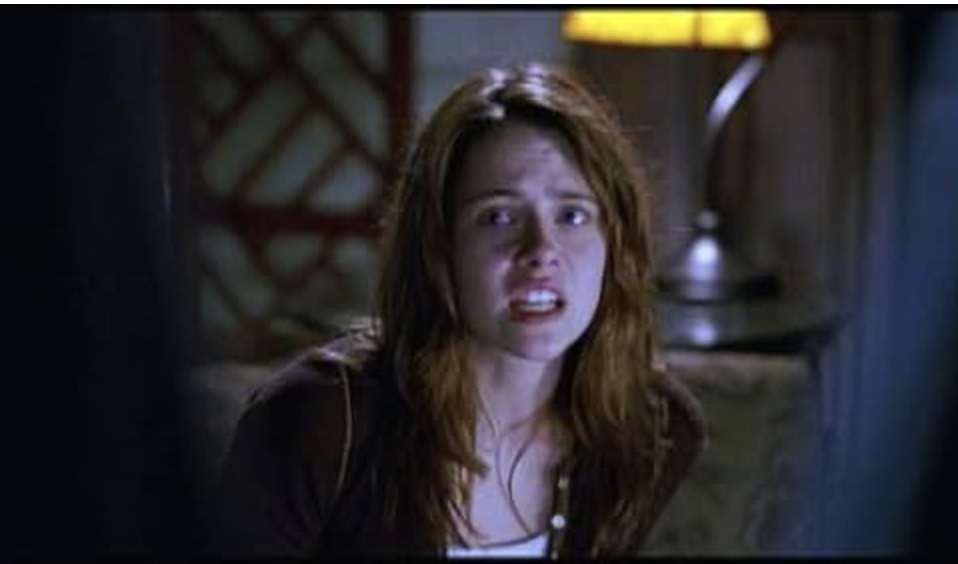
The plot? A family, fresh off a traumatic experience that—surprise!—we never quite get the full backstory on, moves to a remote farmhouse in the middle of nowhere. The idea? A fresh start. The reality? You guessed it: an eerie, crumbling abode with more paranormal activity than your average Victorian graveyard. Enter Jessica (played by the ever-earnest Kristen Stewart), a teenager who, like every other teenager in horror films, refuses to believe what’s clearly in front of her face. She’s too busy sulking over her own personal angst to acknowledge the ghosts and strange happenings all around her. This, of course, makes her the perfect protagonist for a movie that thrives on ignoring the obvious signs of terror and, instead, tries to milk that slow, drawn-out tension until you’re left wondering if it’s worth the effort to even care.
The film tries to dress itself up as something unique, with the now-familiar conceit of a cursed house, a strained family dynamic, and a desperate need to make the audience believe that this isn’t just another The Ring knockoff. But at its core, The Messengers is a recycling bin of standard haunted house clichés. The family moves in, things go bump in the night, Jessica sees things that no one else does, and then—surprise—there’s an unexpected twist involving a long-buried family secret. And by twist, I mean one of those “well, of course this was coming” moments that makes you wonder how the filmmakers thought they were being clever.
Kristen Stewart, who was still riding the Twilight wave at this point, plays Jessica with a level of brooding intensity that might have been impressive had the script given her more than a laundry list of teen angsty clichés to work with. She doesn’t want to be there, she doesn’t like her parents, and she’s having a rough time dealing with… well, being a teenager. It’s all so painfully familiar that it barely registers. But Stewart manages to wring a few moments of genuine discomfort out of her character, and it’s a testament to her ability to convey a certain subtle dread, even if the material around her is actively working against it.
Then we have the rest of the family, led by the perpetually beleaguered Dylan McDermott and Penelope Ann Miller. McDermott plays the father, who, in the tradition of every horror movie father, is too busy to notice the sinister happenings around him. Miller, as the mother, seems to be the only one who’s actually concerned about what’s going on. Of course, the movie spends more time focusing on their strained marriage—because we can’t have enough family drama in our supernatural horror, right? At this point, we get the feeling that the real horror isn’t the ghosts at all but rather the fact that McDermott can’t seem to get a grip on how to act like a concerned parent.
The house itself, as is traditional, is a character in its own right. It’s an old, dilapidated farmhouse, naturally, with creaky floors, dark corners, and enough dusty surfaces to give you a sinus infection just watching it. The filmmakers clearly spent more time deciding how many ghostly figures they could squeeze into each frame than on making the house feel truly ominous. Instead, it’s more of a set piece than a setting, and you’d have a hard time remembering what makes this house so “special” beyond its propensity to house things that go bump in the night.
But let’s talk about the ghosts for a moment. Because what would a haunted house film be without a bunch of vengeful spirits walking around trying to make the family’s lives a living hell? The Messengers certainly doesn’t disappoint in that department, though it does what it can to play it coy, showing us ghostly figures that flicker in and out of view as if they were afraid to fully commit to the idea of actually scaring us. There’s a solid attempt at creating tension through shadowy figures and sudden noises, but it’s so painfully formulaic that even the most startled viewer will likely see the scares coming from a mile away.
Of course, the big reveal—one of those oh-so-satisfying “Aha!” moments that’s more eye-roll than jaw-drop—arrives in the film’s final act. The twist itself is hardly the type to make you question the entire film; it’s more likely to make you wonder how anyone involved in this project thought it was fresh or exciting. It’s not so much a shock as it is an inevitability, and by the time it arrives, you’re already so far removed from any kind of emotional investment that you could care less.
But hey, there’s a charm to the simplicity of The Messengers. It’s an earnest, if somewhat ineffective, attempt at a supernatural thriller. It’s got all the necessary elements for a decent ghost story, and while it never manages to push the boundaries of the genre, it gets the job done—just barely. The film is very much in the mold of 1970s horror flicks, where the scares are more about atmosphere and tension than about gore or shock value. The result is a film that might make you jump once or twice, but it’s more likely to leave you shrugging your shoulders in the end.
