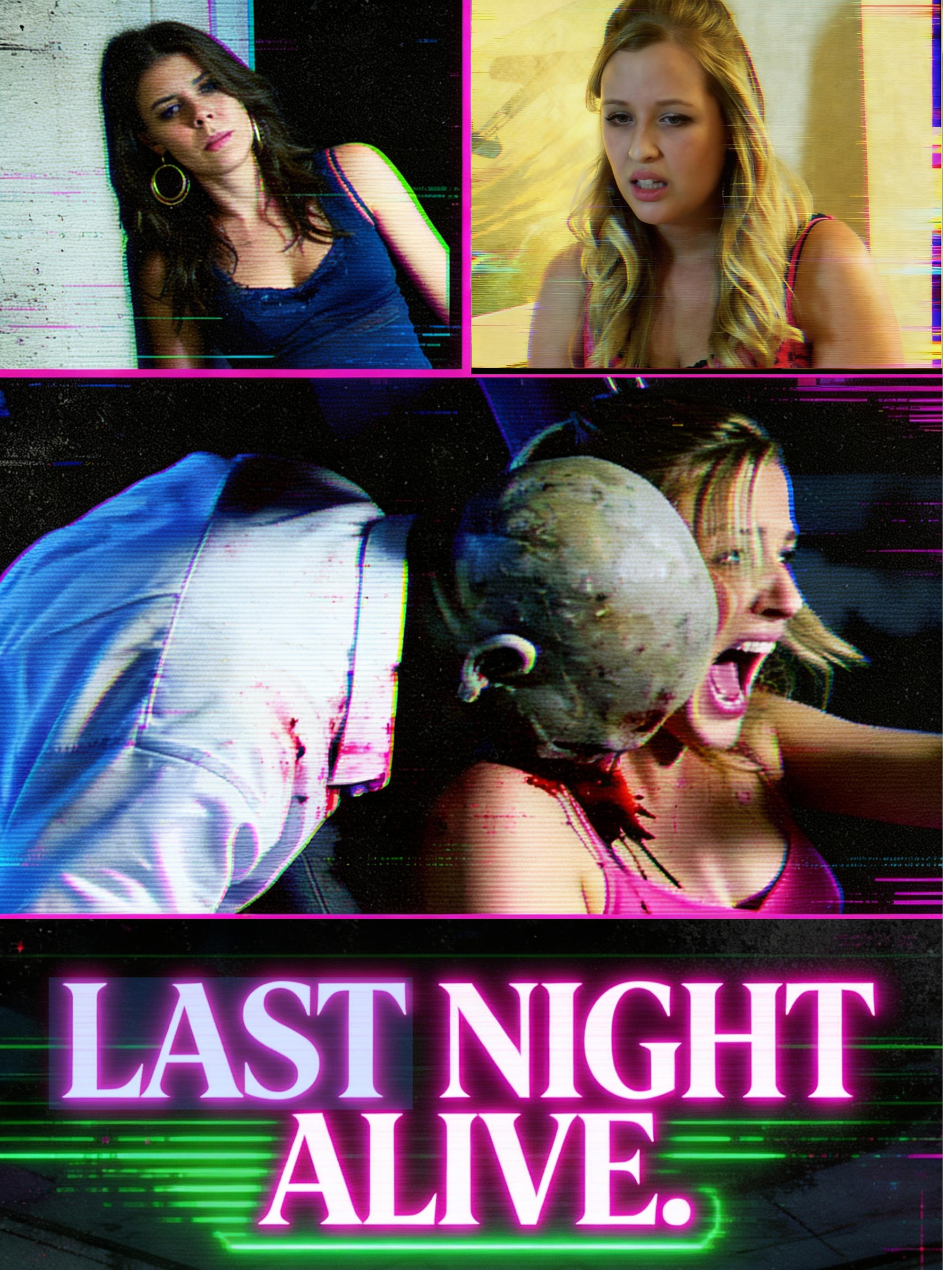
LAST NIGHT ALIVE is a grimy descent into panic, paranoia, and late-night urban horror — the kind of nightmare that feels like it crawled out of a half-remembered VHS tape left playing at three in the morning.
Set almost entirely over the course of one increasingly catastrophic night, the film opens inside a cheap motel room already soaked in disaster. Furniture overturned. Television smashed. Blood staining the sheets like somebody tried to paint over hell and ran out of time. Tess — exhausted, terrified, and barely holding herself together — scrambles through her purse searching for her phone while the body of her lover, Bud, lies nearby with his throat viciously torn open.
Or at least… what’s left of him.

Desperate and unraveling, Tess calls her closest friend Jessica, a streetwise survivor whose loyalty may be the only thing standing between Tess and complete psychological collapse. Racing through neon-lit streets in her battered red Honda Civic, Jessica arrives expecting drugs, violence, maybe another bad decision spiraling out of control.
What she finds instead feels far worse.
As the women attempt to piece together what happened to Bud, the film fractures into flashbacks, fragmented memories, and escalating dread. Their recollections reveal a relationship already rotting from the inside long before blood covered the walls. But beneath the emotional wreckage lurks something even more disturbing: strange attacks, missing persons, emergency broadcasts, and whispered reports of mutilated bodies returning to life.


The deeper Tess and Jessica dig, the more the city itself begins feeling infected — as if civilization is quietly decomposing just outside the motel walls.
Rather than presenting horror through polished studio spectacle, LAST NIGHT ALIVE embraces a raw, intimate ugliness. The film traps viewers inside cramped interiors, flickering motel lights, lonely highways, and moments of suffocating emotional desperation. Every frame feels unstable, like reality itself is beginning to peel apart under stress.
At its core, the film is less about zombies than emotional decay. Bud’s death becomes the catalyst for exposing years of regret, dependency, exploitation, loneliness, and self-destruction simmering beneath the characters’ lives. Tess and Jessica aren’t traditional horror heroines. They’re damaged people trying to survive a world that stopped caring about them long before the monsters arrived.


